
Suffolk survivor's campaign to reform abuse order law
A woman from Suffolk who was forced to relive her abuse in court just to keep a non-molestation order in place is campaigning for the law to change, calling for automatic extensions in cases where an abuser has been convicted of breaching an order or committing related offences.

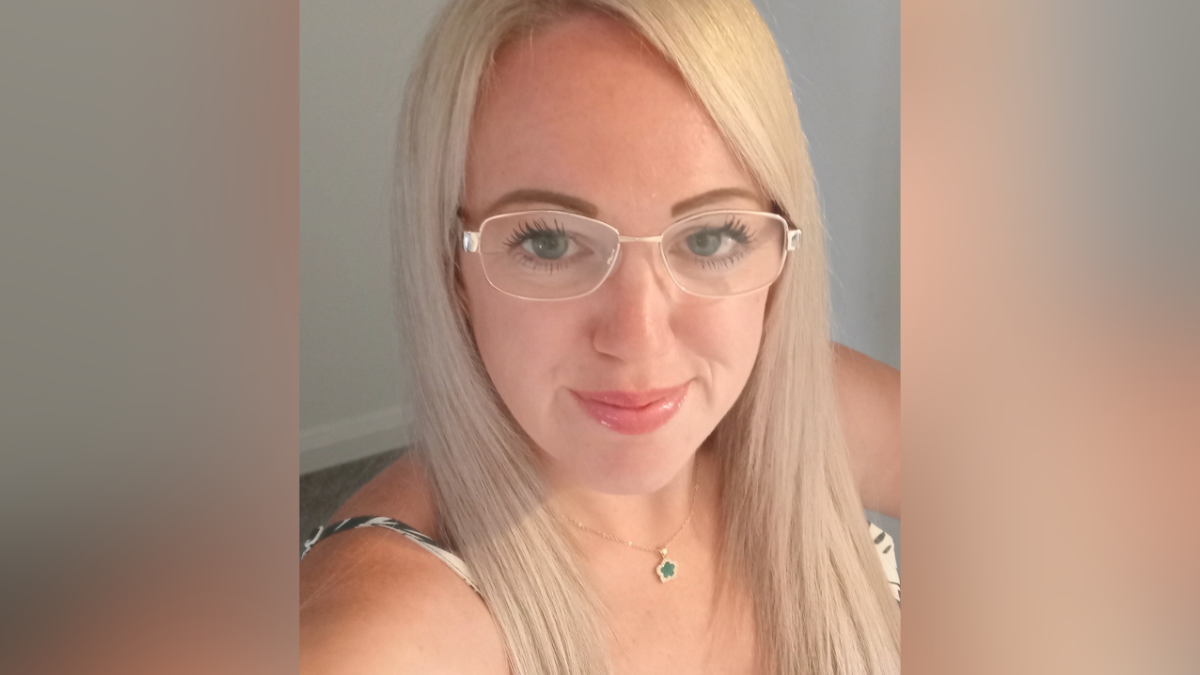
Charlotte Holtum's ex-partner has convictions for stalking her, breaching a non-molestation order, and forcing entry by battery, as well as a historical conviction for abuse, and is currently subject to a suspended sentence. Yet when the protective order keeping her safe was due to expire, Charlotte still had to prove, all over again, that she needed it.
A protection that had to be fought for twice
A non-molestation order was first granted to Charlotte in May 2025, without notice, due to the severity of the abuse and the risk to her safety. In June 2025, the court granted a further sealed order lasting 12 months from when the original order was made, as the respondent had the legal right to contest the original order.
Despite the existing convictions, Charlotte remained responsible for proving to the court that the order should continue when it came up for extension. A restraining order had also been imposed following the abuser's convictions, but it did not cover all of the behaviours the abuser had shown, and it too will need to be extended when its 18 months expires.
"There should be a simpler, victim-centred process," Charlotte said. "Where an offender has been convicted of breaching a non-molestation order or related offences, an application to extend the order should, as a general rule, proceed automatically. Victims should not be forced to repeatedly relive their trauma in court simply to maintain protections that have already been proven necessary."
In May 2026, Charlotte had to reapply for the extension, submit fresh evidence, and attend another hearing. The abuser did not attend court, but an email setting out their reasons for opposing the extension was read aloud and accepted. The court ultimately granted the extension, though some provisions were removed where they overlapped with the restraining order. Charlotte now has both orders in place, providing what she describes as complementary protection.
Reliving the trauma in court
For Charlotte, the process itself was as challenging as the outcome was necessary.
"Applying to extend a non-molestation order is not a simple process," she said. "I had to complete a detailed application form, submit it to the court, provide supporting evidence, and then anxiously wait for a hearing."
"The hearing itself was traumatic. I had to listen as the judge read aloud [the abuser's] statement, despite [them] not attending court. Hearing [their] words triggered my PTSD and heightened my anxiety. Every court hearing takes me back to one of the darkest periods of my life. I find the process overwhelming, and it often leads to panic attacks. Having to openly recount the abuse I suffered and explain why I still needed protection was incredibly distressing."
Charlotte said the judge was initially reluctant to extend the order, and that it was only after she described an incident in which police were unable to act because the behaviour was not specifically covered by the existing order that its necessity became clear.
"The court ultimately granted the extension for a further year, but I had to fight for that protection every step of the way," she said. "No victim should feel as though they are the one on trial simply for asking to remain safe."
What the law says
Non-molestation orders are civil injunctions designed to protect a person and any children from an abusive or harassing partner, ex-partner, or family member. They can prohibit violence, threats, intimidation and contact, and can also require an abuser to stay away from a person's home, workplace or their children's school.
Applicants must complete a witness statement and the relevant court form, and orders are typically granted for six to 12 months, though they can be extended if the risk continues. In urgent cases, a court can grant an order "without notice" to the respondent, with a later "return hearing" so they can present their case. Breaching a non-molestation order is a criminal offence, carrying a penalty of up to five years in prison.
It is this gap – between an abuser already being convicted of breaching an order, and a survivor still being required to justify why it should continue – that Charlotte's campaign is aimed at closing.
A campaign gaining momentum
Charlotte launched her petition, Automatic extension for Non-Molestation order when it is breached, calling on the Government to make extensions automatic where a breach or related conviction has already been proven. At the time of publishing, it had reached 3,591 signatures.
Her ambition goes well beyond the numbers required to trigger a government response or a parliamentary debate. "I believe the law has to change," she said. "My goal is to reach 100,000 signatures and change the law. I will campaign as much as I can."
Charlotte said she has also spoken to various charities who have been supportive of her campaign.
Leeway, an independent charity established in 1974 that supports adults, young people and children experiencing domestic abuse across Norfolk and Suffolk, helping more than 14,000 people a year, offered its perspective on the issue.
"Stories like this are sadly all too common and are reflective of a system that does not fully understand the dynamics of domestic abuse," said Leeway chief executive Jools Ramsey-Palmer. "It should not be down to a survivor to provide evidence when these measures are breached, nor should they feel like they have to justify their need to stay safe."
Ramsey-Palmer said the reform Charlotte is campaigning for would prioritise survivors' safety. "I'm obviously supportive of this proposed reform as it removes the emphasis on survivors having to prove that they need these protections," Ramsey-Palmer said. "It prioritises the safety of survivors, which should be the number one concern in these cases."
Ramsey-Palmer also pointed to wider delays across the family courts as an area in need of reform. "One of the biggest issues remains the delays in cases being heard," Ramsey-Palmer said. "This must change because, the longer that cases go on for, the greater the impact it has on a family's ability to be safe, and move on.
Ramsey-Palmer also welcomed recent changes to the family courts. "There have been a few encouraging developments relating to the family courts in recent months though, particularly with the announcement that there will no longer be an automatic assumption of child contact for both parents. This will ensure that the voice of children is heard, taking into account their thoughts, feelings, and safety."
The bottom line
Charlotte Holtum simply wanted the protection she had already been granted, and had already proven was necessary, to continue without having to relive her trauma to keep it. Her petition is the first step in a campaign she intends to fight all the way to Westminster.
"No victim should be placed in a position where pursuing their own protection feels overwhelming or unattainable," she said.
If you have been affected by domestic abuse, support is available. The National Domestic Abuse Helpline can be reached free and in confidence, 24 hours a day, on 0808 2000 247. Locally, Leeway offers support to survivors of domestic abuse.
Don't forget: If you enjoy our content, please add Ipswich.co.uk as a "preferred source" on Google so you can easily find more of the content you value.
This article cost us ~£108 to produce
It's free for you to read thanks to the generous support of our partners. Please support us by supporting them.
Below the line