
Suffolk council formally threatens legal action over reorganisation plans
Suffolk County Council has sent a pre-action letter to the Government warning it will seek a judicial review unless Ministers withdraw plans to reorganise local government in the county, escalating a dispute that began when the new Reform administration took control earlier this month.

Why it matters: A judicial review could delay or disrupt Suffolk's transition to a new unitary structure, but opposition leaders argue the challenge is costly, legally weak, and politically motivated.
The details: The council's pre-action letter sent to the Secretary of State for Housing, Communities and Local Government, sets out concerns that the Government's local government reorganisation (LGR) decision is unlawful and should be withdrawn.
The council argues that the proposal goes beyond the Secretary of State's legal powers, does not follow the statutory process set out in legislation, and departs from the Government's own published criteria without clear justification.
The Secretary of State has until 12 June to respond. If a satisfactory reply is not received, the council says it will consider initiating formal judicial review proceedings.
The council says that the pre-action letter is legally privileged and will not be published – a claim that has been met with much criticism.
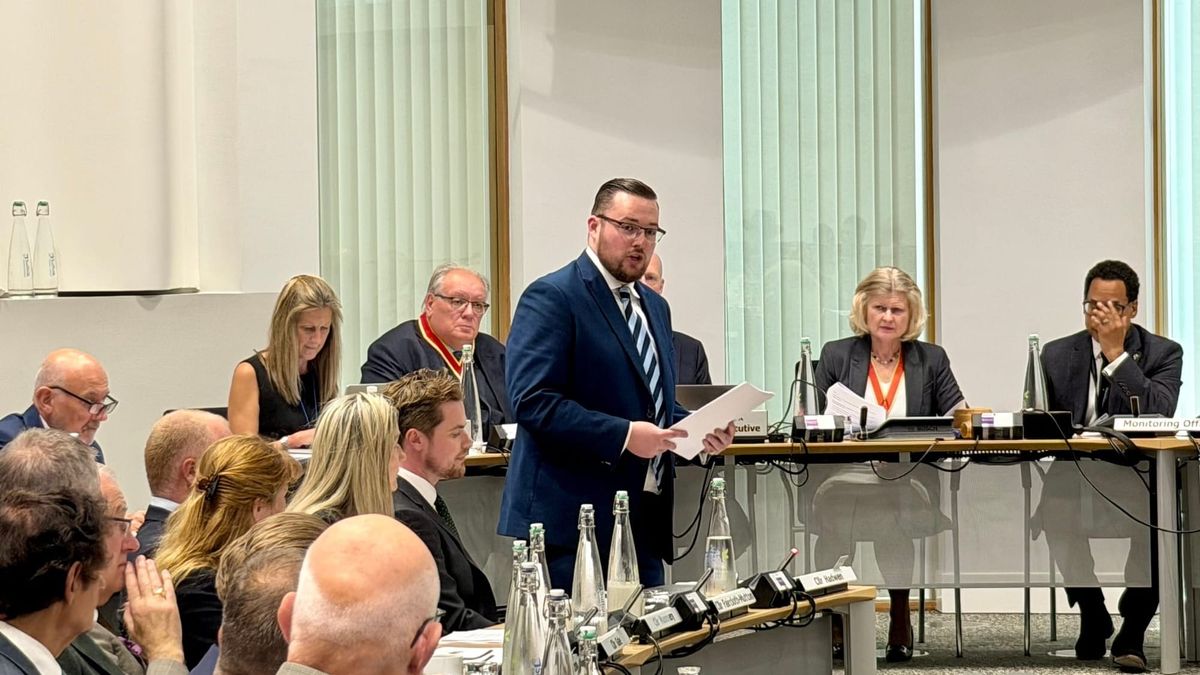
What they're saying: Councillor Michael Hadwen, leader of Suffolk County Council, said: "Suffolk cannot be forced into a costly and chaotic reorganisation on the basis of a flawed process.
"The decision to take this action is about protecting Suffolk from expensive and unnecessary upheaval.
"Residents elected us less than a month ago to reform local government in Suffolk. We were clear before the election that we do not support reckless local government reorganisation by the Government, and that we would take all possible steps to protect residents and taxpayers' money. That's what we're doing."
He added: "We are therefore calling on the Government to listen, reconsider its approach, and abandon its plans. Any decision about the future of Suffolk must be made properly and transparently. We believe this proposal fails on these key tests."
The other side: The Green group, who form the official opposition at Suffolk County Council, criticised the decision. Andrew Stringer, Leader of the Greens and their spokesperson for Local Government and Devolution, said:
"Our group is deeply concerned that the Reform UK administration have taken this decision without a vote or discussion.
"In the previous administrative term, we had several opportunities to put residents' views across. I feel sure the people of Suffolk are very concerned that an unknown quantity of public money is being used to challenge government legislation. We are now less than 10 months away from the elections to the new unitary authorities, and Reform UK are using an undisclosed amount of public money to potentially frustrate this election.
"I find it ironic that Reform made a great deal during their election campaign about giving the public a chance to vote, yet as soon as they gain power, they try to shut down future elections, where they can be challenged. This potentially costly move has been made with no vote or discussion at the council."
Cllr Richard Rout, leader of the Suffolk Conservative Group, said:
“This judicial review seems spurious at best, and hiding behind legal privilege is weak. Pre-action protocol letters are not privileged in the way that claim implies. They’re a formal, procedural step in contemplated litigation, not protected legal advice. The proof is next door in Essex, where the County Council published its pre-action letter in full, setting out six detailed legal grounds, the case law it relies on, and the specific failures it alleges.
“If Suffolk had a comparable case, there would be no reason not to do the same. Instead, residents are being asked to take it on trust that strong grounds exist, while the actual document, and any genuine scrutiny of whether the challenge has merit, is kept hidden behind a privilege claim that does not stand up. The natural inference is that there is little in the letter that would survive being read in daylight.
“We remain clear that the government made the wrong choice splitting Suffolk into three but throwing good money after bad, particularly when the public consultation seemed to favour three councils, is not the answer. Council staff warned us that there were likely no grounds for challenge prior to the election, and this bland statement seems to confirm that.”
Cllr Martin Cook, leader of the Labour Group on Suffolk County Council said: "While calling for transparency, Reform UK are unwilling to share the contents of their letter. Far from protecting taxpayers’ money they are about to embark on a complex legal process with costs in the region of £100k and want to lock us into an antiquated system of local government that costs more and often fails Ipswich.
"Public consultation showed that the Government's plan to create three new all-purpose councils for Suffolk is popular with residents because it keeps decision making local and makes investment in vital projects like the Ipswich Northern Bypass, which Suffolk County Council have consistently blocked, more likely.”
For context: The Government announced in March 2026 that it was proceeding with LGR in Suffolk, a decision that will see the county's existing two-tier structure replaced with new unitary authorities. Both the One Suffolk and Power of Three proposals for local government reform projected significant savings from the changes.
A judicial review is a legal process in which a judge examines the lawfulness of a decision or action made by a public body. It focuses strictly on how a decision was made — not whether it was the right decision. To succeed, a challenge must demonstrate that the decision was illegal, irrational, or procedurally flawed.
The bigger picture: Suffolk County Council is not the first to threaten legal action over LGR. In Essex, the incoming Reform UK leader of the county council, Peter Harris, wrote to Communities Secretary Steve Reed on Wednesday, 14 May, describing the Government's proposals as "ill-thought, expensive and purely ideological in nature," and said he had instructed lawyers to prepare a pre-action protocol letter. In March, the Government backed a model of five all-purpose councils in Essex to replace the current structure of 15 councils.
What's next: Ministers will need to pass legislation in Parliament later this year to abolish and replace the existing councils. The Secretary of State has until 12 June to respond to Suffolk County Council's pre-action letter. If the council proceeds with a formal claim, even an ultimately unsuccessful judicial review could — according to legal analysis of similar cases — have a "freezing" effect on LGR progress, seriously threatening delivery on the current timetable.
The bottom line: Suffolk County Council has moved from rhetoric to action, giving the Government until 12 June to back down or face a judicial review. With opposition leaders across parties united in scepticism about the legal merits of the challenge, the coming weeks will test whether this is a credible constitutional challenge or, as critics suggest, a political manoeuvre aimed at slowing the clock on reorganisation.
Don't forget: If you enjoy our content, please add Ipswich.co.uk as a "preferred source" on Google so you can easily find more of the content you value.
This article cost us ~£27 to produce
It's free for you to read thanks to the generous support of our partners. Please support us by supporting them.
Below the line