
Suffolk traffic hits record high despite £12m cycling push
Suffolk County Council has spent more than £12 million on walking and cycling infrastructure over the past five years, yet traffic on the county's roads has hit an all-time high – more than any year since records began in 1993.

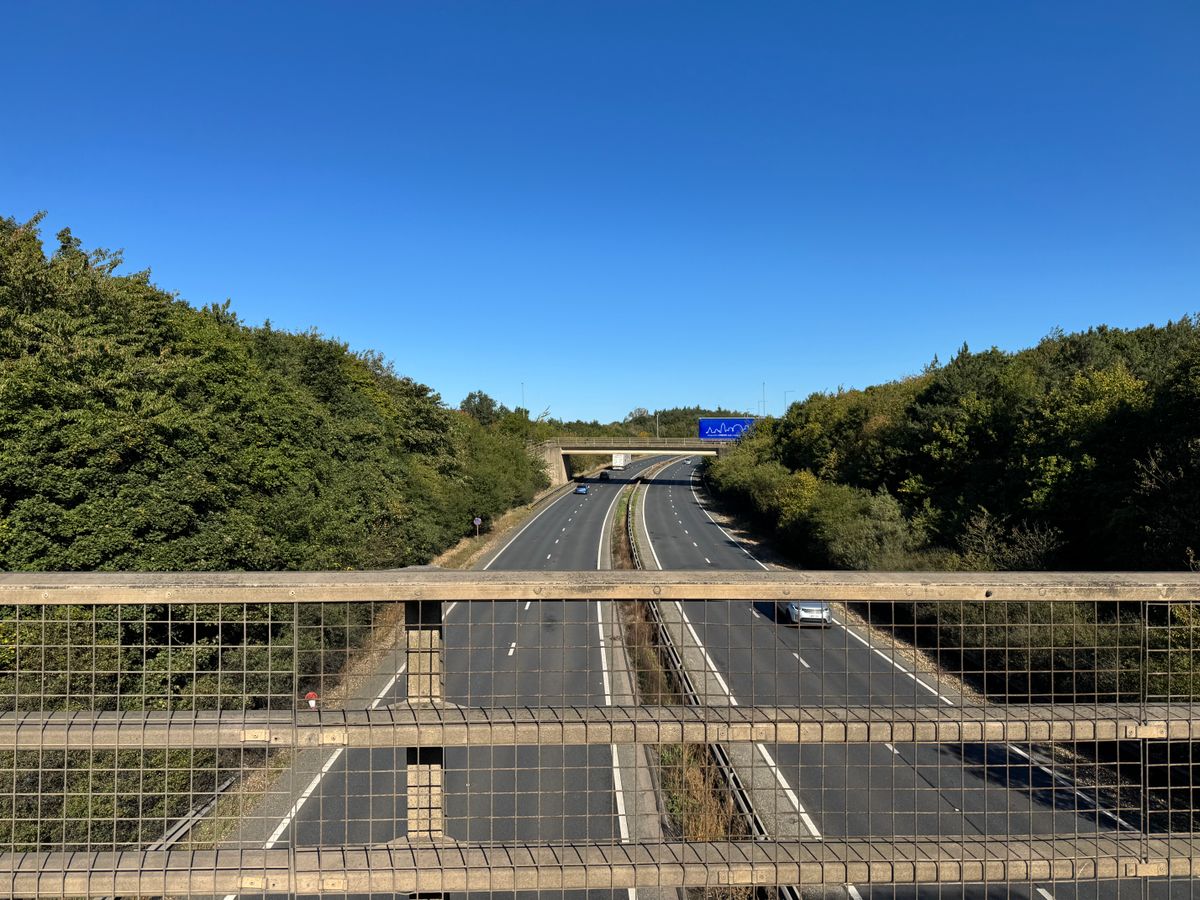
Department for Transport data shows drivers covered 4.18 billion miles in 2024, matching the pre-pandemic peak and marking the busiest year since records began in 1993. That is up from 4.11 billion miles in 2023.
Why it matters: Across Great Britain, traffic on council-maintained roads dropped to 293 billion miles in 2024, down from 299 billion in 2023 and well below the 313 billion recorded in 2019. Suffolk is bucking the national trend.
For Ipswich residents, the record traffic likely means more congestion on key routes like Nacton Road and increased pressure on bus services despite investment in bus lanes and signal prioritisation.
The investment: The £12 million in active travel funding over five years equates to roughly £2.4 million per year across the county.
The draft Ipswich Local Cycling and Walking Infrastructure Plan prioritises new routes, including Upper Brook Street, Bridge Street, Nacton Road, and hospital-to-Waterfront links, as part of the council's Local Transport Plan 2025–2040.
Whether £2.4 million per year is sufficient to create the connected networks cycling advocates say are essential – or to compete with decades of car-oriented infrastructure investment – remains an open question.
Suffolk County Council (SCC) points to population growth and rural development as key factors driving increased traffic.
"The population of Suffolk is increasing—particularly development in rural areas which can generate vehicular trips, for example Woolpit and Thurston," a council spokesperson said.
"A significant amount of behavioural change work goes into working with schools around active travel as this helps to create significant long-term benefits in terms of reduced health spend, but there is clearly a longer lead time for this to have an effect."
National trends suggest other factors may be at play—while traffic has fallen across Britain, Suffolk's rise could reflect economic recovery, cost-of-living pressures making car ownership essential, or post-pandemic travel patterns that have returned to pre-2020 norms.
Measuring success: The council says it tracks progress through metrics beyond overall traffic volume, including almost 4,000 year five and six pupils undergoing Bikeability training each year and monitoring around 50 schools through annual travel behaviour surveys.
For specific schemes, the council monitors traffic counts, cycle activity, pedestrian footfall, air quality, and collision data depending on objectives.
However, these measures focus on individual interventions rather than countywide modal shift – and the headline figure of 4.18 billion miles suggests car dependency remains entrenched.
The rural reality: Rod Dennis, RAC senior policy officer, said 81% of drivers would struggle to adjust to life without their vehicle.
"This is especially true for those in rural areas where public transport provision is limited or non-existent," he said.
"The more cars there are on the roads, the greater the impact on air quality, road conditions and traffic. While the current Government is very focused on improving public transport across the board, we expect the car will remain essential to many people's lives for years to come."
Much of Suffolk is rural, with villages and market towns where car ownership is often a necessity rather than a choice, particularly for accessing employment, healthcare, and education.
The council acknowledges this reality but argues the focus should be on urban journeys that could shift to sustainable transport.
"In urban areas such as Ipswich there is a significant proportion of existing journeys which could be made by these more sustainable means with just small changes to people's routines," a spokesperson said.
"By enabling people to change these journeys, that frees up road space for those who don't have alternatives whilst reducing pollution for everyone's benefit."
However, the data does not break down urban vs rural mileage, making it impossible to verify whether town-centre trips are shifting to cycling while rural journeys drive overall growth—or whether car dependency remains high across the board.
Ipswich CAN and Cycle Ipswich, local cycling advocacy groups, did not respond to requests for comment.
Managing growth vs reducing traffic: Asked whether significant modal shift is realistic given Suffolk's geography, the council suggested the goal is as much about managing growth as reducing overall traffic.
"There are many journeys in our urban areas and market towns that could move to more sustainable means," the spokesperson said.
"Looking at some of the more rural areas, of course there is a need for independent travel and SCC looks to complement this by promoting lift-sharing and with the launch of car clubs, allowing people to access a vehicle only when they need it."
The council also points to the countywide rollout of electric vehicle charging points. Its acknowledgment that electric vehicles "will inevitably be part of the transport mix in Suffolk over the coming years" suggests a tacit acceptance that significant modal shift away from cars may not be achievable, with the focus instead on reducing emissions from vehicles that remain on the road.
Air quality: Ipswich has three Air Quality Management Areas where nitrogen dioxide levels exceed national limits.
The council said key priorities include active travel infrastructure upgrades, bus priority measures such as bus lanes and signal prioritisation, and expansion of park-and-ride services.
However, a spokesperson said the council has shifted focus to poor air quality from home burning, which it now considers a bigger challenge than transport emissions.
What's next: The Government has said it is committed to delivering a new road safety strategy "to reduce antisocial behaviour, injuries and tragic deaths on our roads" – the first in over a decade.
A Department for Transport spokesperson said: "The safety of all road users is a top priority for the Government, which is why we are committed to delivering a new road safety strategy and will set out next steps in due course."
The bottom line: Despite more than £12 million in investment over five years, car dependency in Suffolk remains high, with roads busier than ever. Whether this reflects insufficient investment, the challenge of changing decades-old travel patterns, the reality that cycling infrastructure alone cannot compete with the convenience of cars in a largely rural county – or a combination of all three – remains an open question as Suffolk plans its transport strategy to 2040.
This article cost us ~£47 to produce
It's free for you to read thanks to the generous support of our partners.
Below the line