Why it matters: The symptom, known clinically as hypomimia or facial masking, reduces the tiny movements that make up everyday expression – meaning people may feel fully engaged or amused but appear blank, serious or disengaged. The misunderstanding can lead to social isolation and eroded confidence, making everyday interactions exhausting for both patients and their families.
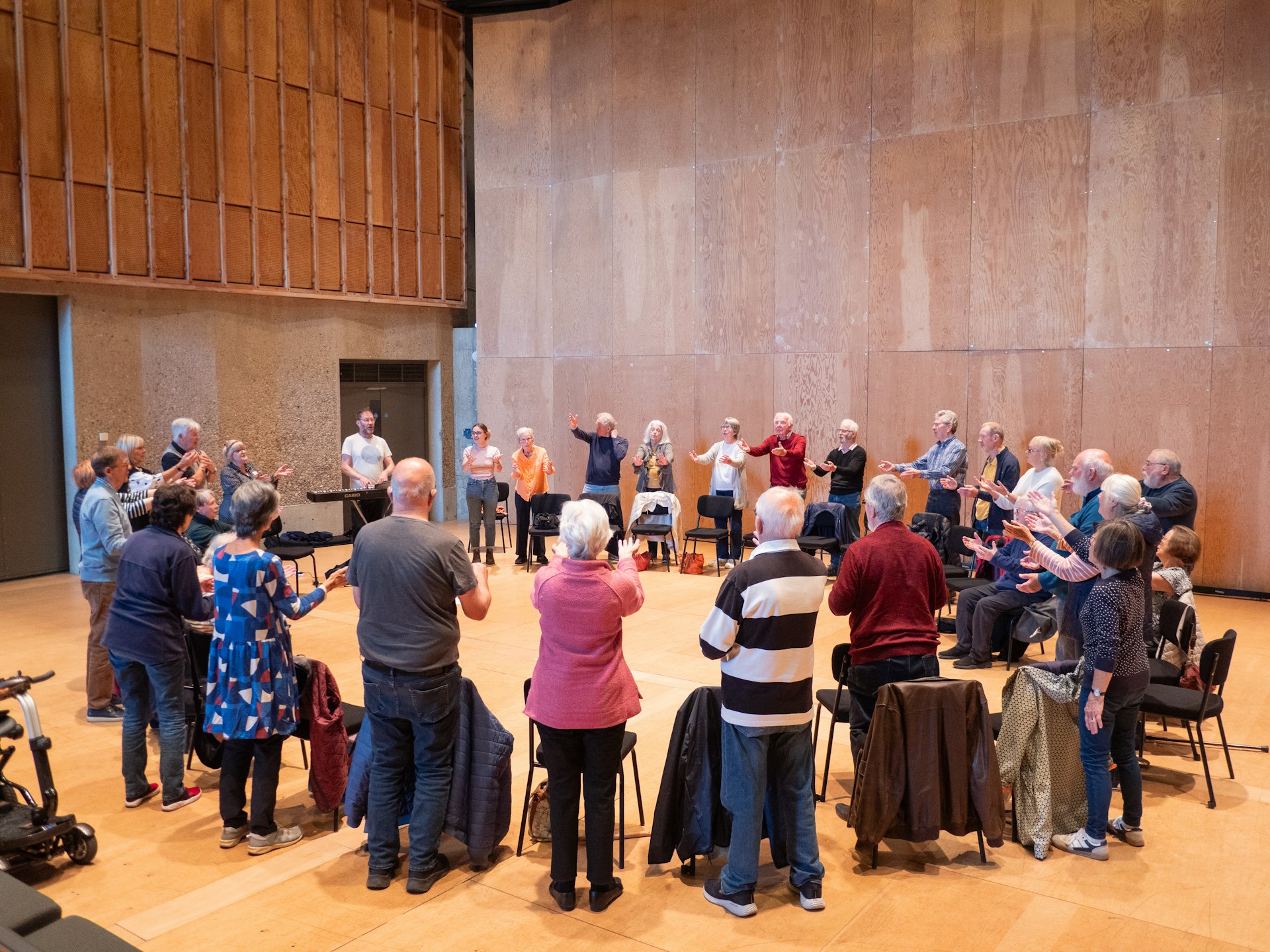
The details: The 12-week pilot will involve 40 people living with Parkinson's. Twenty will join weekly two-hour East Suffolk Skylarks singing sessions at Kesgrave Community Centre and Snape Maltings, while 20 control participants will attend three half-hour assessments at the University of Suffolk. Researchers will compare changes in facial mobility and self-confidence between the groups.
The big picture: Singing programmes for people with Parkinson's exist nationally and report benefits, but none have been formally evaluated as clinical rehabilitation tools for facial masking. This pilot aims to generate that evidence base. If successful, the findings could support larger-scale funding and make the case for NHS adoption.
For context: The project has full NHS ethical approval and is funded by Colchester & Ipswich Hospitals Charity. Dr Abigail Webb, clinical research fellow at the University of Suffolk's Institute of Health and Wellbeing, said: "By delivering a fun, non-clinical intervention that can help address the symptoms of facial hypomimia, we will measure whether facial exercises in these sessions influence facial mobility and self-confidence." The findings will provide data to support future research applications.
The study brings together the University of Suffolk, University of Essex, East Suffolk and North Essex NHS Foundation Trust (ESNEFT) and Britten Pears Arts, which runs the established East Suffolk Skylarks programme using techniques based on years of research to support people with Parkinson's through singing. Sessions will use exaggerated facial movements typical of musical theatre performance, which researchers believe could strengthen facial muscles and improve circulation.
What they're saying: Sheeba Mason, chief investigator for the study and Parkinson's advanced clinical practitioner at Ipswich Hospital, said facial masking "is often misread resulting in social stigmatisation or exclusion. This causes significant impact on an individual's social wellbeing and self-confidence. There is limited research in this area so we hope the findings of this pilot project will demonstrate feasibility and the evidence required to power future research."
Dr Webb added: "Many local and national incentives demonstrate the impact of singing on the physical and psychological wellbeing of people living with Parkinson's, but no study to date has evaluated them for their efficacy as a rehabilitative tool to improve facial mobility."
Dr Sebastian Korb from the University of Essex's department of psychology said the project "constitutes an initial step in the quest to better understand the role of facial mobility in emotion."
Caro Barnfield, director of the music programme at Britten Pears Arts, said: "The positive impact of singing in a variety of circumstances is well proven, and we are delighted to be part of this next phase of research that will serve people in our region and beyond."
Mandy Jordan, associate director of charity at ESNEFT, said Colchester & Ipswich Hospitals Charity was "proud to fund this research study. Every breakthrough brings hope to families living with Parkinson's in our community."
What's next: People living with Parkinson's in East Suffolk can participate in either the weekly singing programme or the control group assessment sessions. The first singing session begins on Thursday, 8 January 2026. Contact Dr Webb on 01473 338162 or a.webb6@uos.ac.uk, or visit the Britten Pears Arts for programme information.
The bottom line: After years of limited research into a symptom affecting the vast majority of Parkinson's patients, this Suffolk-led pilot represents an early step in what could become a new care pathway. Researchers will need additional funding to test the approach with larger groups if initial results prove promising.