Why it matters: With the new mayor set to control £37.4m annually from the government over 30 years, Suffolk's business community is positioning itself early to influence spending decisions on local infrastructure and services.
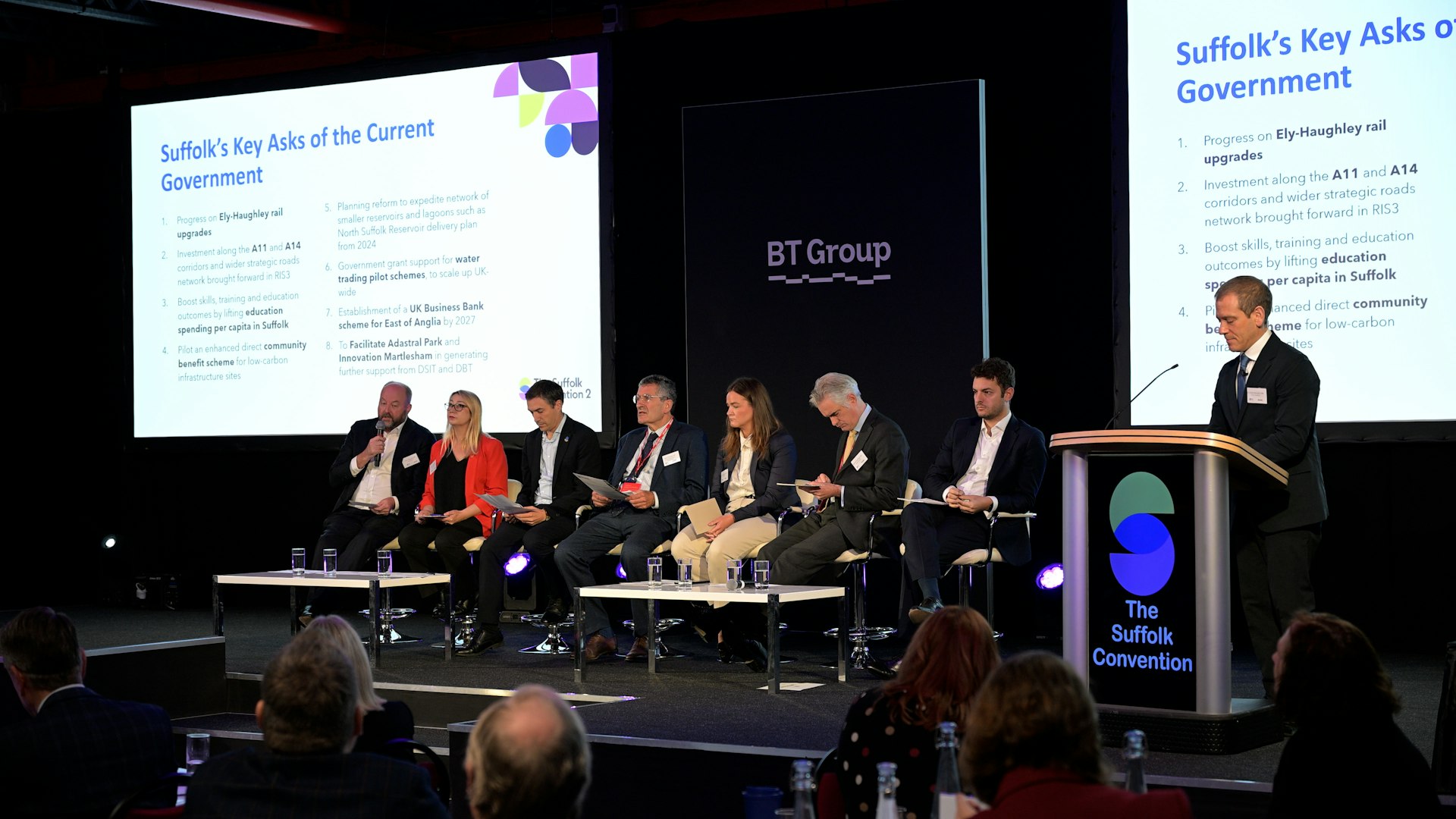
The details: At the second Suffolk Convention summit at BT's Martlesham research centre, seven of the county's eight MPs gave accounts of what they had done to advance economic asks identified at last year's inaugural meeting, facing searching questions from delegates and facilitator Dr Adam Marshall, a former director-general of the British Chambers of Commerce.
Delegates then broke into groups to outline what projects they hoped the new mayor would help support and fund once elected in May 2026.
The Suffolk Chamber of Commerce is collating the feedback and will produce a report later this year to evaluate mayoral candidates' election pledges.
The bigger picture: The summit heard from Mark Thurston, chief executive of Anglian Water, about the challenges and opportunities for the eastern region in persuading Westminster to fund infrastructure and skills projects through a more joined-up approach to lobbying.
Edward Colman, head of communications at the Cambridgeshire & Peterborough Combined Mayoral Authority, shared how that region improved cooperation between businesses and the public sector to sharpen their advocacy to ministers and senior civil servants.
What they're saying: John Dugmore, Suffolk Chamber's chief executive, said: "The delegates took advantage of this opportunity to explore whether and how we wanted to work more effectively than ever before to influence Government and help set out the business expectations of the forthcoming Norfolk and Suffolk Mayor."
Paul Simon, head of public affairs at Suffolk Chamber, said: "This second summit was about both holding our MPs to account and mapping out how the county's business and political leadership hopes to work with the new Mayor for Norfolk and Suffolk and his/her team."
Catherine Johnson, Suffolk Chamber's president, said: "It was also very heartening to see such a large number of delegates so wholeheartedly engaged in shaping Suffolk's ongoing growth ambitions."
For context: The summit also received an update on the Suffolk Coordination Office, managed by the Suffolk Chamber and funded by the Suffolk Business Board, which helps the county deliver clearer messages to Westminster about how its economy can contribute to national prosperity and growth.
Economic priorities from last year's Suffolk Convention include the Ely-Haughley rail upgrades, investment along the A11 and A14 corridors, lifting education spending per capita in Suffolk to match the national average, and establishing a UK Business Bank scheme for East Anglia by 2027.
The bottom line: Suffolk businesses are working to ensure the county's economic priorities shape the agenda of the new Norfolk and Suffolk mayor before the role even exists, holding local MPs accountable while preparing to influence regional funding decisions.