
Rough sleeping up 38% as council seeks new contracts to tackle 'most harmful form of homelessness'
Ipswich has seen a 38% rise in people sleeping rough each month compared to last year, prompting the council to procure new specialist services aimed at ending rough sleeping in the town.

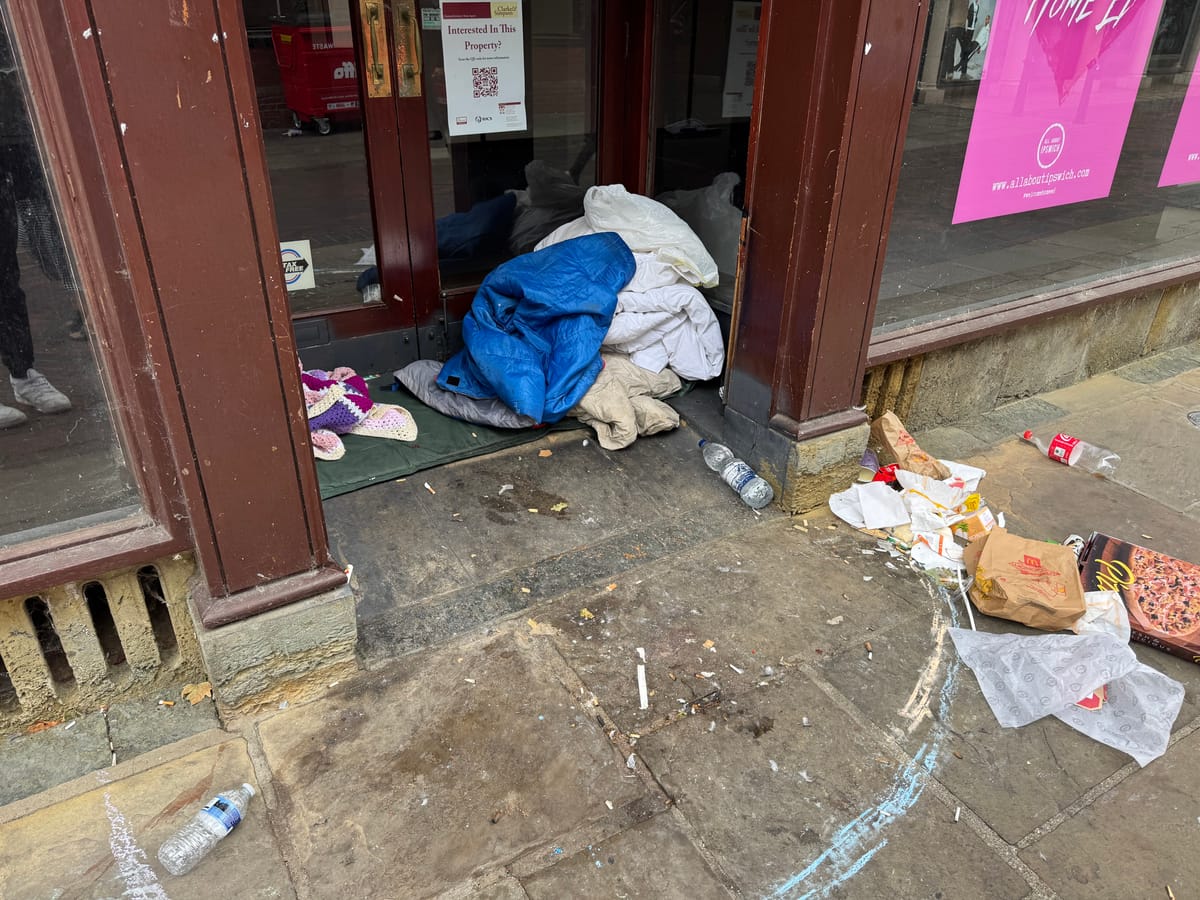
Why it matters: Rough sleeping is considered the most harmful form of homelessness, often leading to severe health challenges, increased NHS use, interaction with the criminal justice system, and significantly lower life expectancy. Between April and September 2025, 122 individuals were found rough sleeping in Ipswich.
The details: Ipswich Borough Council's Executive will meet on Tuesday, 10 February, to consider plans to procure new rough sleeper services to ensure support continues beyond March 2026, when current contracts are due to end.
- The council says an average of 26 individuals were found bedded down each month in 2024/25, but this has increased to 36 each month so far in 2025/26.
- The national rough sleeper count also showed an increase from five in 2023 to 10 in 2024 on the single night snapshot.
- The renewed provision would include emergency beds, short-term emergency accommodation, rough sleeper outreach, a prevention navigator, and a specialist mental health practitioner.
The bigger picture: Since 2020, Ipswich Borough Council says it has secured over £3.6 million in Rough Sleeper Initiative funding from the Ministry of Housing, Communities and Local Government. For 2026/27, the council has been awarded £2,186,947 in combined homelessness prevention, rough sleeper, and domestic abuse grants.
The council says in 2024/25, 45.5% of households in Ipswich owed a prevention duty were single male adults and 22.5% single female adults, significantly higher than the national average of 29.7% and 20.6% respectively.
What they're saying: Cllr Alasdair Ross, Portfolio Holder for Housing, said: "Rough sleeping is the most harmful form of homelessness, and in Ipswich we've seen a 38% rise in people bedding down each month compared to last year."
"Between April and September 2025, 122 individuals were found rough sleeping. This is why we're acting now to procure specialist services that provide safe accommodation and support," he added.
"Since 2020, Ipswich Borough Council has secured over £3.6 million in Rough Sleeper Initiative funding, and we will continue to deliver value for money and life-changing support for those in greatest need."
Progress so far: Since the council's Homelessness and Rough Sleeping Strategy was approved in January 2025, the authority says it has achieved significant progress, including 52 people who have moved on from rough sleeper beds since January 2025, additional temporary accommodation for those at high risk, and stronger joint working with Adult Care Services.
The council also says it has implemented the Ipswich Supported Accommodation Pathway, which provides accommodation with support for those in need, and has achieved its target of creating 28 Housing First tenancies.
What's next: The Executive will consider authorising the procurement of rough sleeper services, with contracts set to be awarded for one year from April 2026, with options to extend for further 12-month periods up to a maximum of five years, subject to contractors meeting key performance indicators and future funding availability.
The proposed contracts would cover six service areas, including supported beds for rough sleepers, emergency beds offering an off-the-street provision, rough sleeper outreach covering 56 hours per week, a prevention navigator, and a mental health practitioner.
The bottom line: With rough sleeping on the rise and the harmful impacts on vulnerable residents, the council says it must continue specialist support services that have already helped dozens of people move away from the streets and into permanent homes.
This article cost us ~£27 to produce
It's free for you to read thanks to the generous support of our partners.
Below the line