Why it matters: The petition has attracted 8,693 signatures locally as of 6 November, with 4,521 from the Ipswich constituency (3.9%) and 4,172 from Central Suffolk and North Ipswich (4.2%), reflecting significant local opposition to the proposal.
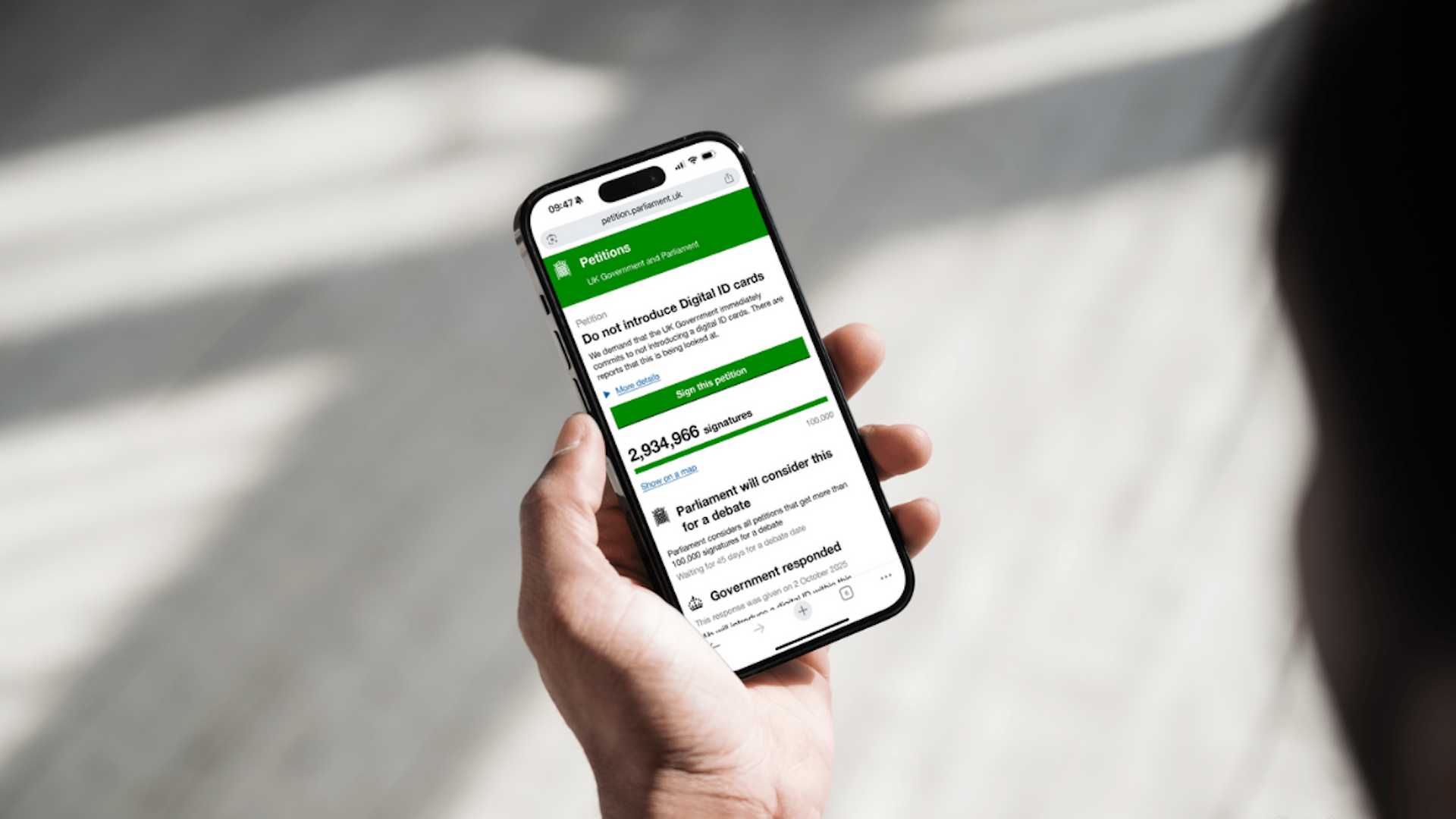
The big picture: The petition forms part of a national campaign that has gathered 2,934,956 signatures across the UK, making it one of the most popular parliamentary petitions currently active. With well over the 100,000 signatures required, the issue is eligible for parliamentary debate.
What the Government says: The Government has responded to the petition, stating it will introduce a digital ID system "to help tackle illegal migration, make accessing government services easier, and enable wider efficiencies."
The Government said the new system will be a digital identity rather than a physical card, available for free to all UK citizens and legal residents aged 16 and over. It will not be compulsory to obtain a digital ID, but it will be mandatory for some applications.
By the end of this Parliament, employers will have to check the new digital ID when conducting right to work checks. The Government said this will help combat criminal gangs who promise access to the UK labour market and profit from dangerous and illegal channel crossings.
The Government emphasised that it will not be a criminal offence to not hold a digital ID and police will not be able to demand to see a digital ID as part of a stop and search.
How it would work: The system will build on GOV.UK One Login and the GOV.UK Wallet, allowing people to access government services without needing to remember multiple logins or provide physical documents.
The Government said privacy and security will be central to the programme, with the system designed in accordance with the highest security standards to protect against cyber-attacks. Digital credentials will be more secure than physical documents, which can be lost, copied or forged, according to the Government.
What's next: The Government will launch a public consultation in the coming weeks and work with employers, trade unions, civil society groups and other stakeholders to co-design the scheme. Following consultation, it will seek to bring forward legislation to underpin the system.
For context: British citizens and UK residents can create parliamentary petitions online, with only citizens and residents able to sign using a valid UK postcode and verified email address. The Government must respond to petitions that reach 10,000 signatures nationally. When petitions reach 100,000 signatures, they are considered for parliamentary debate, though MPs can debate issues before reaching this threshold. Petitions with fewer than 25 signatures are excluded from published data.
The bottom line: Despite the Government's assurances about privacy and voluntary adoption, opposition to digital ID cards represents one of the strongest expressions of public opinion currently recorded through the parliamentary petition system in Ipswich and the surrounding areas, with nearly 9,000 local signatures contributing to a petition of almost three million nationally.