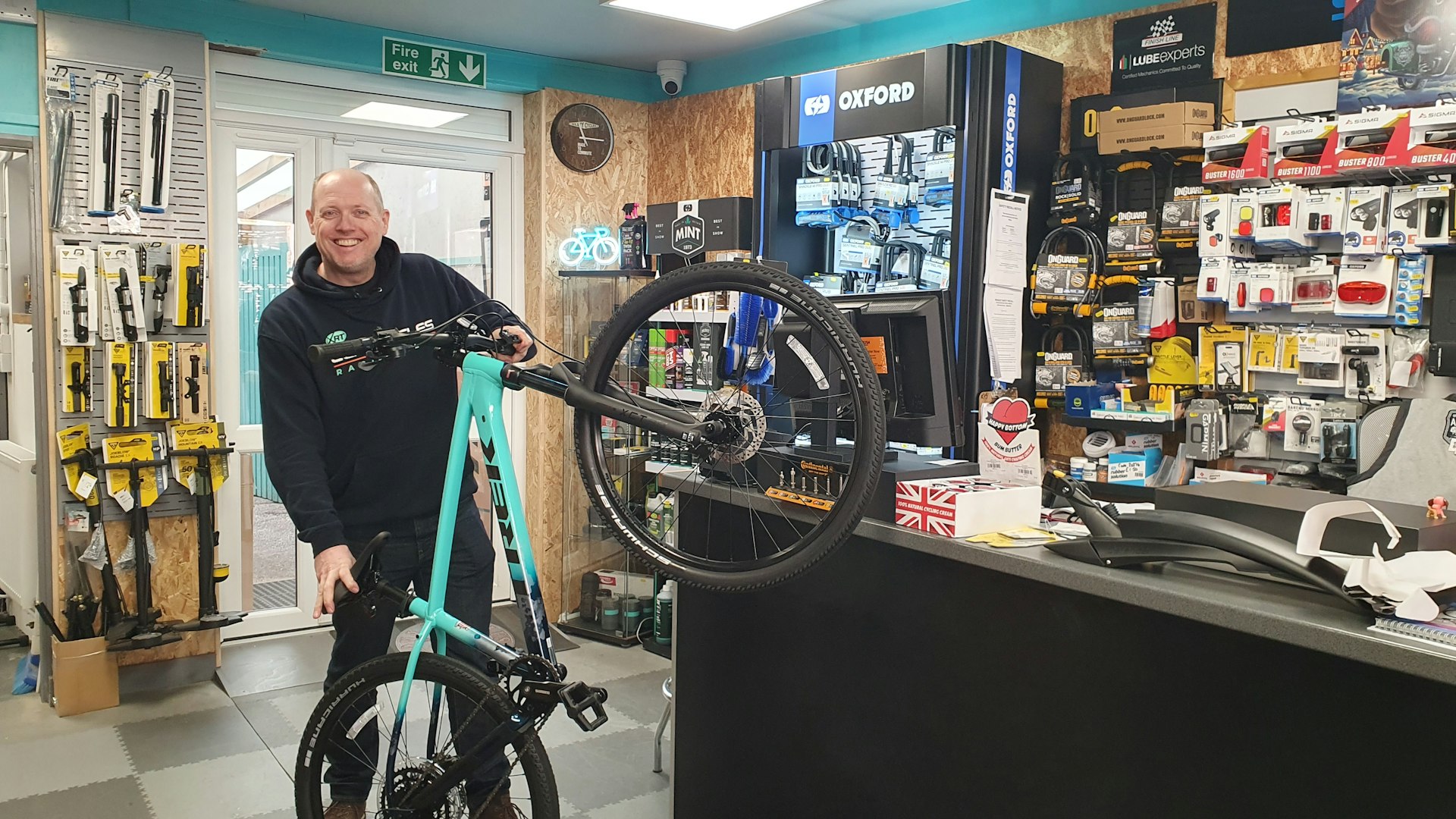
"We wanted to move the doorway so that customers could come in the back, but feel they're coming into the shop rather than into the workshop," Steve explains. "It might sound like a small thing, but actually it makes a big difference."
During our conversation, Steve breaks off repeatedly. Delivery drivers need signatures. Regulars wander in, checking repair timescales. Former Ipswich MP Chris Mole arrives with "two and a half" issues with his bike, including some locking problems. Steve's diagnosis: it might be terminal.
Through it all, Steve remains serenely unflustered. If you swap notes of beer for fumes of warm machine oil, it could be the Ipswich version of Cheers, where everybody knows your name – and gear preference.
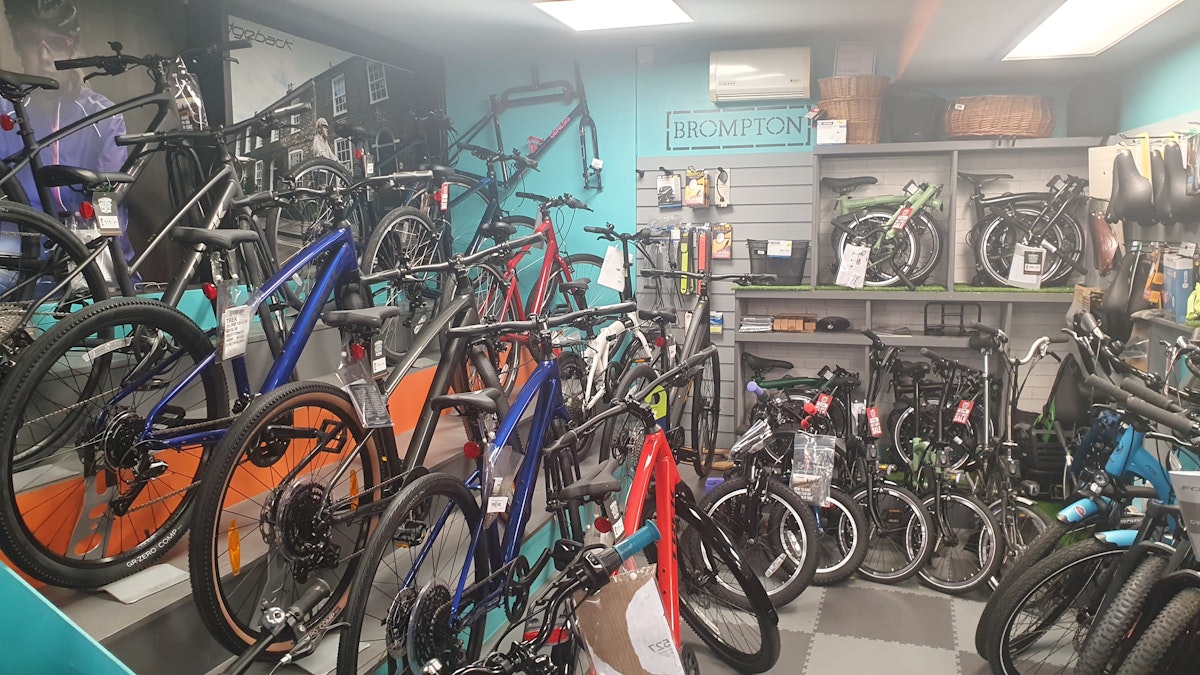
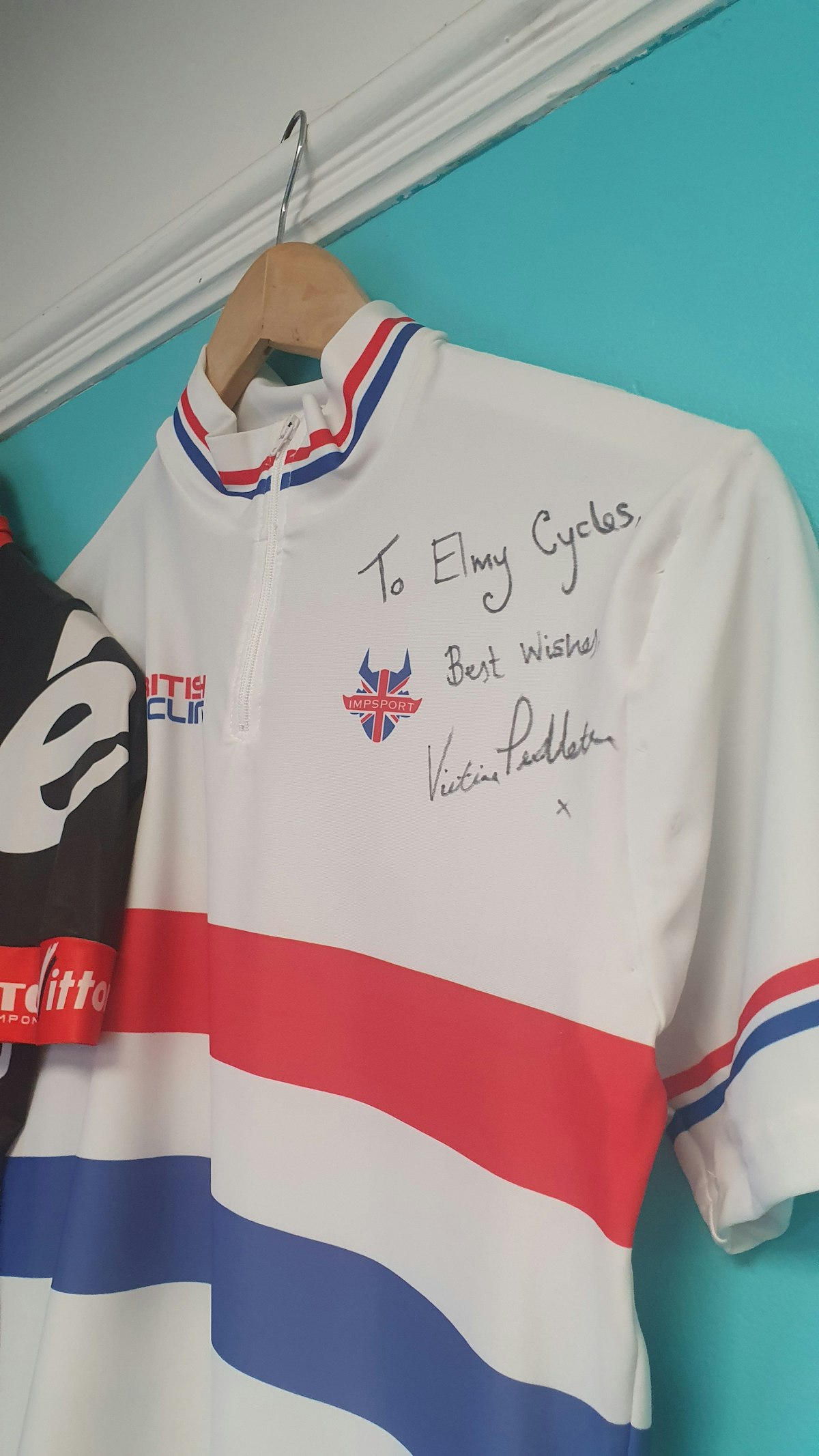
Two floors of tantalisingly glossy bikes line the walls and cover the shop floor, from Trek and Ridley to Dolan and Raleigh. Upstairs, a 1991 Greg LeMond Billabong and a framed, signed shirt by Team GB Olympian Victoria Pendleton serve as reminders that Elmy Cycles operates at every level of the sport.
"A bicycle is an incredible product," Steve insists. "It crosses all social and economic boundaries. It can just be a person trying to get to work who doesn't drive, to somebody looking for a luxury sports item, to somebody who wants to get fit."
The pandemic proved the point. With public transport feared and exercise rationed, the bicycle "popped up again as a solution," Steve notes.
The grant that kept giving
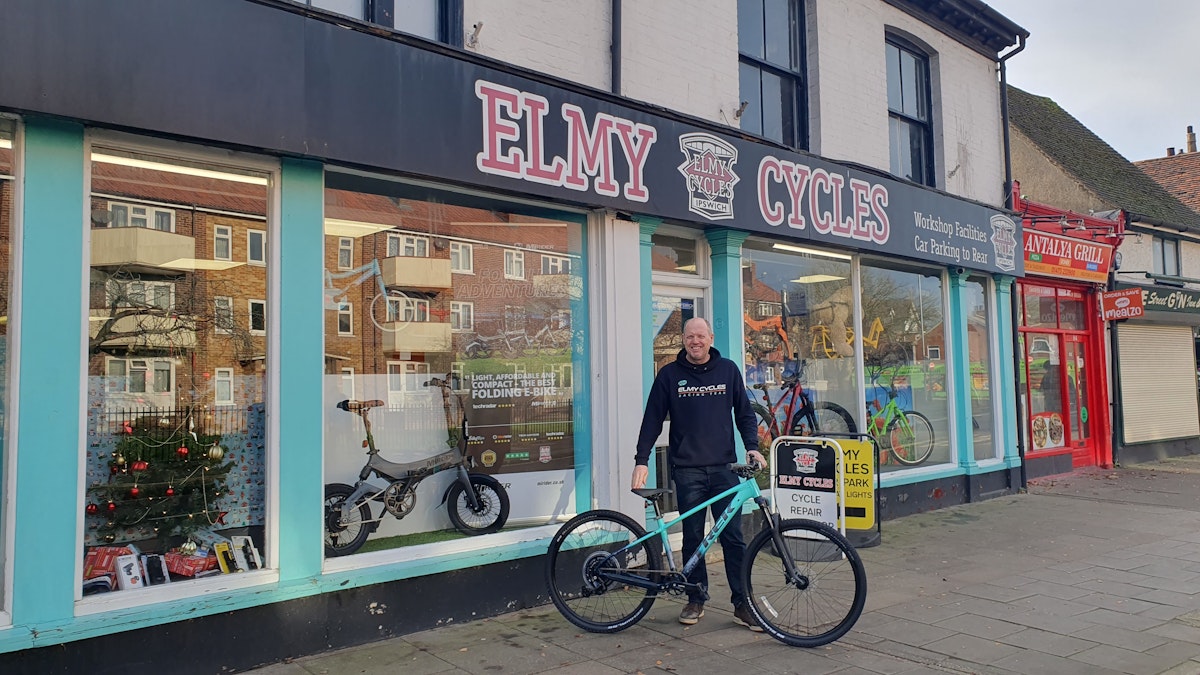
The solution to Steve's rear entrance challenge came via a £10,000 investment made possible by a £5,000 match-funded grant from Ipswich Borough Council's Town Fund scheme. For Steve, who has run Elmy Cycles for more than 30 years, one thing was non-negotiable: every penny would stay in Ipswich.
"The council gave us a grant, we found a local company to fit the new windows and doors, and we gave the money straight to them," Steve says.
But beyond the economics, the grant meant something else to Steve.
"Even a small contribution makes us feel like someone's got your back," he says. "Someone's trying to help you out, and you're not doing it all alone."
Steve had to give himself what he calls "a talking to" before applying. "We don't naturally look to grants," he explains, "but actually that money will just go somewhere else. I think we can probably spend it better here in Ipswich than central government will."
From apprentice to owner
Elmy Cycles started at the corner of St Helens Street in 1922, then moved to its current premises about 12 years ago.
Steve worked directly for Mr Elmy – the son of founder Harry Elmy – and now runs the business with Joanne Newstead, a European World Masters cycling medallist who specialises in bike fitting. In his early days, Steve even met Harry, who would occasionally visit.
"He came in because he was proud that the shop was still here serving the people of Ipswich," Steve recalls.
In Harry's era, a typical bicycle cost about a month's wages. Ninety per cent were sold on hire purchase using a small brown ledger book behind the counter – a system that relied on trust and the British public's deep reluctance to disappoint a shopkeeper.
Honouring that heritage, Steve and Joanne had one clear goal: reach the 100-year milestone. "We had a real desire to make sure we got to our 100th anniversary," Steve says. "And I'm really pleased that we've sailed past that and are still growing."
Would Harry still recognise the shop now? "I think the technology would surprise them, but actually, fundamentally, they'd still recognise it as a bicycle shop," Steve says. "They would probably be amazed by the fact that I can connect a bicycle up to a mobile phone and update the software on its electric gear system."
A steep challenge: online regulation
Last century, the main competition was the bike shop up the road. Now, it is social media, where bicycles can be purchased from companies that may or may not exist.
"Competition keeps us on our toes," Steve says. "Where we struggle is where we don't have a level playing field."
When a customer buys from Elmy Cycles, the bike arrives completely assembled, safe, and backed by proper standards. If anything goes wrong, they bring it straight back. Online purchases are different. "You're never going to send it back. You're never going to get it repaired. You don't really know what it is you're buying," Steve says.
The challenge is acute with younger customers who buy from social media ads without knowing which company they're dealing with. "We can't expect people to pay more just because we're nice people," Steve says. "We have to show them that there is a difference."
His hope is that the government will eventually regulate online marketplaces more strictly.
"Eyes and ears of the high street"
Beyond bicycles, the team repairs wheelchairs and mobility scooters. The shop includes Hayden, an apprentice continuing the tradition Steve started as a teenager. And it is in these small acts – the fixes, the favours, the quiet kindnesses – that the older idea of the shopkeeper still flickers.
"Shopkeepers used to be the eyes and ears of the high street, keeping an eye out for everybody, helping people out," Steve says. "We've lost a lot of that."
The shop's busiest period is not Christmas but January, doing twice the business as people resolve to get fit. "Even a good second-hand bicycle, you could buy for £100 and use for years to get yourself fit and active," Steve says.
The journey matters too
"I don't think Ipswich is unsavable," Steve says when asked about the challenges facing the town.
"Whenever you redecorate your house, it doesn't all come together until you hang the pictures up," he says. "Ipswich is a bit like that. It needs a few key businesses and to find what its speciality is again."
His main focus is something often overlooked: the approach routes.
"I hope the borough council puts as much emphasis on the ways into the town as the town itself," Steve says. "The journey is just as important as the destination. If everybody is coming in through places which don't feel welcoming, they'll never get to the destination. Those routes into town – Norwich Road, St Helens Street, Woodbridge Road – are incredibly important."
He contrasts Ipswich with Bury St Edmunds, which kept investment concentrated in its centre, while Ipswich allowed retail parks to spread. "I think that possibly has been a mistake."
But Steve sees progress. Improvements around The Walk and St Nicholas Street show what's possible. "There are a lot of people very quick to be negative," he says, "but actually there are some things that we are getting right as well."
Pedalling forwards
Steve's grant shows what's possible when councils back independents who invest that support back into their communities. His decision to spend 100 per cent locally turned £5,000 into a £10,000 investment for Ipswich.
"If Ipswich doesn't get its act together and get it, then it goes somewhere else," Steve says. "And that's not good for us."
Other businesses should take note. The Town Fund exists to support small independents willing to commit to the town. If Steve's story encourages even one other business to access it, he will have given back in more ways than one.
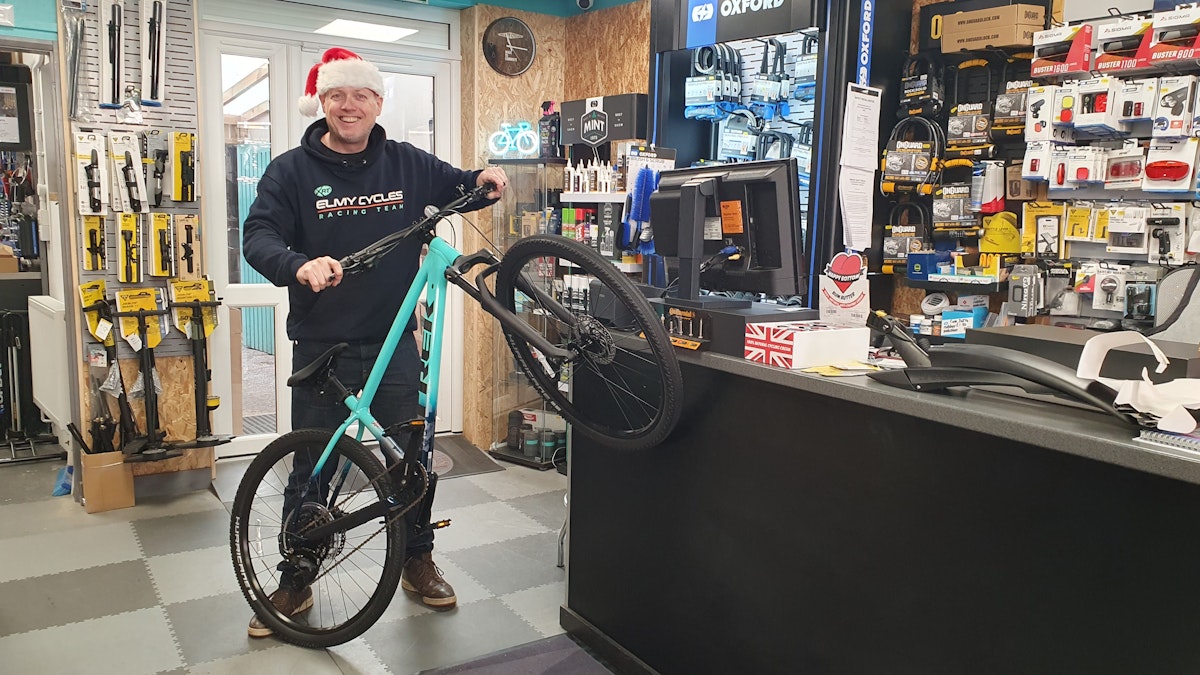
As he poses for photos – Santa hat on, bike hoisted overhead in characteristic good humour – Steve's journey makes something clear. If a century-old shop can not just survive but thrive serving every rung of society, perhaps Ipswich still has more road ahead than some headlines would have you believe.