
Government U-turns on council election delays after legal challenge
All local elections in Suffolk will now go ahead in May after the government withdrew its decision to postpone 30 council elections across England following legal advice and a legal challenge from Reform.

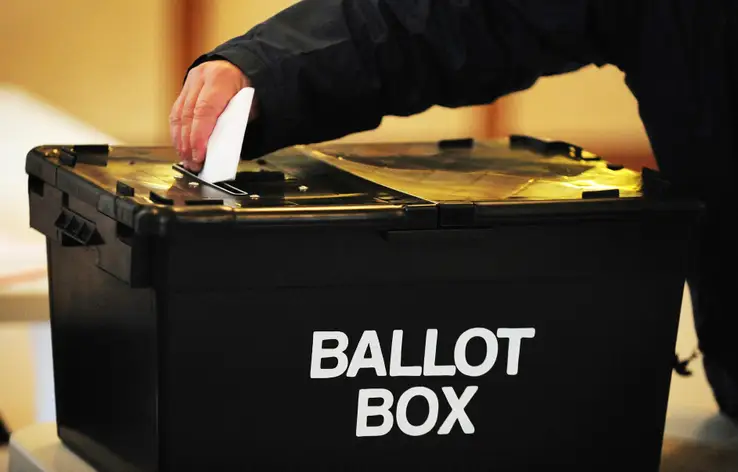
Why it matters: The reversal means residents will get to vote for both Suffolk County Council and Ipswich Borough Council in May, despite Ipswich Borough Council requesting a postponement, and Suffolk County Council lobbying for one. Both authorities will be abolished under reorganisation plans, making these their final elections.
The details: Housing and Communities Secretary Steve Reed wrote to council leaders on Sunday to confirm he had withdrawn his original decision to postpone the elections. The government had written to the High Court setting out its position ahead of a legal challenge from Reform UK, which was due to be heard on Thursday.
The secretary of state invited the housing minister, who was not involved in the initial decision-making, to reconsider the position afresh. The housing minister decided the elections should proceed in May 2026. The government has agreed to pay Reform UK's legal costs, which a party source said would be at least £100,000.
What they're saying: In his letter to council leaders, Reed said: "I recognise that many of the local councils undergoing reorganisation voiced genuine concerns about the pressure they are under as we seek to deliver the most ambitious reforms of local government in a generation."
Reform UK leader Nigel Farage said: "We took this Labour government to court and won. In collusion with the Tories, Keir Starmer tried to stop 4.6 million people voting on May 7th. Only Reform UK fights for democracy."
Liberal Democrat leader Sir Ed Davey said his party "fought tooth and nail to stop this stitch-up and the government has been forced into a humiliating U-turn".
The local response: Responding to the government’s decision to reinstate local elections in Suffolk in May 2026, Cllr Matthew Hicks, Leader of Suffolk County Council, said:
"The decision on whether or not to postpone local elections rests entirely with Government. We have been clear about that from the start.
"We have not been privy to the legal advice they reference. However, throughout this process, ministers and civil servants have consistently expressed confidence in their position. That makes the current situation all the more surprising.
"Local councils across the country are experiencing whiplash as major government decisions shift repeatedly and without warning. This uncertainty makes it almost impossible to plan effectively, deliver stability for residents, or provide clarity for our staff and partners.
"There is now a significant question mark over the government’s wider agenda for devolution and local government reorganisation. Certainly, as we previously set out in our letter to ministers, this makes delivering one new unitary council for Suffolk more difficult, and three nigh on impossible."
Andrew Stringer, Leader of the G.L.I group on Suffolk County Council, said, "The 2025 County elections should never have been postponed. Our group argued this at the time, and it was only our group that voted against sending a letter to request the latest postponement.
"Some could feel that to have an election with only two years left, and a term including only one budget, is a cost that could be avoided, but democracy should never have been delayed last year on such a thin premise. So an election is going ahead based on the new electoral boundaries, [and] our group looks forward to putting out a positive message of hope and basing our election campaigns on our track record."
Cllr Christopher Hudson, leader of the Reform Group, said the Government had tried to 'stifle and strangle' democracy. "I am very happy to hear the elections are going forward and that democracy has won," he said.
Neil MacDonald, Leader of Ipswich Borough Council, said: "I would like to thank the Secretary of State for his clarity around this decision and welcome the additional capacity funding that has been made available.
I look forward to the election campaign, as Ipswich Labour have a good local record to stand on, with 300 council houses recently completed, bringing Jamacia Blue and Lovisa to the town centre and refurbishing the Regent Theatre.
I'd also like to thank the IBC election team for their hard work, and I know they will do what is necessary to ensure these elections go ahead."
Cllr Ian Fisher, the leader of Ipswich’s Conservative Group, said he welcomed the decision but was 'gobsmacked' by the Government’s constant U-turns. "Usually I can see the sense of something, even if I don’t agree with it,” he said, “but I have no level of comprehension of this whatsoever." He acknowledged that, despite speaking in favour of holding the elections, his party could lose seats, but stressed that democracy should always take priority.
The bigger picture: The government originally approved delays to 30 council elections until 2027 to help deliver a major reorganisation that will see some local authorities abolished. Of the 63 councils eligible to request a postponement, 30 were granted permission in January.
Of the councils originally granted permission to delay their elections, 15 were Labour-controlled, four were led by the Conservatives, one by the Liberal Democrats, and 10 were under no overall control.
In Suffolk, both Ipswich Borough Council and Suffolk County Council had been granted postponements. Ipswich requested that its elections be postponed outright, while the county council stopped short of making that request but was known to be lobbying behind closed doors for a delay.
What's next: The government announced it will provide up to £63 million in additional capacity funding to the 21 local areas undergoing reorganisation across the whole programme, building on the £7.6 million provided last year to develop proposals.
Reed said his officials will be in touch with affected councils to determine whether any further practical support is required.
Elections to the new unitary councils are expected to take place in May 2027, with the new councils expected to be up and running in April 2028.
The bottom line: After facing a legal challenge and receiving legal advice, the government has reversed course on election delays, restoring the right to vote for millions of residents across England and giving Suffolk voters their final chance to hold their local councils accountable before reorganisation. However, the decision also means both Ipswich Borough Council and Suffolk County Council will now undergo a period of sustained and significant disruption over the next three years.
This article cost us ~£27 to produce
It's free for you to read thanks to the generous support of our partners.
Below the line