
Suffolk County Council approves maximum 4.99% council tax rise in 'best out of a bad job' budget
Suffolk County Council has approved a 4.99 per cent council tax increase, raising Band D bills by £82.26 to £1,731.69, after rejecting a Reform UK proposal for a smaller rise that was dismissed as flawed and lacking detail.


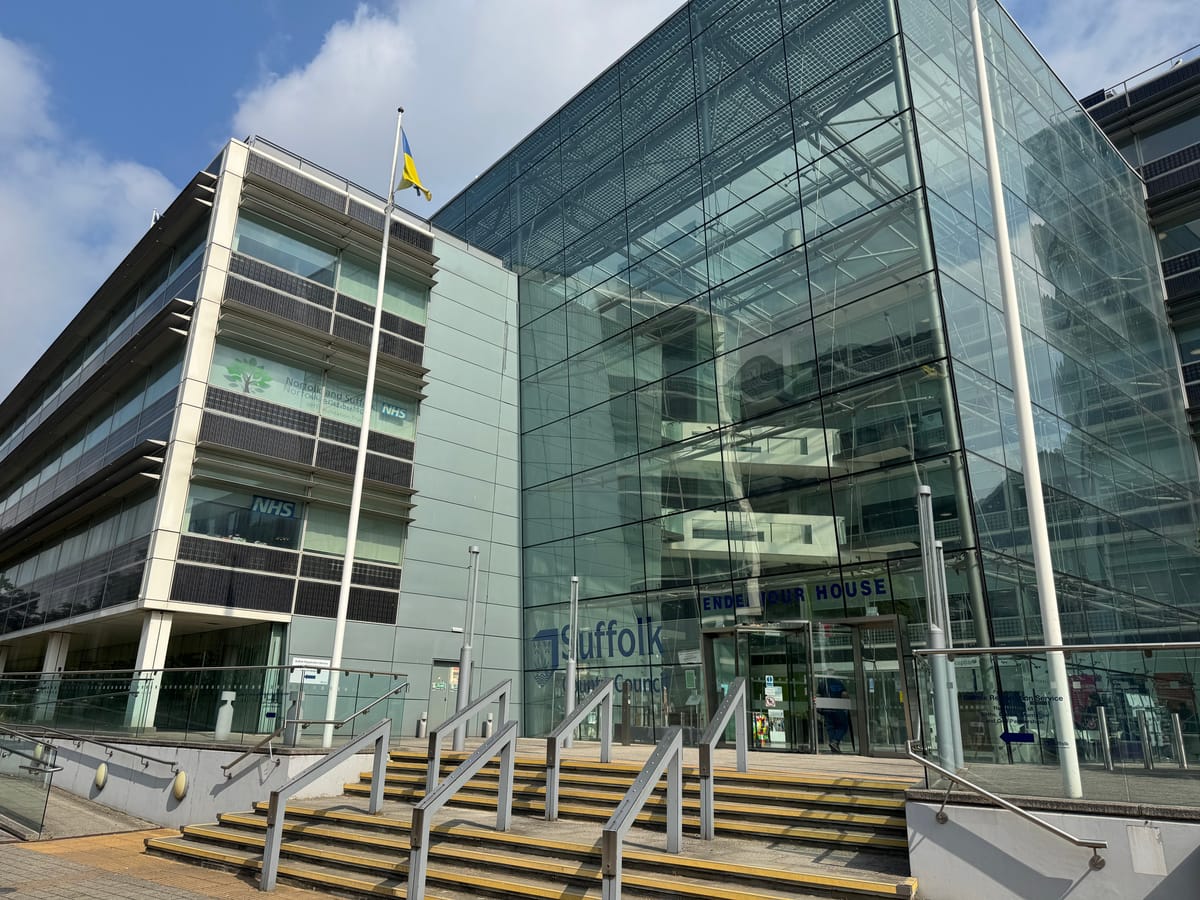
Why it matters: The Conservative-led authority voted yesterday to implement the maximum council tax increase allowed without a referendum, with the budget approved by 50 votes to four with four abstentions. The tax rise comes as the council faces a tough financial position requiring £46.5 million in savings.
The big picture: The council is in a financially precarious position, having borrowed from its reserves to balance the budget for the last couple of years. This means the council has less in savings and will be facing a budget gap of £23.4m for 2027-28, rising to £24.9m in 2029-30.
The details: Cllr Richard Smith, who put together the budget, said the plans were being presented "with regret" as the council continued to face financial pressures. The tax increase will not be enough to balance the books, with the council still having to draw on nearly £1 million from its reserves.
"This is just about as much as this authority can cope with," Cllr Smith said. "This is the best we can do, and it is a budget which will take us forward in a positive way over the next 12 months."
What they're saying: Cllr Andrew Reid, the council's lead for education and special educational needs and disabilities, said the council's budget took responsible steps to stabilise the council's financial position and plan for the future.
Cllr Andrew Stringer, leader of the main opposition group made up of Green, Liberal Democrat and Independent councillors, gave his support for the budget despite not agreeing with all of it, calling it the "best out of a bad job". He said his group had not submitted an amendment, as has been the case before, due to there being no more wiggle room in the authority's finances.
The other side: The Green, Liberal Democrat and Independent group said they had pressed the Conservative-run council to take the maximum incremental increase in council tax for many years, in order to "fill its coffers". The opposition group has criticised the administration's history of not taking maximum council tax rises in previous years, arguing this contributed to the current financial difficulties.
Cllr Annette Dunning, deputy leader of the Green, Liberal Democrat and Independent group and their spokesperson for finance, said: "Suffolk County Council is in a perilous position financially. It is currently within £2m of having insufficient reserves, which means the council could have to request an emergency bail out from the government."
She criticised the Conservative administration's history of not taking maximum council tax rises in previous years. "If the Conservative administration at Suffolk County Council had increased council tax by the maximum 4.99% each year since 2021, it would be raising £9.4m more money for 2026-27. The additional cumulative funding for the maximum council tax rises since 2021 would be £41m."
The dismissed Reform amendment: An alternative proposal to increase council tax by just four per cent was put forward by Cllr Christopher Hudson, the Reform UK group leader. He said it was incumbent on the authority to tighten its belt as residents continued to struggle.
The amendment sought to plug the £4.6 million gap it created by carrying out redundancies in teams where the group felt there was duplication with district and borough councils, and by establishing a "Get Back to Work" scheme to reduce long-term sickness and support council employees to return to their jobs.
However, no information was provided on what these roles might be or how much money might be saved, with councillors labelling the proposals as nonsense and deception.
The Reform UK proposals failed with four votes in favour and 56 against.
Cllr Annette Dunning said: "To us, this amendment from Reform UK looks like a bid for publicity – they just want to say they proposed a reduction in council tax. As newly Reform UK councils have been finding across the country, raising council tax by the maximum each year is the only responsible decision at a time when council finances are under such intense pressure."
By the numbers: Households in Ipswich will see the following changes to their county council portion of council tax:
- Band A: Currently £1,099.62 per year. Will increase to £1,154.48 per year – an increase of £54.86 per year (£1.05 per week)
- Band B: Currently £1,282.89 per year. Will increase to £1,346.89 per year – an increase of £64.00 per year (£1.23 per week). Band B properties are the most common in Suffolk
- Band C: Currently £1,466.16 per year. Will increase to £1,539.30 per year – an increase of £73.14 per year (£1.41 per week)
- Band D: Currently £1,649.43 per year. Will increase to £1,731.71 per year – an increase of £82.28 per year (£1.58 per week)
- Band E: Currently £2,015.97 per year. Will increase to £2,116.53 per year – an increase of £100.56 per year (£1.93 per week)
- Band F: Currently £2,382.51 per year. Will increase to £2,501.35 per year – an increase of £118.84 per year (£2.28 per week)
- Band G: Currently £2,749.05 per year. Will increase to £2,886.17 per year – an increase of £137.12 per year (£2.64 per week)
- Band H: Currently £3,298.86 per year. Will increase to £3,463.42 per year – an increase of £164.56 per year (£3.16 per week)
For context: The budget comes after the government announced earlier this week it would write off 90 per cent of councils' historic budget deficits relating to special educational needs. In Suffolk, this will be equivalent to just over £150 million being wiped out, leaving the council to deal with a £16.8 million shortfall.
Cllr Reid welcomed the government's announcements but stressed there were still significant pressures over the next few years to grapple with.
The bottom line: Despite receiving significant government relief on historic special needs debts, Suffolk County Council says it had no choice but to implement the maximum council tax rise as it continues to face severe financial pressures and must find tens of millions in savings.
This article cost us ~£40 to produce
It's free for you to read thanks to the generous support of our partners.
Below the line