
The six-figure job at the heart of Suffolk's biggest council shake-up in 50 years
Suffolk County Council has opened applications for a Programme Director to deliver the abolition of six councils and the creation of three new unitary authorities by 2028 – one of the most significant public sector change programmes the county has ever undertaken.

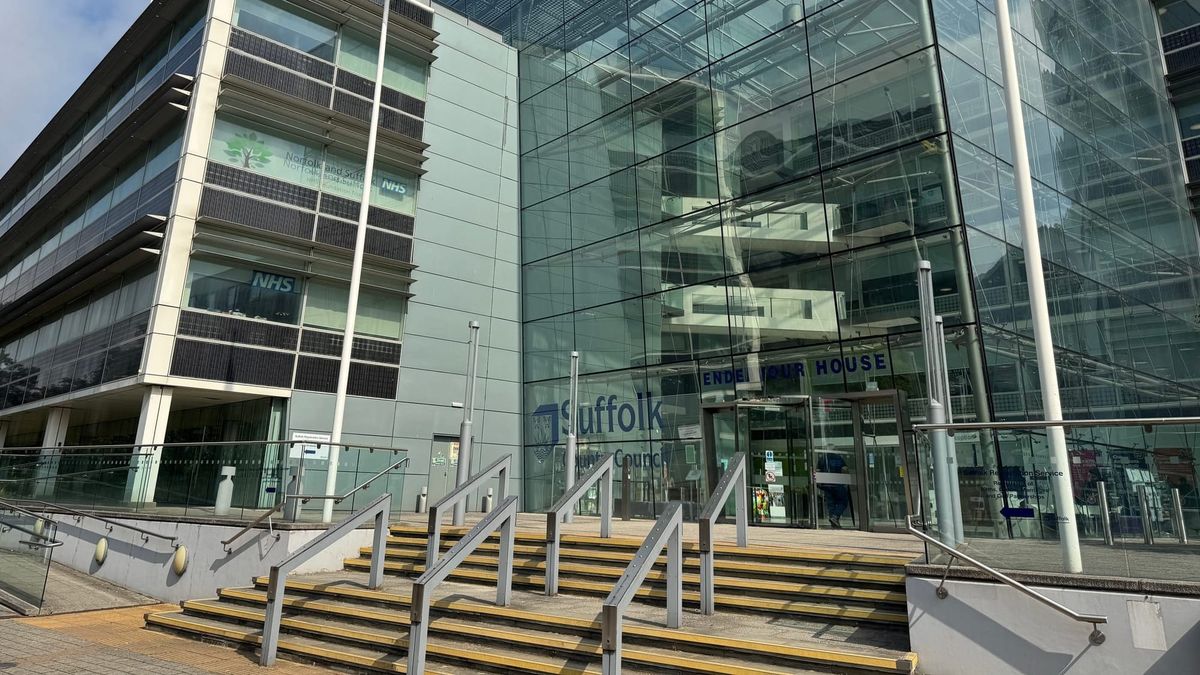
The permanent, full-time role, based at Endeavour House in Ipswich, carries a salary of £110,100 to £121,785 per year. Applications close at 23:59 on 31 May 2026, with interviews scheduled for 25 June.
Why it matters: Whoever takes the post will be responsible for steering Suffolk's transition from its current two-tier system – in place since 1974 – to three new unitary councils anchored in Ipswich, Bury St Edmunds and Lowestoft, due to formally take over in 2028.
The details: Suffolk County Council is hosting the recruitment on behalf of all Suffolk councils, describing the post as "one of the most significant public sector change programmes the county has undertaken."
The Programme Director will:
- Lead the end-to-end Local Government Reorganisation (LGR) programme, reporting to the Senior Responsible Officer
- Establish and lead a single system-wide Programme Management Office spanning all councils
- Translate government decisions and local proposals into "integrated, assured programme plans"
- Oversee risks, interdependencies and readiness across "accelerated timescales"
- Lead preparations for governance, finance, workforce, digital and service transition
- Act as the principal operational interface with central government, members and senior officers
The role is described as "highly autonomous", operating across "multiple sovereign councils within agreed statutory, political and governance frameworks."
The successful candidate is expected to be "a senior system leader who is calm under pressure, politically astute and able to deliver at pace in highly complex environments" with experience of delivering "large-scale transformation or reorganisation programmes" across multiple organisations.
The bigger picture: The recruitment comes at a politically charged moment for Suffolk County Council. Just days ago, on Friday, 8 May, Reform UK won 41 of the 70 seats on the council, ending nearly two decades of Conservative control. The new administration formally takes over at the council's Annual Meeting on Thursday, 21 May.
The government confirmed on Wednesday, 25 March, that Suffolk's six councils would be replaced by three new unitary authorities, following months of competing business cases between the county council, which had backed a single "One Suffolk" authority, and the district and borough councils, which proposed the three-council "Power of 3" model that was ultimately adopted.
For context: Suffolk Councils published the role through recruitment partners Tile Hill. Although hosted by Suffolk County Council, it is described as "a genuinely system-wide role working across the full LGR system, bringing together multiple councils, disciplines and partners behind a single shared objective."
The successful candidate will be "accountable to a joint group of Chief Executives and elected members" and will report to the Implementation Board, the Joint Committees and the shadow unitary councils.
What's next: Unitary council elections are due in May 2027, with the three new unitary authorities formally taking over the following year. The Programme Director will be central to ensuring services continue uninterrupted through that transition.
The bottom line: Suffolk is recruiting one of the most consequential local government posts in the county's recent history – a role tasked with dismantling six councils and standing up three new ones, against a backdrop of political upheaval at Endeavour House and a tight timeline.
Don't forget: If you enjoy our content, please add Ipswich.co.uk as a "preferred source" on Google so you can easily find more of the content you value.
This article cost us ~£27 to produce
It's free for you to read thanks to the generous support of our partners. Please support us by supporting them.
Below the line