
Reform won – what happens next at Endeavour House?
Reform UK will now control Suffolk County Council, but the levers of power do not all pivot instantly. We examine what the new administration can change quickly, what it cannot, and the pressure now bearing down on a group of councillors who, until last week, had mostly never held office.

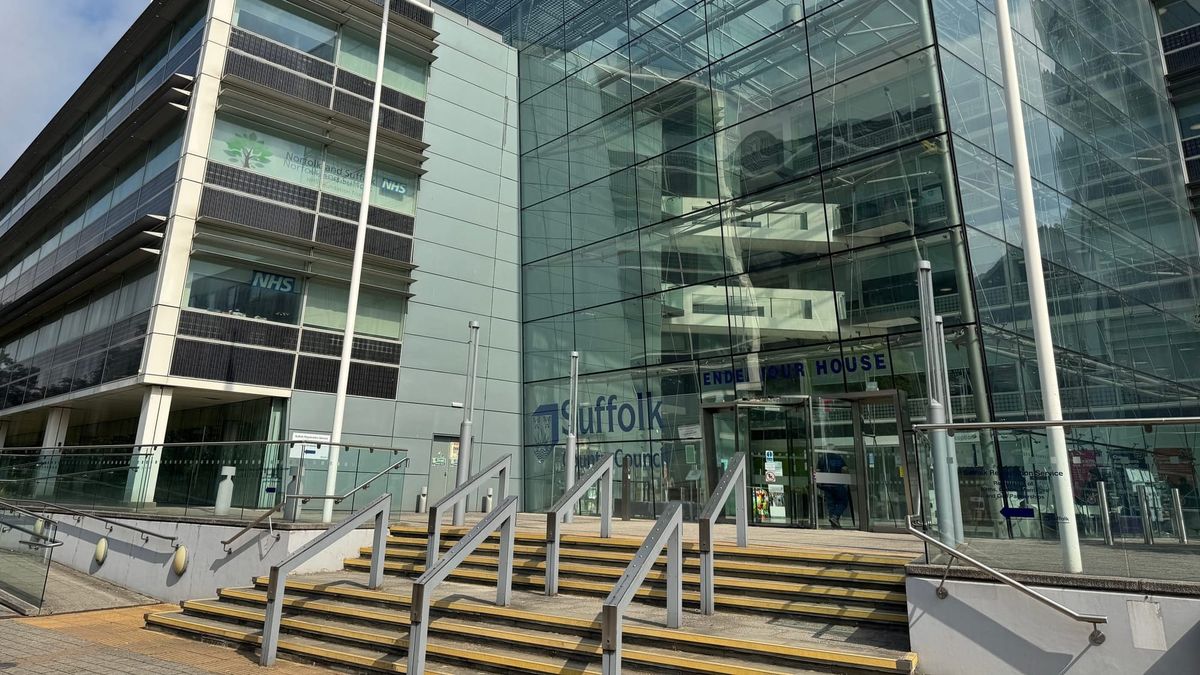
By any measure, last Thursday's result was extraordinary. A party that did not field a single candidate at the 2021 county council elections has won 41 of 70 seats — five more than it needed for a majority — and ended nearly two decades of near-continuous Conservative rule at Endeavour House. With that majority comes responsibility for adult social care, children's services, highways, schools, libraries, the fire and rescue service, and the county's role in the transition to a new unitary system in 2028.
What it does not bring is an instant transfer of power. The mechanics of taking over a council are quicker than people often think, but the practical changes unfold over months — and many of the most consequential decisions of the year ahead have already been taken.
The handover of power
The formal transition of power will take place on Thursday, 21 May at 14:00 at Endeavour House, when Suffolk County Council holds its Annual Meeting. It is at this meeting that the new majority group will elect one of its own as Leader of the Council, and the council will appoint a Chair (a largely ceremonial civic role). Committee places will then be reallocated under the rules of "political proportionality" set out in the Local Government and Housing Act 1989, with the new majority taking the chair of most committees and the bulk of seats on them.
Because Suffolk County Council operates a leader-and-cabinet model — as most English principal authorities do — the new Leader will then appoint a Cabinet, with portfolios covering areas such as finance, children's services, adult care and highways.
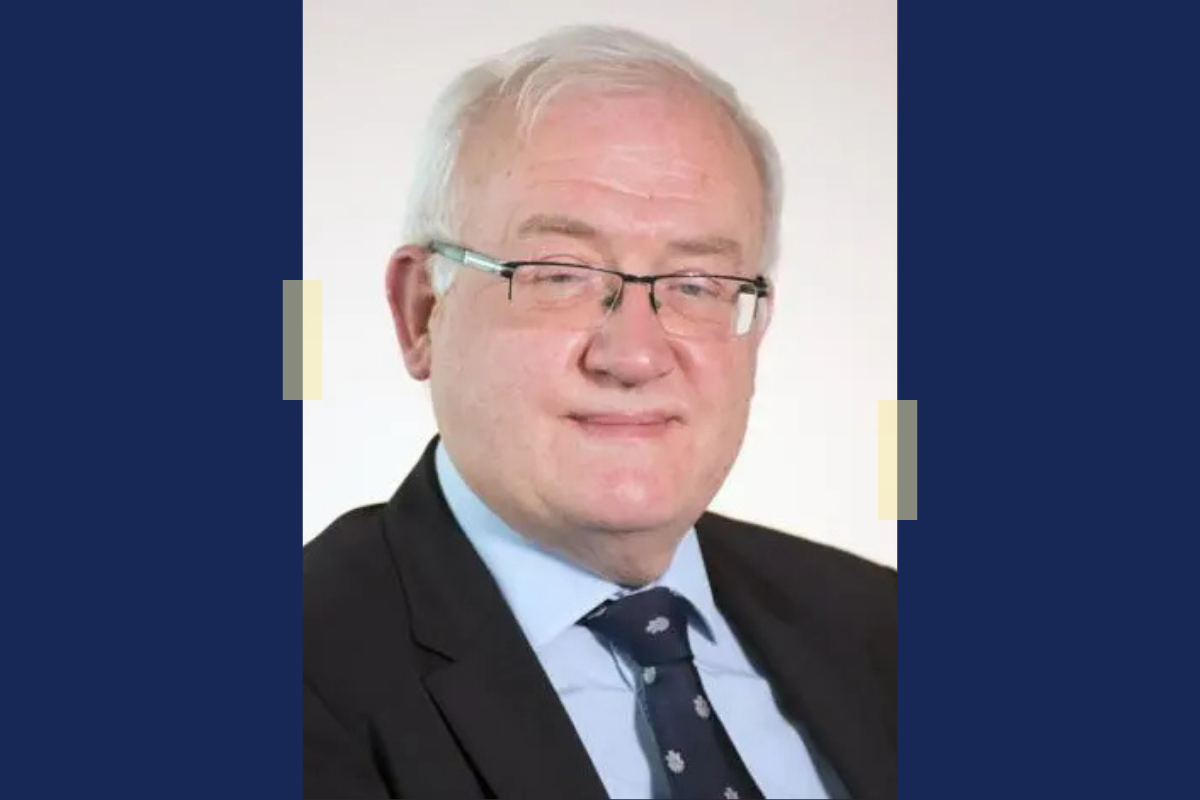
It is thought that Chris Hudson, the recently re-elected county councillor for the Brook division, is a frontrunner for the Leader position.
What does not change
What does not change with a change of administration is the officer corps. The Chief Executive, the Monitoring Officer and the Section 151 (statutory finance) officer all remain in post. They are politically neutral, serve whichever administration is elected, and cannot be removed for political reasons.
At Suffolk County Council, that means Mark Ash and Andrew Cook, who took over as joint chief executives on 1 April 2026 from Nicola Beach after her eight years in the role, continue to lead the officer side of the council. Ash focuses on local government reorganisation and devolution; Cook leads on operational efficiency and serves as the council's head of paid service. Both will be central to whatever transition follows.
Day-to-day services keep running because they are delivered by officers and their teams, not by councillors. Bin lorries do not stop. Social workers do not down tools. Roads are still repaired. The visible business of the council carries on largely uninterrupted, regardless of who has won the election.
Where the new administration can move quickly
Where the incoming administration can act swiftly is in policy direction and tone: setting new corporate priorities, issuing fresh strategy statements, pausing or reviewing schemes that are not yet contractually committed, and reshaping scrutiny arrangements. A new Leader can stand up in the chamber on 21 May and announce a different set of priorities for the council, and those priorities can start working their way through the council machine within weeks.
The Local Government Association, which provides support and guidance to councils across England, sets out a familiar checklist for newly elected administrations. It advises new leaders to spend time with their chief executive understanding "timelines and expectations" around the Annual Meeting and governance requirements, to think carefully about "the key positions: the cabinet places or committee chairs and the chairs of other committees such as overview and scrutiny", to listen to other parties' requests on committee distribution, and to keep their own councillors briefed because "their opinions will be important in the final decision".
The LGA also offers peer support through its political group offices, connecting new leaders with councillors who have been in similar situations elsewhere. It is the kind of behind-the-scenes induction that does not make headlines but determines how quickly an administration finds its feet – important given that Reform in Suffolk has only a handful of former Conservative county councillors with experience at its disposal.
Where it cannot
Where the new administration cannot move as fast is on the money. Suffolk County Council's budget for the current financial year was set in February by the outgoing Conservative administration, before any of the new councillors were elected. The new majority will generally have to live within it until the next budget round, which is normally finalised in February for the financial year that begins in April.
That means the first opportunity for Reform to set its own budget at Suffolk County Council will be in February 2027 — by which time the council itself will be within months of another local election.
Existing contracts must also be honoured. Statutory duties — adult social care, children's services, education and the rest — continue regardless of who is in charge. Planning decisions must still be made on material planning grounds rather than political preference.
The room for radical change in year one is therefore narrower than the size of Reform's majority might suggest. The room for change in tone, priorities and scrutiny is considerably wider.
A foreshortened mandate
The councillors elected on Thursday will serve a foreshortened term. Suffolk's two-tier system is being abolished, with Ipswich Borough Council and Suffolk County Council to be succeeded by three new unitary authorities from April 2028. Elections for that body are due in May 2027, with the new council running as a shadow authority for a year before formally taking on power.
In practical terms, the Reform group will have something in the order of 12 months of normal operation at Endeavour House before the focus shifts to the unitary transition and the shadow elections that will define what comes after. Whether the party can convert a standing-start victory into a durable local presence by then is one of the open questions of the next 12 months.
The pressure on a new group of councillors
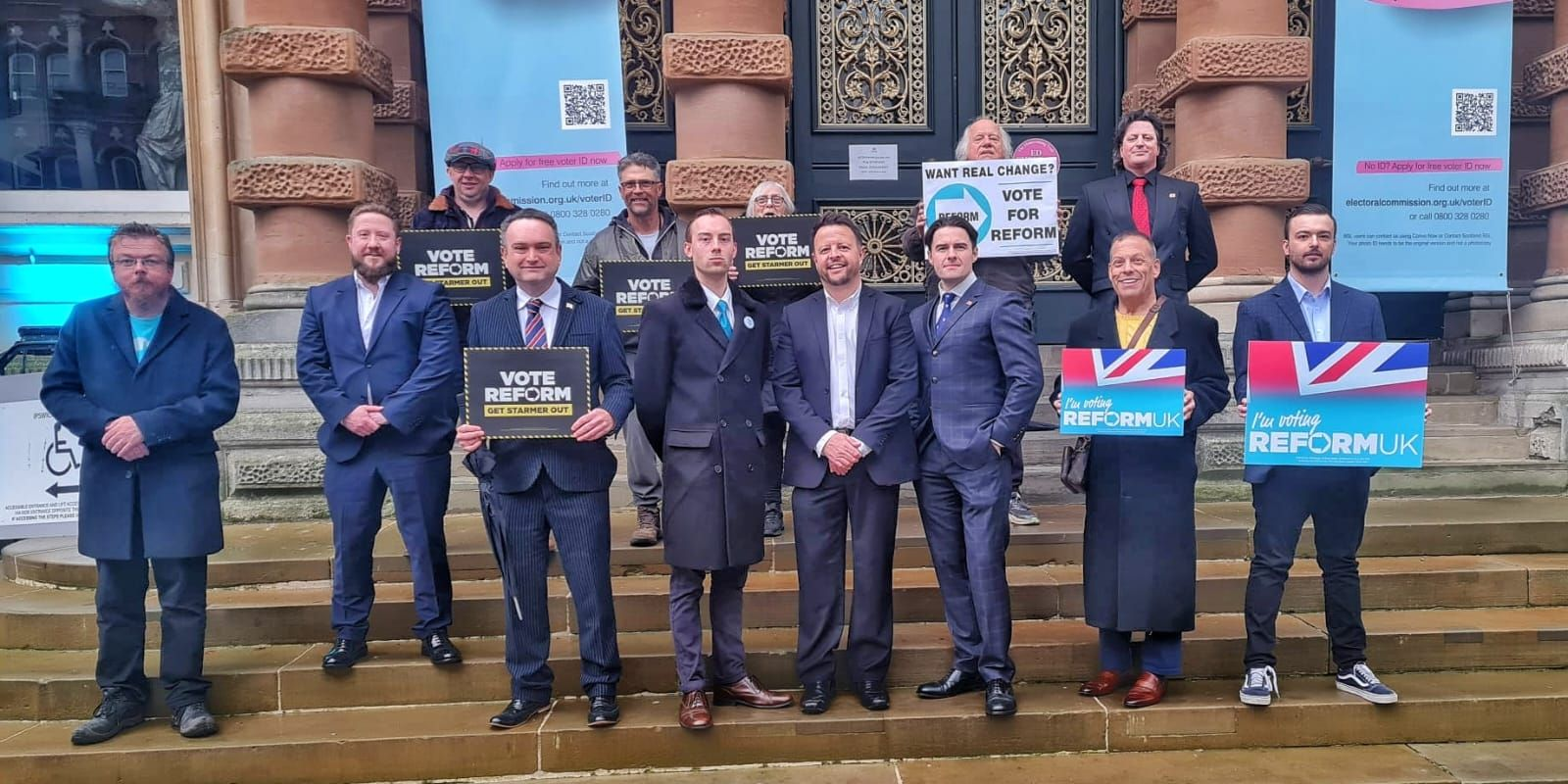
Forty-one councillors will take their seats for Reform when the Annual Meeting opens on 21 May. Many will have no prior experience of public office. Some have never been inside Endeavour House. They will be asked, between now and 2027, to make decisions on a budget of more than £850 million pounds covering services that touch every household in Suffolk.
The LGA's induction materials exist for precisely this reason. So do the council's permanent officers. But there is no substitute, in practical terms, for time spent learning the brief — and the unitary clock means time is the one thing this new administration does not have in abundance.
The accountability question
There is one further question hanging over the new administration that does not appear on any LGA checklist. It is whether, and how, Reform's incoming councillors intend to communicate with the people who elected them.
In the run-up to the election, every Reform candidate in Ipswich was instructed by Shayne Pooley, the famously pro-Russia, former Conservative chairman of Ipswich Reform, not to engage with local media. On election day itself, only one Reform candidate spoke briefly to the BBC. After the results were declared, Pooley said that "voters can contact their councillors directly," adding that there was "no need to offer you [the media] a sound bite, we are not a paycheck for you." He concluded: "Neither we or the voters need you."
Pooley's position is not formally the position of the incoming Suffolk County Council administration. In fact, Pooley isn't actually a serving councillor, and it's unclear what, if any, role he will play in local government beyond his role as Chairman of Reform in Ipswich.
The new Leader, once elected on 21 May, will be free to set their own approach. It is a decision that will define, more than almost any other in the first few weeks, how visible and accountable this administration chooses to be.
Ipswich.co.uk has invited Hudson and Pooley to discuss this in person. Pooley has declined, though responded to a separate invitation on Facebook with "we'll see 😉," while Hudson has yet to respond.
A council that runs schools, social care and the fire service is not a private organisation. Its decisions are made in public, its meetings are open to the press and public by law, and its councillors answer — in the end — to the people who put them there. How the new majority chooses to engage with the residents who handed it that mandate is a question only it can answer.
The bottom line
Reform UK has the seats. From 21 May it will have the Leader, the Cabinet and the committee chairs. What it will not have, for at least a year, is its own budget — and what it cannot avoid, for the duration of its term, is the basic obligation to be transparent and accountable. The mechanics of taking power are well understood. The question of how this administration intends to use it, and to talk about it, is one the new Leader will need to answer in the chamber on 21 May. We will be there to report what they say.
Don't forget: If you enjoy our content, please add Ipswich.co.uk as a "preferred source" on Google so you can easily find more of the content you value.
This article cost us ~£81 to produce
It's free for you to read thanks to the generous support of our partners. Please support us by supporting them.
Below the line