
Our political map redrawn: How Reform swept Suffolk in a single day
Five years ago, Reform UK did not field a single candidate in Suffolk. On Thursday, the party took outright control of the county council and became the largest single winner among the seats contested in Ipswich — reshaping the political geography of the county in a single day.

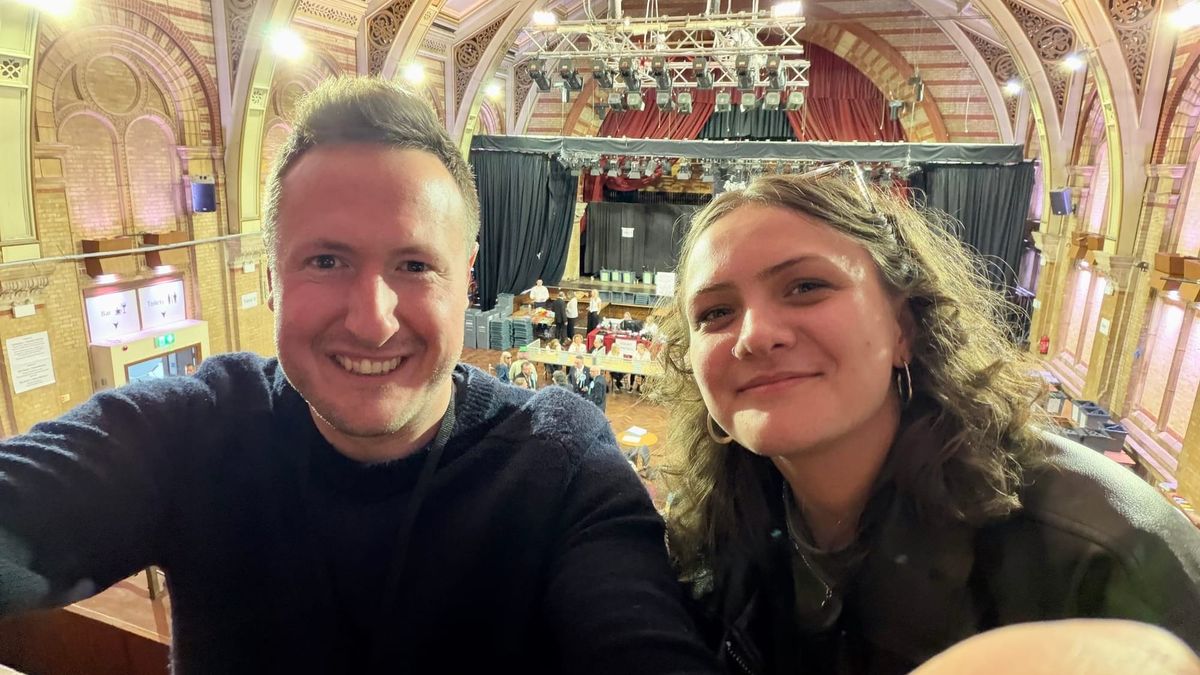
By the time the count at the Town Hall wound down on Friday evening, the picture across Suffolk had changed almost beyond recognition. Reform UK had won 41 of the 70 seats on Suffolk County Council — five more than the 36 needed for a majority — and 10 of the 16 seats up for grabs on Ipswich Borough Council. The Conservatives, who held 44 county seats going into the election and have run the authority continuously since 2017, were reduced to nine. Labour, who entered the borough vote defending 13 of 16 seats, emerged with four.
It was, on any reading, a historic day. And it happened in a county where, until very recently, Reform UK was not a meaningful electoral force at all.
This changes everything.
Our coverage of this year's local elections cost more than £1,000 to produce — from the live blog at the Town Hall to the candidate interviews, ward-by-ward analysis and weeks of background reporting. Independent local journalism like this only exists if readers fund it. If you value what we do, please consider subscribing — it is the single biggest thing you can do to keep this kind of reporting going in Ipswich.
From standing start to majority control
The scale of Reform's advance is difficult to overstate. The party did not stand a single candidate at the last Suffolk County Council elections in 2021, when the Conservatives swept the board. It gained a foothold during the previous term through defections and by-elections — six county seats in total — but Thursday was the first time it had fielded a full slate, and the first time voters across every ward and division in Ipswich had been able to choose a Reform candidate.
The result was a swing on a scale rarely seen in local government. The Conservatives lost 35 seats. The Greens remained the second-largest group on the county council, winning 13 seats – but second to Reform now, not the Conservatives. Labour took three. Two went to independents, and the Liberal Democrats secured two.
In the borough elections, Labour took a battering – saved by the fact that only one third of seats were up for grabs. Reform gained Bixley, Castle Hill, Bridge, Gainsborough, Gipping, Priory Heath, Sprites, Stoke Park, Whitehouse and Whitton. The Liberal Democrats retained St Margaret's, where Inga Lockington took 1,633 votes — more than three times the total of her nearest challenger. The Greens gained Alexandra, with David Plowman edging Labour's John Cook by just 41 votes. The Conservatives failed to win a single seat across the borough.
Council leader Neil MacDonald narrowly held St Johns by 117 votes over Reform's Joshua Owens. The Mayor of Ipswich, Stefan Long, retained Rushmere by 241. Labour also held Holywells and Westgate. Eleven of its colleagues were not so fortunate.
A Conservative collapse, two decades in the unmaking
For Suffolk's Conservatives, the day brought to a close one of the longest periods of single-party rule in the council's modern history. The party has run Suffolk County Council since 2017 and held it for most of the previous decade as well. On Thursday, it was reduced to a rural rump.
The party held on in Carlford, where Elaine Joseland — known on the ballot as Elaine Bryce — won with 1,909 votes; in Hardwick, where Richard Rout took 1,701; in Blackbourn, Clare, Constable, Barrow and Thingoe, and Haverhill North West and Withersfield. Council leader Matthew Hicks held Thredling against the trend, beating the Greens' Teresa Davis by 247 votes in a three-way scrap that saw three candidates poll above 1,300.
But across most of the county, the Conservative vote simply gave way. In wards where the party had once been dominant, Reform candidates won by hundreds. In some, the Tories were pushed into third or fourth place. The pattern was not uniform — the party performed strongly in parts of West Suffolk and held its ground in some Babergh divisions — but the overall direction was unmistakable.
A pre-election projection by national elections analyst PollCheck had suggested Reform could win as many as 59 of the 70 seats, with the Conservatives projected to lose all 55 they secured in 2021. The modellers themselves had cautioned that 2026 was "uncharted territory". In the event, the Conservatives held more than the model expected — but only just.
 Oliver Rouane-Williams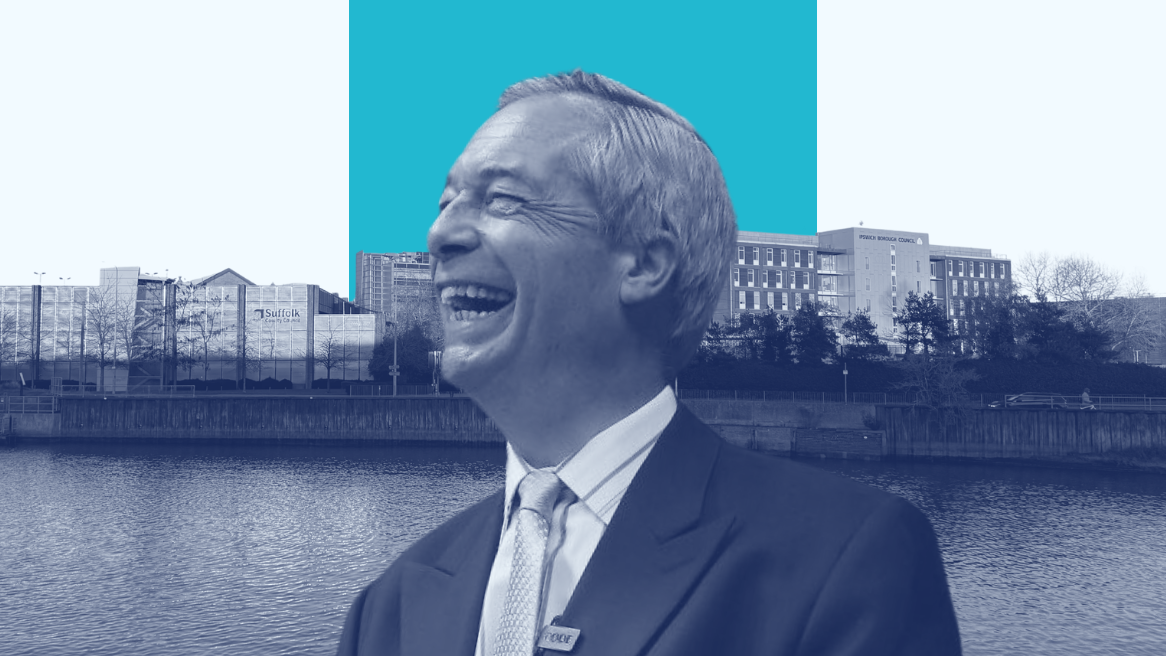
The Labour squeeze in Ipswich
For Labour, the borough result was a study in narrow escapes. Council leader Neil MacDonald's 117-vote margin in St Johns made him one of four Labour councillors to survive. Where the party held — St Johns, Rushmere, Holywells, Westgate — it did so by margins of between 117 and 314 votes. Where it lost, the margins were often even tighter.
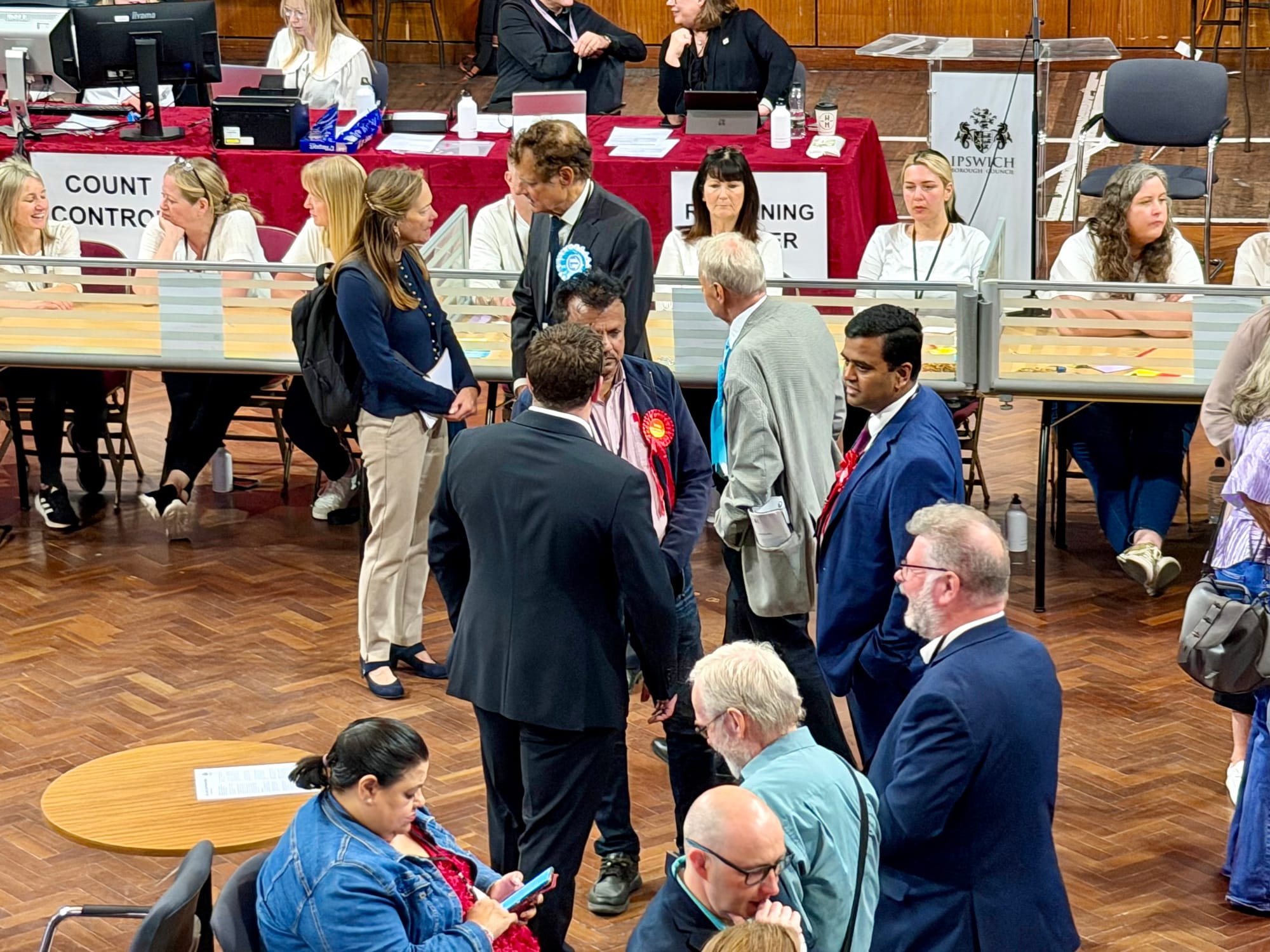
Reform's Leslie Foster took Gipping by 63 votes over Labour's Simona Lazar. In Bridge, Rupert Tonkin-Galvin beat Polly Ford by 94. In Priory Heath, Tim Buttle took the seat from Owen Bartholomew by 115. In some traditionally Labour wards, the Conservative and Liberal Democrat vote effectively collapsed, leaving a straight Reform-Labour fight that Labour lost.
Other Reform wins in Ipswich were more decisive. Tony Gould — the only Reform candidate to engage with Ipswich.co.uk during the campaign — took Whitton by 395 votes in a three-way contest with no Conservative or Liberal Democrat standing. Stuart Allen won Sprites by 470. Ryan Procter took Gainsborough by 422.
Labour retains overall control of Ipswich Borough Council — only a third of seats were contested this year — but the loss of 11 of the 15 it was defending is a significant shift. It also leaves the party facing a substantial Reform foothold going into the 2027 elections for the new unitary authority.
The Greens become the official opposition, outright
While Reform took the headlines, the Greens quietly amassed 13 county seats, outnumbering the Conservatives' nine, making them the second-largest group on Suffolk County Council and the official opposition to Reform.
The party's strongest performances came in Mid Suffolk and Babergh. Andrew Stringer took Upper Gipping with 2,312 votes, beating Reform's Charles Tilbury by 759. Sally Mittuch took Hoxne and Eye in a tight three-way contest. Robert Lindsay won Cosford. Matt Bentley took Thedwastre South by 27 votes from Reform's David Flowerday. Peter Aiano won Bungay by more than 500. James Patchett took Thedwastre North, and Annette Dunning won Halesworth comfortably. In Beccles and Kessingland — a two-seat division — the Greens and Reform shared the spoils, with just 10 votes separating Green Ash Lever from Reform's Chris Cox at the top of the poll.
In Ipswich, the Greens gained a single seat — Alexandra — but their vote share rose noticeably across the borough, with Green candidates pushing into second or third place in a number of wards where the party has not historically been competitive.
Tight margins and a fragmented vote
A feature of the day was how many results turned on a handful of votes. In Bridge — the county division, not the borough ward of the same name — Reform's Rupert Tonkin-Galvin beat Labour's Sachin Karale by 11 votes. In Melford, independent John Nunn beat Reform's Michael Holt by 16. In Thedwastre South, the Green-Reform margin was 27. In Haverhill East and Rural, Reform's Luke O'Brien beat the Conservatives' Nick Clarke by 28.
Several Ipswich results were similarly knife-edge. Reform's David Hill took Bixley by 35 votes over the Conservatives' Edward Phillips. The Greens took Alexandra by 41. Reform took Gipping by 63. In ward after ward, the splintering of the vote across five or even six parties produced winners on relatively modest totals — and runners-up only just behind them.
Turnout ranged across county divisions from around 25 per cent in Harbour to 57 per cent in Felixstowe Clifflands, with most divisions falling somewhere between 35 and 50 per cent.
A new force, and a frustrating stance on media engagement
For a party that has just won outright control of a major English county council, Reform UK said remarkably little on Thursday. Only one of its candidates, Stuart Allen, spoke briefly to the BBC on the day. All others — including newly elected councillors — declined to be interviewed or photographed, following an instruction from the chairman of Ipswich Reform that candidates should not engage with the media, telling them to speak only to GB News.
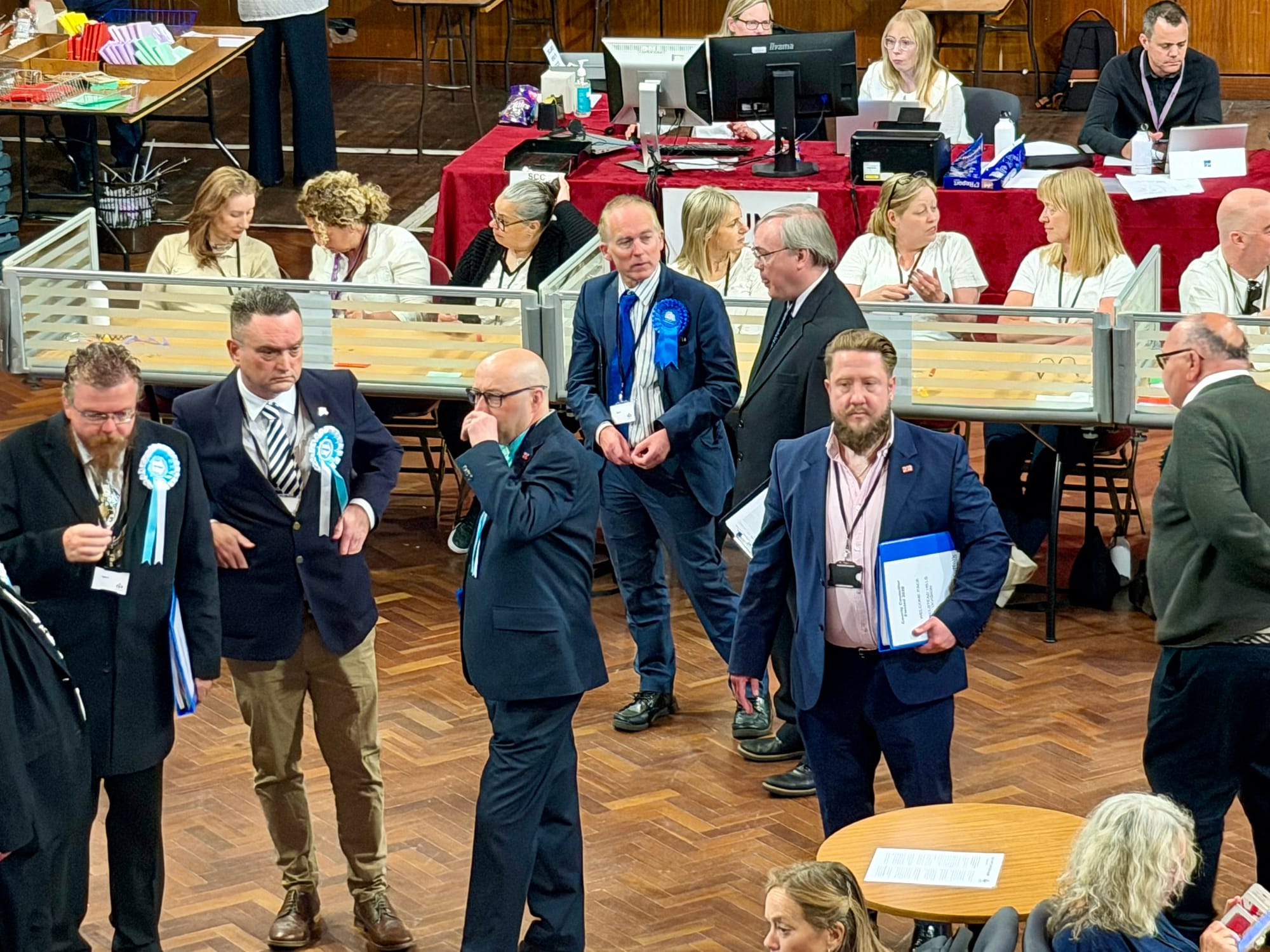
That posture leaves voters in the unusual position of having handed a clear mandate to a party whose local representatives have not, for the most part, set out their stall in public. What Reform intends to do with its majority on the county council — across adult social care, children's services, highways, schools, libraries and the fire and rescue service — remains, at the time of writing, largely unstated.
We shall continue to do all we can to engage with Reform, but so far, its leadership has refused to talk with us.
A council on borrowed time
Whatever the new administration does, it will not have long to do it. Suffolk's two-tier system is being abolished. Ipswich Borough Council and Suffolk County Council are to be succeeded by a new unitary authority covering Ipswich and South Suffolk from April 2028. Elections for that body are due in May 2027, with the new council running as a shadow authority for a year before formally taking on power.
The councillors elected on Thursday will therefore serve a foreshortened mandate. For Reform, the question is whether it can convert a standing-start victory into a durable local presence by the time the unitary elections come round. For Labour, the Conservatives, the Greens and the Liberal Democrats, it is whether they can rebuild — or, in the Greens' case, consolidate — quickly enough to compete.
The bottom line
A party that did not exist locally five years ago now controls Suffolk County Council and holds the largest share of seats contested in Ipswich. The Conservatives have lost a county they had run for most of the past two decades. Labour has held its borough majority but lost most of the seats it was defending. The Greens have become the official opposition at Endeavour House in their own right. The political map of Suffolk has been redrawn — and in just over a year, voters will be asked to draw it again.
Don't forget: If you enjoy our content, please add Ipswich.co.uk as a "preferred source" on Google so you can easily find more of the content you value.
This article cost us ~£498 to produce
It's free for you to read thanks to the generous support of our partners. Please support us by supporting them.
Below the line