
Orwell Crossing and Copdock named among 14 priorities in new transport masterplan
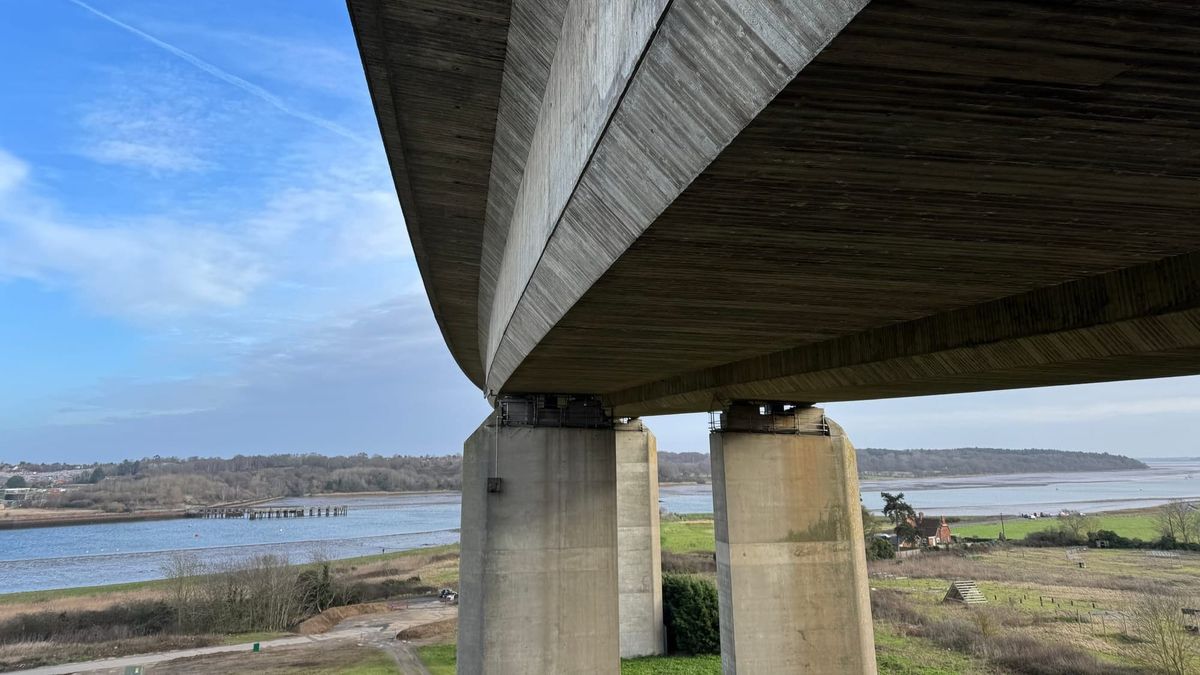
A new transport masterplan drawn up in partnership by Freeport East and Transport East has set out 14 priority investments for the region, with the A14 Orwell Crossing and Copdock Interchange among the schemes identified as critical to unlocking economic growth.

The plan makes the case that interventions could deliver up to £5.5bn in economic value and more than 10,000 new jobs. It is the first time the partnership has set out a prioritised list of transport schemes it believes government, local authorities and industry should back. It covers road, rail, bus, active travel and digital projects spanning Suffolk and Essex, with several of the named priorities running directly through or close to Ipswich.
Freeport East, a government-designated Industrial Strategy Zone, is centred on the Ports of Felixstowe, Harwich and Ipswich, alongside the Gateway 14 business park at Stowmarket. Its chief executive, Steve Beel, said the document was intended to guide the Freeport focus over the coming years.
"Freeport East was created to boost trade and investment, higher-paying jobs and wider sustainable growth, and we believe that productivity comes from connectivity," Beel said. "With the Government's Industrial Strategy placing us at the heart of the UK's economic ambitions, now is the right time to clearly set out our transport priorities."
The 14 priorities
The masterplan groups the 14 interventions by mode. On rail, it identifies capacity upgrades at the Ely and Haughley junctions, electrification of the Ipswich to Felixstowe branch line, and passenger service enhancements on the Colchester-Clacton and Ipswich-Cambridge routes.
On the road network, the document names improvements to the A14 Copdock Interchange, resilience and capacity work around the A14 Orwell Crossing, corridor improvements on the A12 and A120, and the A1331 link road near Colchester.
Local and innovation projects include technology-enabled bus service improvements, an electric shuttle linking Gateway 14 to Stowmarket, autonomous bus and freight trials, green access routes at Bathside Bay, enhancements to the Felixstowe-Shotley-Harwich foot ferry, and integrated journey planning and ticketing solutions.
Indicative costs run from under £5m for the smallest schemes to more than £50m for major rail and road interventions. The Ely and Haughley package alone is estimated at around £500m for the full project, with delivery expected to take between five and ten years.
The Orwell Crossing problem
Among the schemes most relevant to Ipswich, the A14 Orwell Crossing is flagged as a particular concern. According to National Highways data cited in the plan, the crossing already sees more than 65,000 vehicle movements per day against a design capacity of around 70,000.
The document states what many Ipswich residents know all too well: "No future capacity options are currently being assessed by any party." Though it is worth pointing out that Ipswich MP Jack Abbott has pushed hard for renewed plans – plans that are likely to bear more fruit once the county moves to three unitaries under the confirmed Local Government Reform plan.
Freeport East is proposing a two-stage approach. In the short term, it is exploring the use of digital twin modelling, potentially funded by National Highways, to evaluate traffic flow solutions using real-time data. Longer-term options identified in the document include an additional crossing or a bypass, though neither has yet been worked up in detail.
The nearby Copdock Interchange faces similar pressures. The masterplan notes that the junction can see close to 90,000 vehicle movements per day, regularly exceeding its original design capacity of around 60,000. Improvements sit within the government's third Road Investment Strategy, and Freeport East says it will continue to support local partners in making the case for enhancement.
 Oliver Rouane-Williams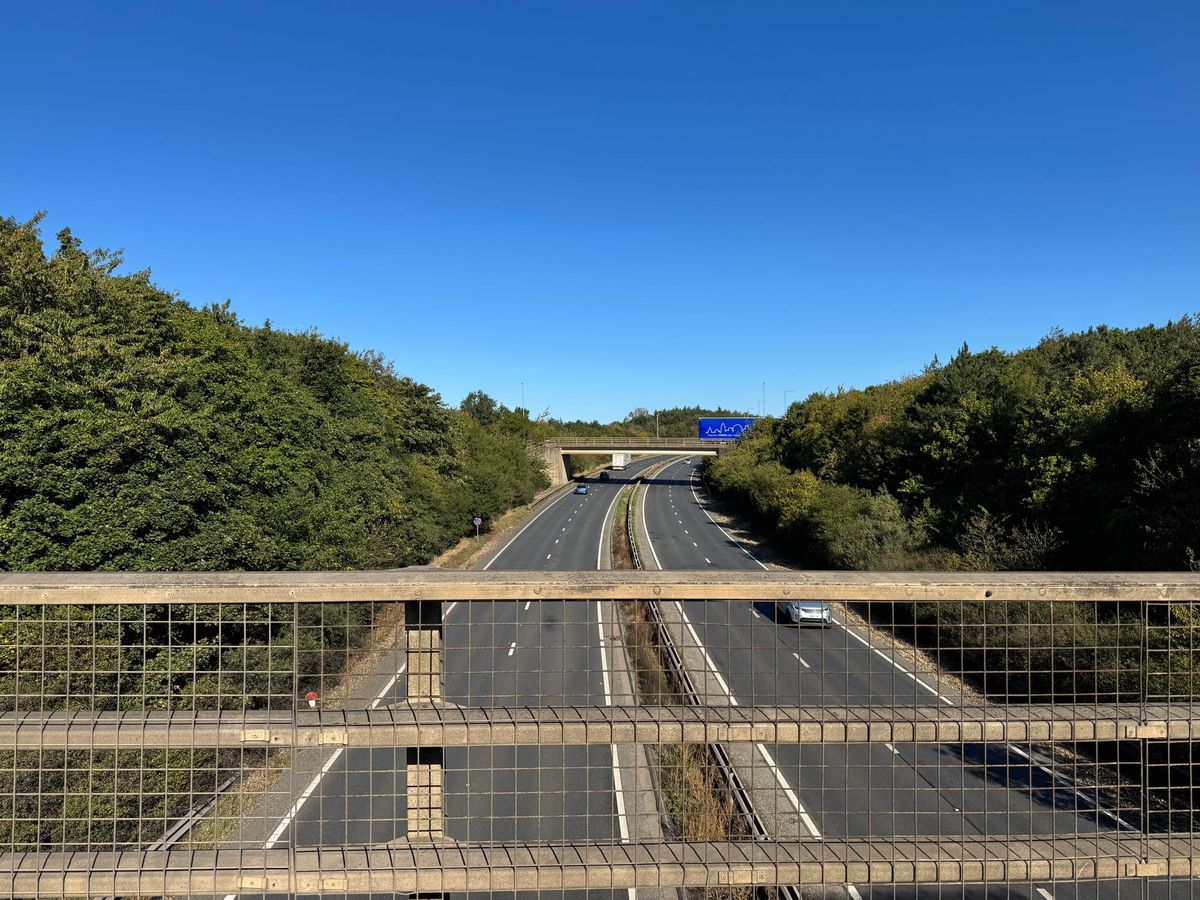
Rail as a parallel priority
Alongside road capacity, the plan frames rail investment as essential to shifting freight away from the road network. The Felixstowe to Nuneaton rail freight line, described in the document as "a crucial alternative for moving goods," is approaching its capacity limits.
The Ely Area Capacity Enhancement programme, which includes the stalled Haughley junction upgrade, is presented as central to unlocking that capacity. According to figures in the masterplan, the scheme would boost network capacity from 6.5 trains per hour to 10, resulting in an extra six freight trains per day to and from Felixstowe. The plan states that this would remove 98,000 lorry journeys from the road annually and stimulate 277,000 additional rail passenger journeys.
Electrification of the Ipswich to Felixstowe branch line is identified as a further decarbonisation priority, though the plan acknowledges that Network Rail is reassessing such schemes in light of developments in bi- and tri-mode locomotives.
Martin Beable, managing director of Greater Anglia, said: "Greater Anglia is pleased to be working with Freeport East on initiatives that aim to deliver further improvements to rail services in our region. By collaborating with Freeport East and other partners on their masterplan, we're focused on securing the investment and upgrades that would see even more passengers and freight travelling by rail."
Private sector backing
The masterplan places significant weight on the scale of private sector investment already made in the region. It cites £120m spent on deepening channel berths in the Harwich Haven, new quay and crane infrastructure at Felixstowe and Ipswich, and a £1bn expansion at London Stansted Airport. Freeport East itself reports that it has secured more than £250m of investment and supported 1,800 jobs to date.
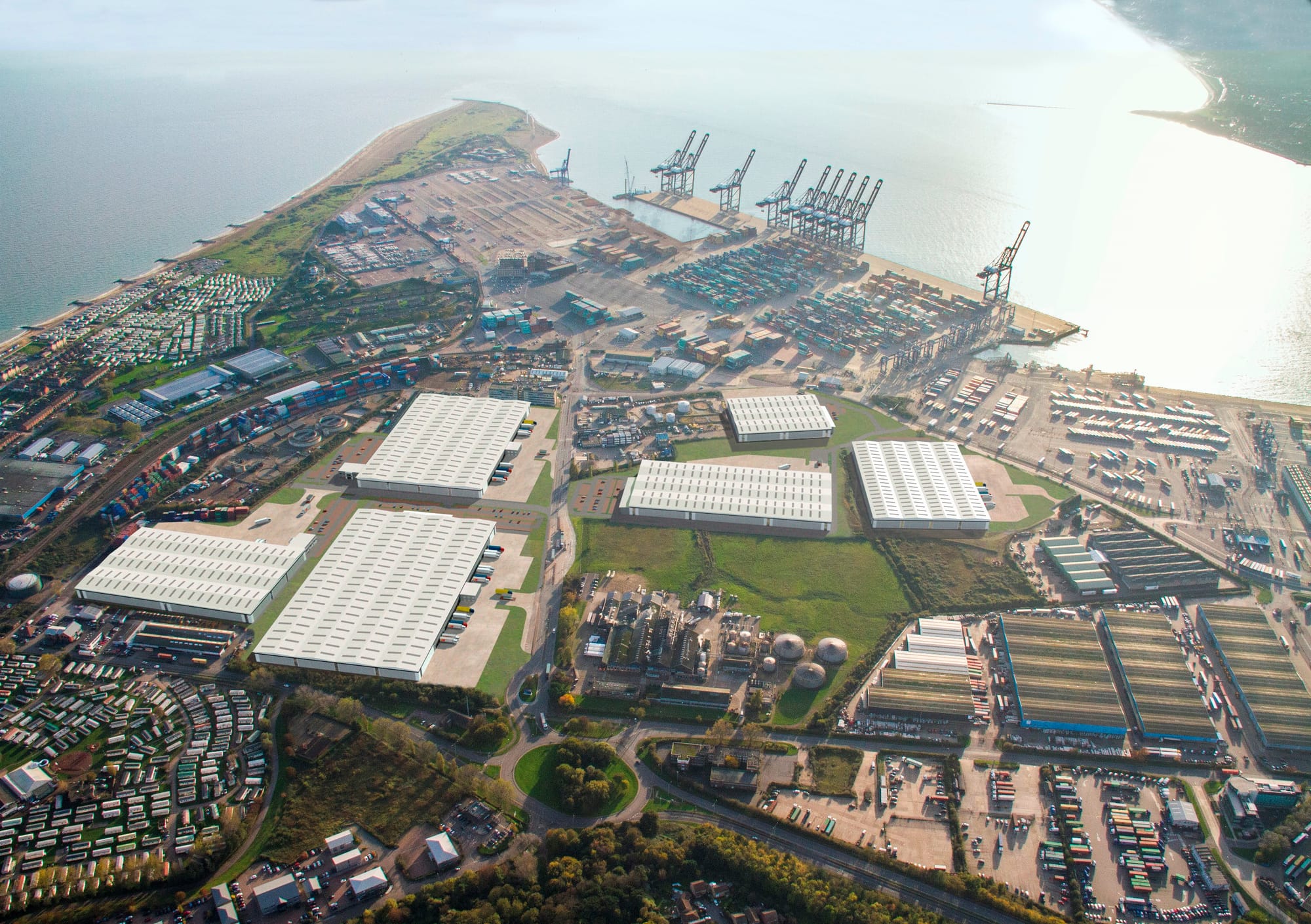
Clemence Cheng, managing director at Hutchison Ports Europe, which operates the Ports of Felixstowe and Harwich, said: "The UK economy is built on trade and the ports of Felixstowe and Harwich are critical international gateways which help drive inward investment and economic growth. Delivering the masterplan objectives are vitally important to maximise future economic growth opportunities locally, regionally and nationally."
The funding question
The foreword to the masterplan acknowledges that delivering all 14 priorities will require creative thinking on funding. It states that Freeport East will need to "be creative in developing the funding plans to bring these to fruition" and identifies the creation of new mayoral authorities as an opportunity to drive options forward.
Andrew Summers, chief executive at Transport East, said: "We are pleased to work with Freeport East to support the development of this ambitious transport masterplan, which clearly demonstrates the power of partnership in unlocking the East's full potential to drive national growth."
Summers added that the East of England contributes £94bn in Gross Value Added and supports 1.7 million jobs, describing it as "one of the UK's fastest growing and most productive regions."
The bottom line
The masterplan is a statement of intent rather than a delivery programme. For Ipswich, the Orwell Crossing, Copdock Interchange and Felixstowe rail line are all named, alongside smaller but tangible schemes such as potential autonomous bus trials and enhanced foot ferry services. Whether those priorities translate into spades in the ground will depend on funding decisions yet to be taken, and on how the incoming mayoral authorities, which will take office in 2028, choose to integrate the plan into their own strategies.
We want to hear your views. Members can comment below.
Don't forget: If you enjoy our content, please add Ipswich.co.uk as a "preferred source" on Google so you can easily find more of the content you value.
This article cost us ~£81 to produce
It's free for you to read thanks to the generous support of our partners. Please support us by supporting them.
Below the line