
MacDonald survives Reform surge as Labour lose nine Ipswich seats
Council leader Neil MacDonald has held his St Johns seat, but Labour has lost 9 of the 13 seats it was defending on Ipswich Borough Council, with Reform UK taking 10 in a result that reshapes the political map of the town.

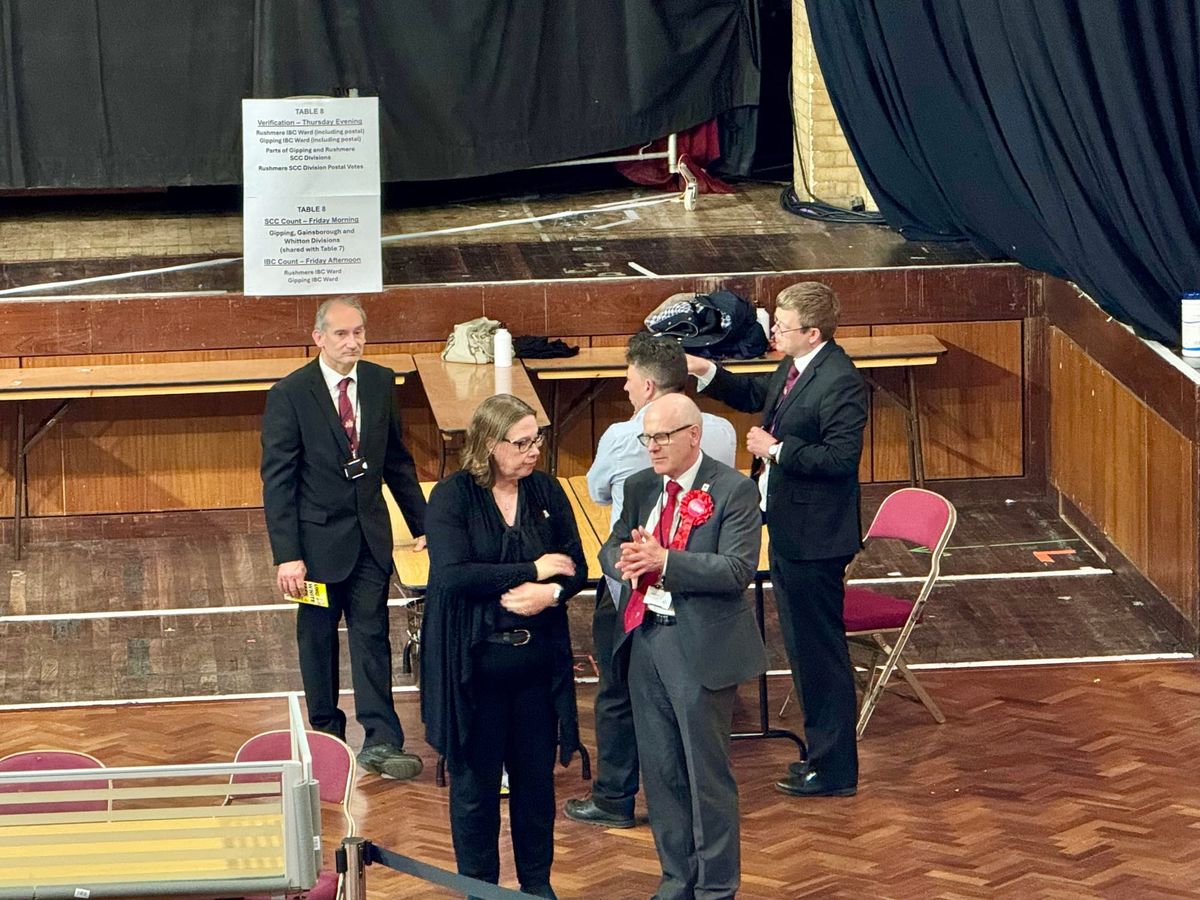
Why it matters: Reform UK did not stand a single candidate at the last Ipswich Borough Council elections. The party has now become the largest single bloc among the seats contested on Thursday, 7 May, taking wards from Labour across the borough.
The details: Sixteen of the council's 48 seats were up for election. The results across those wards were:
- Reform UK – 10
- Labour – 4
- Liberal Democrats – 1
- Greens – 1
- Conservatives – 0
The big picture: Labour entered the election defending 13 of 16 seats and emerged with four. Reform UK gained Bixley, Castle Hill, Bridge, Gainsborough, Gipping, Priory Heath, Sprites, Stoke Park, Whitehouse and Whitton. The Liberal Democrats retained St Margaret's and the Greens gained Alexandra.
Council leader Neil MacDonald held St Johns by 117 votes over Reform UK's Joshua Owens, while Mayor of Ipswich Stefan Long retained Rushmere by 241 votes over Reform UK's Vicky Hill. Labour also held Holywells and Westgate.
By the numbers: Several contests were decided by narrow margins.
- Bixley: Reform's David Hill beat the Conservatives' Edward Phillips by 35 votes
- Alexandra: Green candidate David Plowman beat Labour's John Cook by 41 votes
- Gipping: Reform's Leslie Foster beat Labour's Simona Lazar by 63 votes
- Bridge: Reform's Rupert Tonkin-Galvin beat Labour's Polly Ford by 94 votes
- Priory Heath: Reform's Tim Buttle beat Labour's Owen Bartholomew by 115 votes
Other Reform wins were more decisive. Tony Gould took Whitton by 395 votes in a three-way contest with no Conservative or Liberal Democrat candidates standing, while Stuart Allen won Sprites by 470 votes and Ryan Procter took Gainsborough by 422.
In St Margaret's, Liberal Democrat Inga Lockington won with 1,633 votes, more than three times the total of her nearest challenger, Reform's Graham Knight, on 546.
For context: The borough result mirrors the picture across Suffolk, where Reform UK took majority control of Suffolk County Council on the same day, ending nearly two decades of near-continuous Conservative rule. Reform did not stand a single candidate at the last county elections in 2021.
The bigger picture: The councillors elected this week will serve under a council that is itself due to be replaced. Suffolk's two-tier system is being abolished, with Ipswich Borough Council and Suffolk County Council to be succeeded by a new unitary authority covering Ipswich and South Suffolk – known to many as Greater Ipswich – from April 2028. Elections for the new authority are due in May 2027.
The bottom line: Labour retains overall control of Ipswich Borough Council, with only a third of seats contested this year, but the loss of 9 of the 13 seats it was defending represents a significant shift in the borough's political make-up – and a substantial foothold for a party that did not exist locally at the last full set of elections.
Don't forget: If you enjoy our content, please add Ipswich.co.uk as a "preferred source" on Google so you can easily find more of the content you value.
This article cost us ~£128 to produce
It's free for you to read thanks to the generous support of our partners. Please support us by supporting them.
Below the line