
Is online abuse driving good people out of local politics in Ipswich?
As a torrent of personal attacks plays out beneath candidate interviews on social media, serving councillors warn that good people are walking away from public life — and that the town will pay the price.

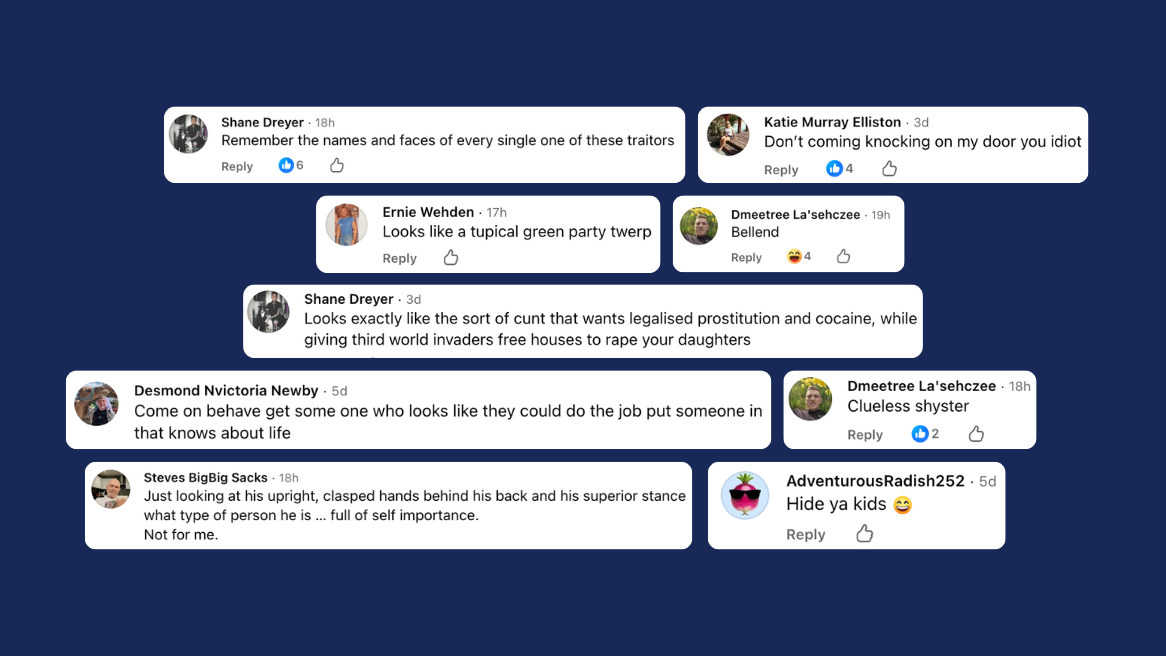
Scroll through the comments beneath any of the candidate interviews Ipswich.co.uk has published in recent weeks, and a pattern emerges. Some are reasonable. Some are partisan but civil. And some are not. "Bellend." "Loser." "Hide ya kids." "Dozy cow." Beneath one Green candidate's interview, a commenter wrote that he looked "exactly like the sort of c**t" who would give "third world invaders free houses to rape your daughters". Beneath another, a commenter responded to a Labour candidate's photograph by suggesting he was a "pedo".
These are not edge cases. They are the everyday weather of local politics in Ipswich, and across the country. And it is not a left-or-right phenomenon: the abuse falls on Labour, Conservative, Green, Lib Dem and Reform candidates alike, with the comments beneath each party's interview drawing from the same well of personal insult, conspiracy and contempt.
According to the Local Government Association's 2025 Debate Not Hate survey, seven in 10 councillors reported experiencing abuse or intimidation. More than half said they had been the victim of misinformation. The LGA warns that the rising tide is "preventing elected members from representing the communities they serve, deterring individuals from standing for election and undermining local democracy".
In Ipswich, councillors across the political spectrum say they are watching that prediction come true.
"They don't want the hassle and hurt"
Cllr Nathan Wilson, a young Conservative councillor who represents Chantry on Ipswich Borough Council, has been on the receiving end of online abuse since he was a candidate. In 2021, before he had even been elected, he received a direct message on Instagram from an anonymous account threatening him with beheading. Since then, he says, the abuse has settled into a steadier diet of "derogatory insults on personal appearance, ageism, outright lies, and occasionally beliefs."
For Wilson, the more troubling pattern is what he hears from people who have not stood at all.
"There are a number of people locally who are very invested in our town and could be great assets for Ipswich and Suffolk, but have openly said to me that they don't want the hassle and hurt of dealing with people's attacks on themselves, their families, and reputations," he says.
It is not only the would-be candidates. Wilson, who says he has "quite a good relationship with a wide variety of councillors of different backgrounds and political persuasions", reports that "many feel worn down and stressed by personal attacks on social media that they feel for their own wellbeing they would rather not be councillors."
Cllr Lucy Trenchard, Labour councillor for Whitehouse, offers a more cautious assessment but reaches a similar conclusion. She has been on the receiving end of months-long heckling from a resident she had previously helped, and other ward residents who had taken to a community Facebook page to call her "useless".
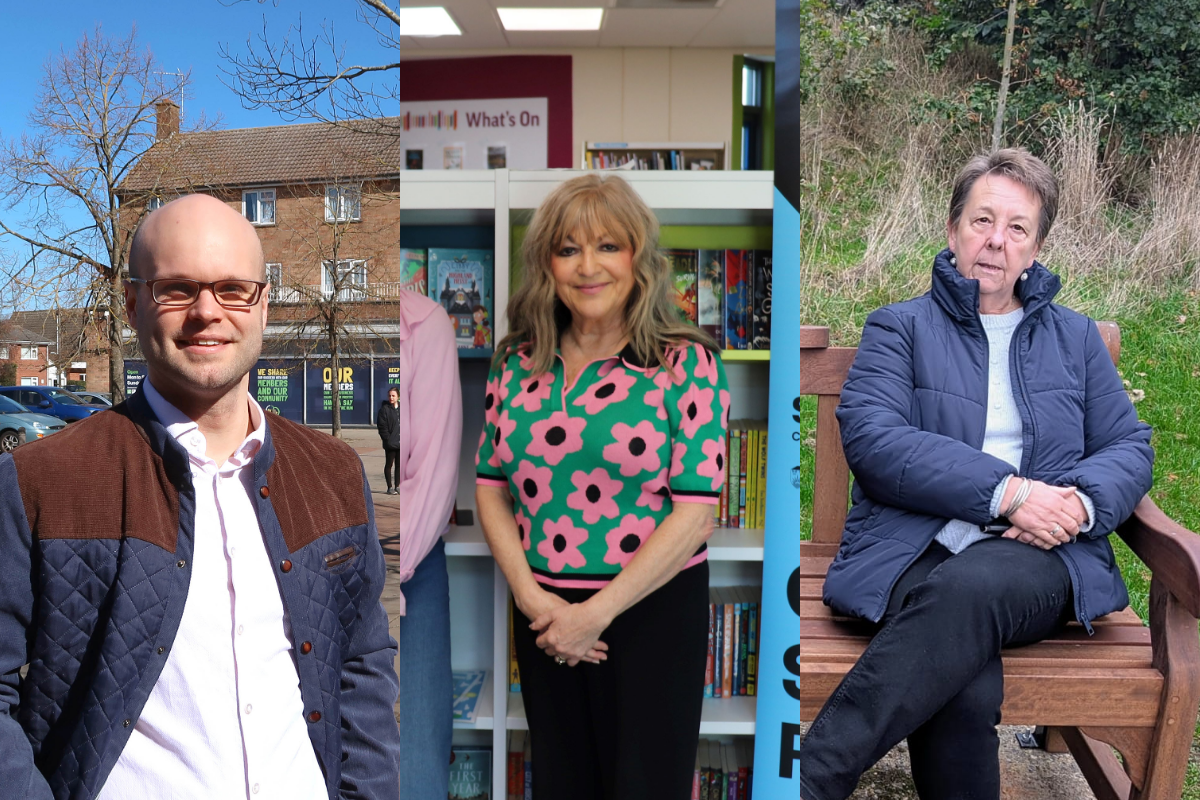
"I really don't know if this is the case," she says of the deterrent effect. "I do know that some have said the hassle sometimes makes them feel like chucking it all in."
Cllr Colin Smart, who is standing for Labour in Sprites, says he is not aware of online abuse being the sole reason anyone he knows has stepped down or declined to stand, "but it must be a factor to some degree". He adds: "Having an online presence is commonplace for most of the population nowadays. I can understand why people wouldn't want their name, image, social media history etc being the subject of hostility from people with an axe to grind."
Abuse an "instant deterrent"
Cllr Edward Phillips, chairman of the Conservative group at Ipswich Borough Council, does not use social media at all — a decision he describes as a deliberate firewall. Even so, he is in no doubt about the wider effect.
"It is a deterrent for many councillors or would-be candidates," Phillips says. "This is so wrong, as being a councillor is us serving the people. And many abusers on social media simply have no idea what we do or the time commitment and sacrifices involved."
Cllr Nadia Cenci, the Suffolk County Council cabinet member for communities and Conservative councillor for Chantry, has continually received abuse online and once had to call the police to investigate a written threat. Despite her own resilience — "water off a duck's back for me" — she is unequivocal about the impact on others.
"I absolutely believe it puts people off from standing or at the very least makes them give up on social media, which is such an important tool," she says. "For others it is stressful and damaging."
The interviews and the comments beneath them
The dynamic is visible in real time on Ipswich.co.uk's own Meet the Candidate series, in which every candidate standing in the borough and county elections on Thursday, 7 May has been sent the same five questions and given space to answer in full. The published interviews have been shared in local Facebook groups, where the comment threads have at times become a study in the very phenomenon councillors describe.
Beneath one Labour candidate's interview, a commenter wrote: "Looks a twat, could've guessed he was Labour." Beneath a Green candidate's: "Section him." Beneath a Conservative candidate's, a commenter posted: "Does she wear her brother's boxers?"
The Conservative candidate in question, Angelina Klein, is a young councillor who is still studying at the University of Suffolk. She has been the subject of comments such as "she's fit" — written by a man who looks to be at least three times her age.
Some of the comments target appearance. Some target party. Some are scattergun insults that read less as political disagreement than as something more visceral. Cllr Wilson notes that women in particular tend to attract a particular flavour of attack: "I have noticed that women do tend to get a bit more of the brunt of personal comments on image and look."
Cllr Trenchard wonders whether the same is true for ethnic minority councillors. "I do wonder sometimes if some people feel more enabled to be abusive to female councillors or those from ethnic minority groups," she says. Cllr Smart is more direct: "Social media is home to a lot of sexism, racism, homophobia and ableism. This will undoubtedly be felt more heavily by elected representatives from minority backgrounds and with protected characteristics."
The retreat from the platforms
For some councillors, the response has been to step back. Cllr Trenchard says she now avoids posting on the community Facebook page where she was previously active, and has stopped sharing certain kinds of information altogether. The new Better Recycling scheme launching in June is a case in point.
"I just know there will be a barrage of abuse if I were to provide links to information relating to this," she says, "so in effect, they don't get the information that they would benefit from."
It is a quiet but significant cost: residents losing access to information from their elected representative because that representative has calculated, reasonably, that sharing it will invite abuse.
Cllr Wilson says he too rarely posts anything online now. "I am not particularly a fan of social media anyway, but with the vitriol that can be seen on even the most basic updates or videos by councillors or MPs, I rarely post anything online."
Cllr Cathy Frost, the Labour councillor for Holywells, told Ipswich.co.uk that she does not speak publicly on social media because of the volume of abuse it attracts, and has to keep her business and her politics separate. The experience, she says, has changed the way she operates and made her more guarded about her own wellbeing.
In March 2026, she was among the councillors who attended a police briefing on personal safety — a session she believes was the first of its kind for local councillors. Such briefings are normally reserved for MPs, whose security has been the subject of national scrutiny following the murders of Jo Cox in 2016 and Sir David Amess in 2021. That borough councillors in Ipswich now warrant the same kind of advice is, in itself, a measure of how the ground has shifted.
Cllr Carole Jones, Labour councillor for Westgate, takes a different view. She is active on X, where one constituent regularly posts about her being a "useless Liebour councillor". The comments, she says, are "faintly insulting but not always personal — and laughable rather than worrying".
The contrast captures something important. Resilience to abuse is not evenly distributed, and the people who can shrug it off are not necessarily the people the town most needs in public life.
A worker shortage hiding in plain sight
The councillors who responded to Ipswich.co.uk are clear that the financial incentive to stand is minimal. Cllr Trenchard makes the point bluntly: "Councillors do not go into local government for money. There is only an allowance which anyone can look up to see what we are paid — and it is not a lot."
For context, Ipswich Borough Councillors will receive a basic allowance of £5,159 per year for the 2025/26 financial year. This is not a salary but a stipend for public duties, with additional Special Responsibility Allowances (SRAs) provided for specific roles like the Leader (£14,446) or committee chairs (£4,798).
If the pay is low, the time commitment is high, and the public abuse is rising, the question becomes who is left in the pool. Cllr Wilson worries that the town is losing exactly the kind of measured, community-minded people it needs. Cllr Cenci frames it as a question of democracy itself: "Democracy has to take place without fear, or we will have no democracy left."
Beneath one of Ipswich.co.uk's candidate interviews, Cllr Ian Fisher, the Conservative member for Castle Hill at Ipswich Borough Council, has represented the ward in which he was raised and still lives since 2016, stepped in to pose the all-important question. Below a thread of insults aimed at a Labour candidate's appearance and intelligence, he wrote: "And the comments here tell you why it is increasingly difficult to persuade people to put their names forward to be a councillor."
It is a question worth sitting with. If the abuse is enough to put off even the most committed councillors, who, in a year's time, will be left to run for seats in the next local elections?
What can be done?
There is broad agreement among the councillors who responded that something has gone wrong. There is less agreement about what to do about it.
Cllr Phillips would like to see anonymity on social media abolished. "People should be forced to reveal their true identity on social media, and then the abuse would instantly reduce," he says.
Cllr Trenchard is sceptical of legislation. "Abuse, that has not crossed a red line into threats or harassment, is always going to be there," she says. "I do not think that legislation is appropriate. We just need to be a kinder society and one which values the work that councillors do."
Cllr Smart is wary of governments policing speech but suggests "perhaps stronger measures should be taken against personal abuse or defamatory statements made against public figures". He also points out that councillors and political figures must be held to the same standard themselves: "We must remember that councillors and political figures can be guilty of sharing their hateful and extremist views themselves."
Cllr Wilson, like Smart, is wary of speech laws but believes the more aggressive, stalking-style behaviour by certain individuals "needs to be looked into, especially at a time when politics is becoming increasingly radicalised".
Cllr Cenci wants the Crown Prosecution Service to take threats against councillors more seriously.
Cllr Frost suggests that some of the abuse stems from a basic lack of understanding about what local government actually does, and floats the idea of teaching local democracy in schools.
Cllr Wilson's closing message captures the underlying plea running through every response. "In your self-righteousness," he says, "don't forget your humanity."
The bottom line
On Thursday, 7 May, residents across Ipswich and Suffolk will go to the polls to elect their councillors. The people whose names appear on the ballot have, in many cases, already paid a price simply for putting themselves forward — in abuse, in withdrawal from the platforms residents use to find them, and in the quiet calculation about whether it is worth standing again.
The cost of that calculation is not borne by the councillors alone. It is borne by every resident who will need someone in the chamber willing to take their call or respond to their email. Healthy disagreement is the lifeblood of local democracy, but comments often go way beyond disagreement – and that must change if we want the right people – of all political persuasions – fighting for our town and its residents.
 Oliver Rouane-Williams
Don't forget: If you enjoy our content, please add Ipswich.co.uk as a "preferred source" on Google so you can easily find more of the content you value.
This article cost us ~£135 to produce
It's free for you to read thanks to the generous support of our partners. Please support us by supporting them.
Below the line