
How Ipswich changed the conversation on endometriosis
Eighteen months ago, no one was listening. Today, Ipswich women with endometriosis have been to Parliament, they are educating employers and slowly changing the misunderstandings of endometriosis – and they are just getting started.
The need to be heard
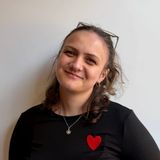
In November last year, Faye Ramsey could not sleep. She was in pain, too ill to stand, and had spent the previous week making 76 unanswered phone calls to her consultant's secretary. On one of those nights, she picked up her phone and posted on TikTok and Instagram, asking other women to share their endometriosis stories.
She was not expecting much, yet what she received were stories of women, from not only across Suffolk but the whole country – many were strangers, trusting her with some of their most painful and personal experiences.
"It was heartbreaking to read the stories," she said at the time. "Most of the women who had messaged me had stated it's something they wanted to do but didn't know how to go about it. They just wanted to be heard."
These stories were the beginning of something Faye could not have predicted.
Third time’s the charm
On 1 January this year, Faye sent all the stories to Ipswich MP Jack Abbott. She had first reached out to him in November, copying him into her formal complaint to East Suffolk and North Essex NHS Foundation Trust, and he had previously helped her secure surgery in March 2025. This time, she wanted noise.
Abbott began applying for a Westminster Hall debate. He was rejected three times before his application was finally accepted. When he emailed Faye a week before the debate to tell her it had been secured, it’s safe to say that the noise had found its outlet.
"I was completely overwhelmed," she says. "I was thinking, this literally started off as one night taking to social media, and it snowballed into this thing, and I've now got 91 women's stories across the country, and now I'm going to be sitting in Parliament watching a debate on something that I feel so very passionate about and something that's kind of ruled my life for nearly 11 years."
Attending parliament collectively
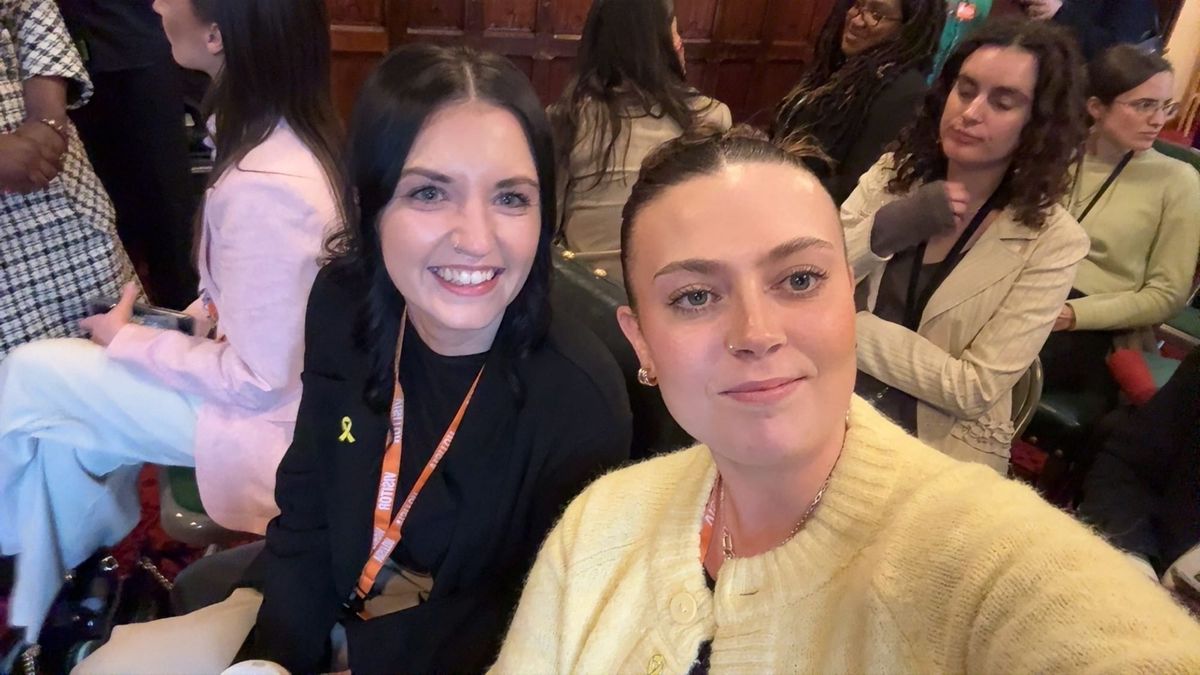
On 24 March, during Endometriosis Awareness Month, Faye travelled to Westminster alongside Monica Thomas, Siana Lynch, and Evie Lapworth – the Ipswich women who have begun changing the stigma around women's health.
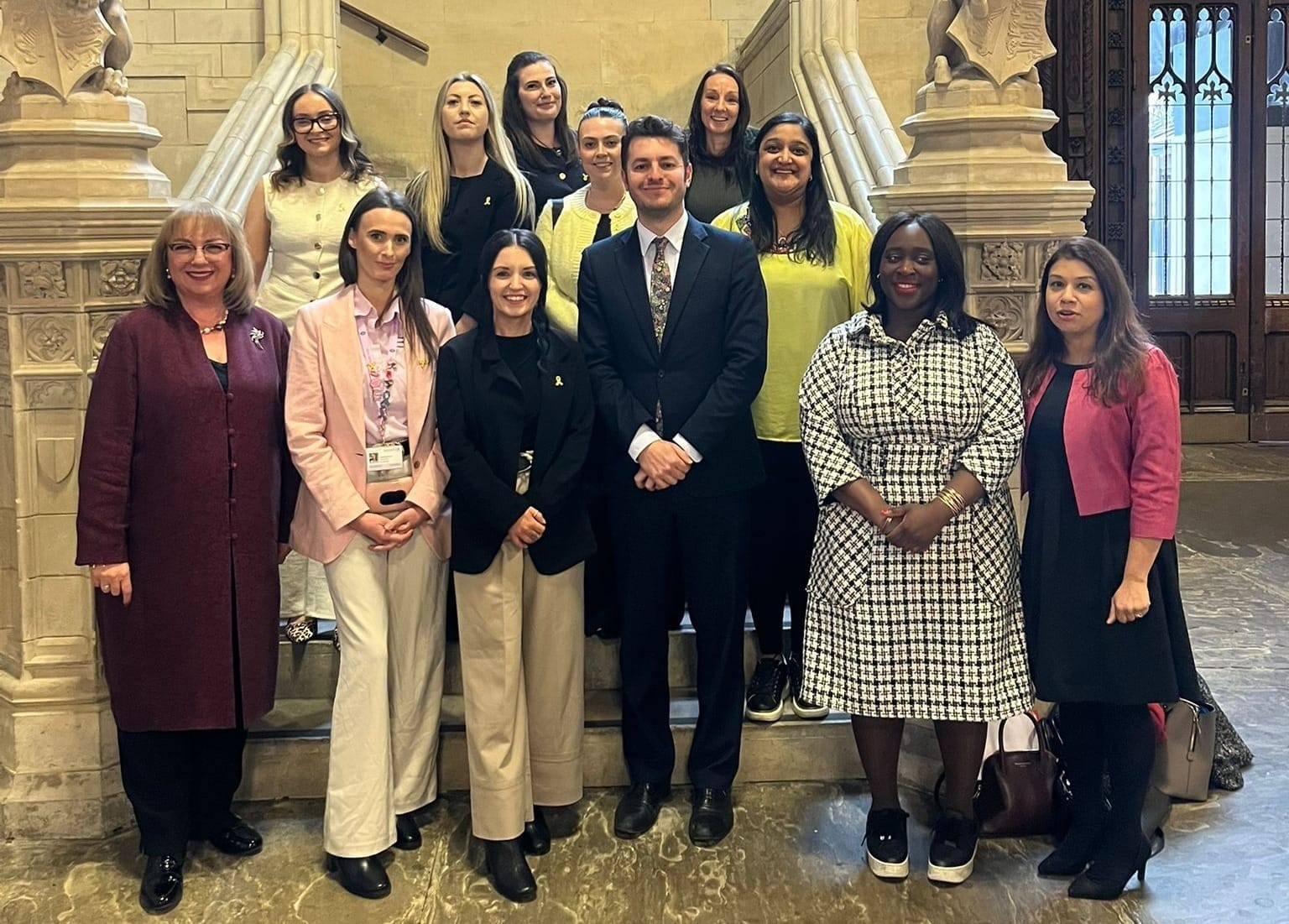
Faye carried all the stories that she had collected from women, along with black and white photographs sent by those who could not be there in person. In the physical presence of one, there were 91 women who were finally being heard.
"I've had two children," Faye says, "but I can honestly say that day was up there with one of the proudest days of my life."
Eighteen months ago, no one was listening. Today, the conversation has shifted — because women in Ipswich refused to let it stay where it was, and because independent local journalism was here to report it and help campaign for change.
We intend to keep reporting: on the campaign for a specialist clinic at Ipswich Hospital, on the waiting times, on the workplaces signing up, and on whatever comes next. That work is funded by local people like you.
If you value our coverage of women's health, please become a member of Ipswich.co.uk for £4.75 a month, so we can continue fighting alongside the incredible women in our town pushing for change.
More than 20 MPs were present throughout the debate, representing constituents from across the country. Abbott called for a specialist endometriosis clinic to be established at Ipswich Hospital, improved diagnosis times, and greater national awareness of the condition.
For Faye, one moment defined the day. An MP from Cornwall stood up and began describing one of her constituents' experiences. As she spoke, Faye recognised the story.
"That story is sitting on my lap," she told Siana. It was one of the 91 she had carried into the chamber. That evening, she was able to message the woman and tell her that her story had been shared in Parliament. "She wasn't aware of it," Faye says. "That was such a nice moment. It made me sit there and think, actually, everything that we're doing is vital"
The failures that made this necessary
To understand why this campaign exists, it is necessary to understand what these women have been living with.
- The average wait for a diagnosis, according to Endometriosis UK, is nine years and four months.
- Suffolk has no endometriosis specialists, with complex cases referred to Colchester Hospital.
- East Suffolk and North Essex NHS Foundation Trust says current waiting times average 44 weeks for general gynaecology appointments and 49 weeks for specialist endometriosis referrals.
- Endometriosis affects one in ten women in the UK, though that figure is based on a 2009 study and is widely considered to be an underestimate.
The stories Faye collected reveal a consistent pattern: women told their pain was "just a bad period" or "in their heads"; women bounced between GPs and consultants for years without answers; women paying privately for diagnoses the NHS failed to provide. Faye herself waited more than a decade before surgery.
But the failures do not stop at diagnosis. Even now, with the campaign in full swing, Faye has encountered the system's oldest habit – withholding information from female patients.
Following a recent hospital admission, she discovered that medical information had been kept from her. When she challenged this, she was told by a consultant that it was standard practice, that patients were not informed of certain findings in order to avoid causing panic.
"Nobody should be withholding that information," Faye says. "I'm a mentally strong person. However, if this fell into the hands of somebody who is going through mental health problems, you're literally playing with someone's life at this point." She has urged the hospital to review its approach to patient disclosure. It is, she argues, the same fundamental issue that runs through every story she has collected: an assumption, embedded within the system, that women cannot be trusted with the truth about their own bodies.
Additionally, there is the workplace. Siana, Faye's co-campaigner, was dismissed from her job while still on probation; her absences due to her conditions have left her with no legal protection. She is now out of work. Her case is not unique. There is currently no legislation specifically protecting employees with endometriosis or other women's health conditions during probationary periods.
The steps being taken
The response to all of this is not just parliamentary. It is practical, local, and already underway.
Faye and Siana are in the process of setting up a charity called Girls Anatomy.
It is not intended to be an endometriosis-specific organisation. Its scope is women's health in the broadest sense: bringing talks into workplaces and schools, advocating for legislative change, and building a platform that keeps the conversation going beyond awareness months. "Our main goal is the fact that we want endometriosis and women's health as a whole consistently spoken about — not just in the awareness months," Faye says. "Really build that momentum. So people actually get a little bit sick of us."
Alongside Girls Anatomy, Faye is actively piloting the Endometriosis Friendly Employer scheme, run by Endometriosis UK, with several local workplaces.
On education, the government has announced that women's health will be included in sex education from September 2026. Faye and Siana welcome it, but have concerns.
Research they have conducted suggests delivery will be left largely to teachers' discretion, without regulated training. They are already in conversations with several headteachers, working to review curricula and deliver talks themselves. Those talks, they insist, must reach boys as well as girls. "Every boy, regardless, is going to have someone within their lives at some point who has endometriosis, or adenomyosis, or PCOS, or PMDD," Faye says. "It's very important that they understand how to be a good partner, a good brother, a good son."
On waiting times, the government is reported to be targeting a reduction in the average diagnosis time to one year by 2030, though Faye says she is still seeking confirmation of the precise details. Faye believes that the target is worth fighting for, as long as people keep pushing. "Four years waiting for that to be reduced down to a year is worth the wait," she says. "But it's not going to happen if people don't keep fighting for it."
Meanwhile, Monica Thomas, who is the founder of Women's Health Hope, met with Abbott this week, describing their conversation as producing "a really clear plan for what comes next."
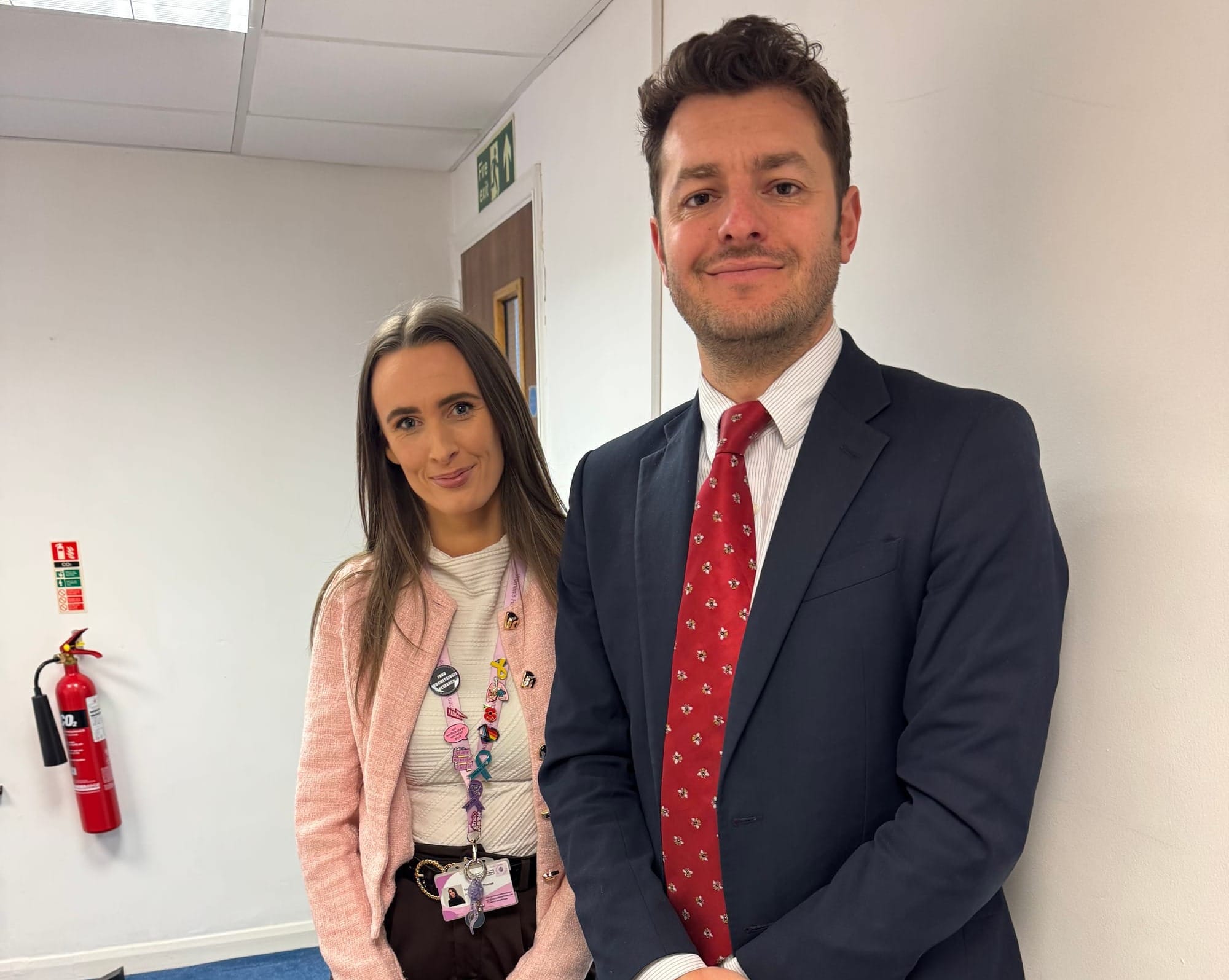
Women's Health Hope is an Ipswich-based charity supporting women with diagnosed and undiagnosed menstrual health conditions, who continue to press for change at a national level, working alongside Abbott as the parliamentary momentum continues to build.
"I'll keep showing up, keep pushing, and keep being a voice — not just locally, but for women across the country who deserve better," Thomas wrote following the meeting.
The bottom line
Eighteen months ago, one woman posted on social media from her sofa, looking for people who understood. Today, 91 women have been to Parliament, a charity is being built, employers are signing pledges, and an MP who was rejected three times kept going until the country had to listen.
The system has not been fixed. The waiting times are still too long. The specialists are still too few. The information is still, too often, being withheld. But in Ipswich, something has shifted - and the women driving that shift have made one thing very clear: they are not going anywhere.
If you have an endometriosis story to share, you can contact Faye via TikTok or Instagram at @girlsanatomy2
To find out more about Women's Health Hope, visit their social media channels @womenshealthhope.
To find out more about the Endometriosis Friendly Employer scheme or to sign your organisation up, visit endometriosis-uk.org/endometriosis-friendly-employer-scheme.
Don't forget: If you enjoy our content, please add Ipswich.co.uk as a "preferred source" on Google so you can easily find more of the content you value.
This article cost us ~£120 to produce
It's free for you to read thanks to the generous support of our partners. Please support us by supporting them.
Below the line