
Five parties, two ballots: The fight for Ipswich
With polling day just two days away, voters in Ipswich face a choice between five parties offering sharply different visions for the town and county. Here is where each one stands on the issues likely to decide how Suffolk is run for the next two years.

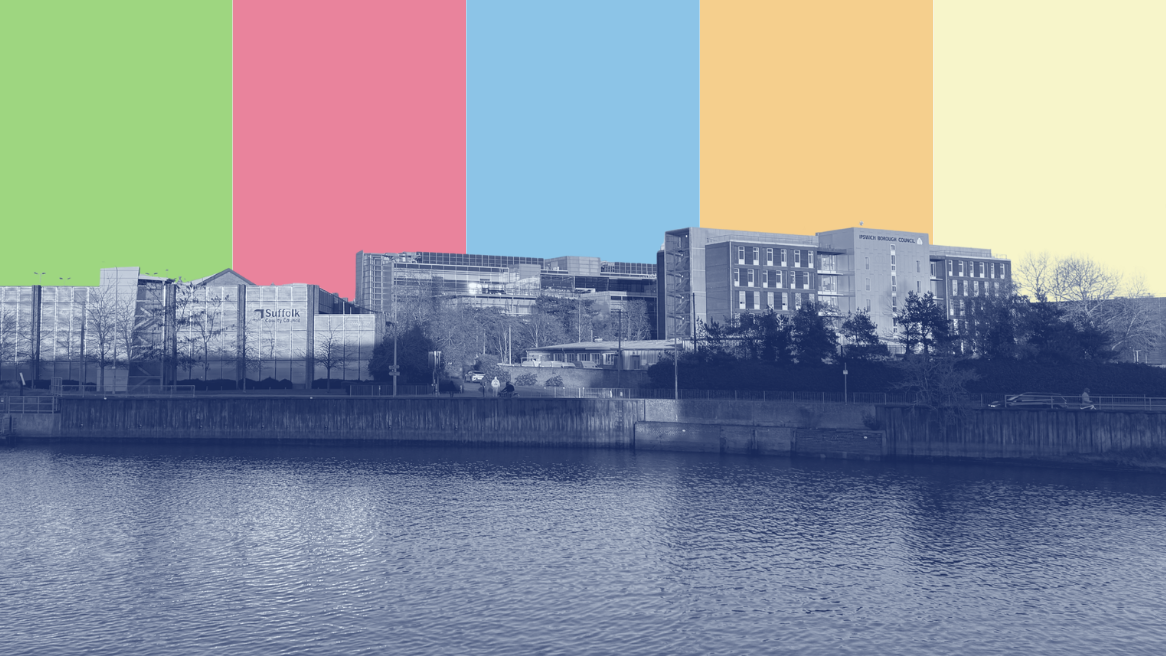
On Thursday, 7 May 2026, residents of Ipswich will head to the polls in two elections at once. All 70 seats on Suffolk County Council are up for grabs, including the 12 divisions that cover the town. At the same time, 16 wards on Ipswich Borough Council — a third of the total — will each elect one councillor.
It is the first time in five years that voters have been asked to fill all of the county's seats, after last year's elections were postponed. The number of seats on Suffolk County Council has been reduced from 75 to 70 since the previous election in 2021. And it will be the last set of elections under the current two-tier system. In May 2027, residents will vote again to elect the first councillors of three new unitary authorities — including the new Ipswich and South Suffolk council, dubbed by many as 'Greater Ipswich' — which will run as shadow bodies for a year before formally taking on power in April 2028.
That makes Thursday's vote, in effect, a two-year mandate. The councillors elected this week will help bridge the transition to the biggest shake-up of local government in Suffolk in half a century. With that backdrop in mind, here is what each of the five major parties is asking residents to vote for.
What councillors actually do
Before turning to the parties, it is worth restating what local councillors are elected to do — and what they are not.
Councillors are elected to represent everyone in the ward or division they win, not only those who voted for them. They work with local people, community groups, businesses, charities and other partners to agree local priorities and shape decisions. Those decisions are then delivered by permanent council staff, known as council officers, who run services day to day.
In practice, the role involves talking to constituents by phone, email, social media, home visit, surgery and at community events; responding to casework and helping resolve local issues; keeping residents informed; reading agendas and reports; attending council meetings; and working collaboratively with local partners — from the police to the NHS to voluntary organisations. Some councillors take on additional responsibilities such as cabinet portfolios, committee chairs or regulatory roles.
What councillors do not decide is national policy. Immigration, VAT rates, foreign affairs, the state pension and the Renters' Rights Act are matters for Parliament and Whitehall, not for Suffolk County Council or Ipswich Borough Council. While these issues sometimes feature in local election campaigns — particularly when parties seek to send a national message — they fall outside the powers a local councillor is elected to exercise.
What does fall within local councillors' remit is substantial. Suffolk County Council is responsible for adult social care, children's services, highways and roads, rights of way, waste disposal, the fire and rescue service, schools and libraries. Ipswich Borough Council is responsible for housing, waste collection, planning, environmental health, council tax collection, leisure facilities and local licensing. Most of the issues people raise on the doorstep — potholes, GP planning, parks, council homes, parking, Broomhill Pool, the future of the town centre — fall within one or other of those two lists.
With that scope in mind, here is what each of the five major parties is putting before voters.
Labour: A Northern Bypass and continuity – for good or bad
Labour controls Ipswich Borough Council with 38 of 48 seats. At Suffolk County Council, the party has held just five seats and has been in slow decline since the early 2000s. This election, Labour's pitch in Ipswich has been dominated by a single issue: the Northern Bypass.
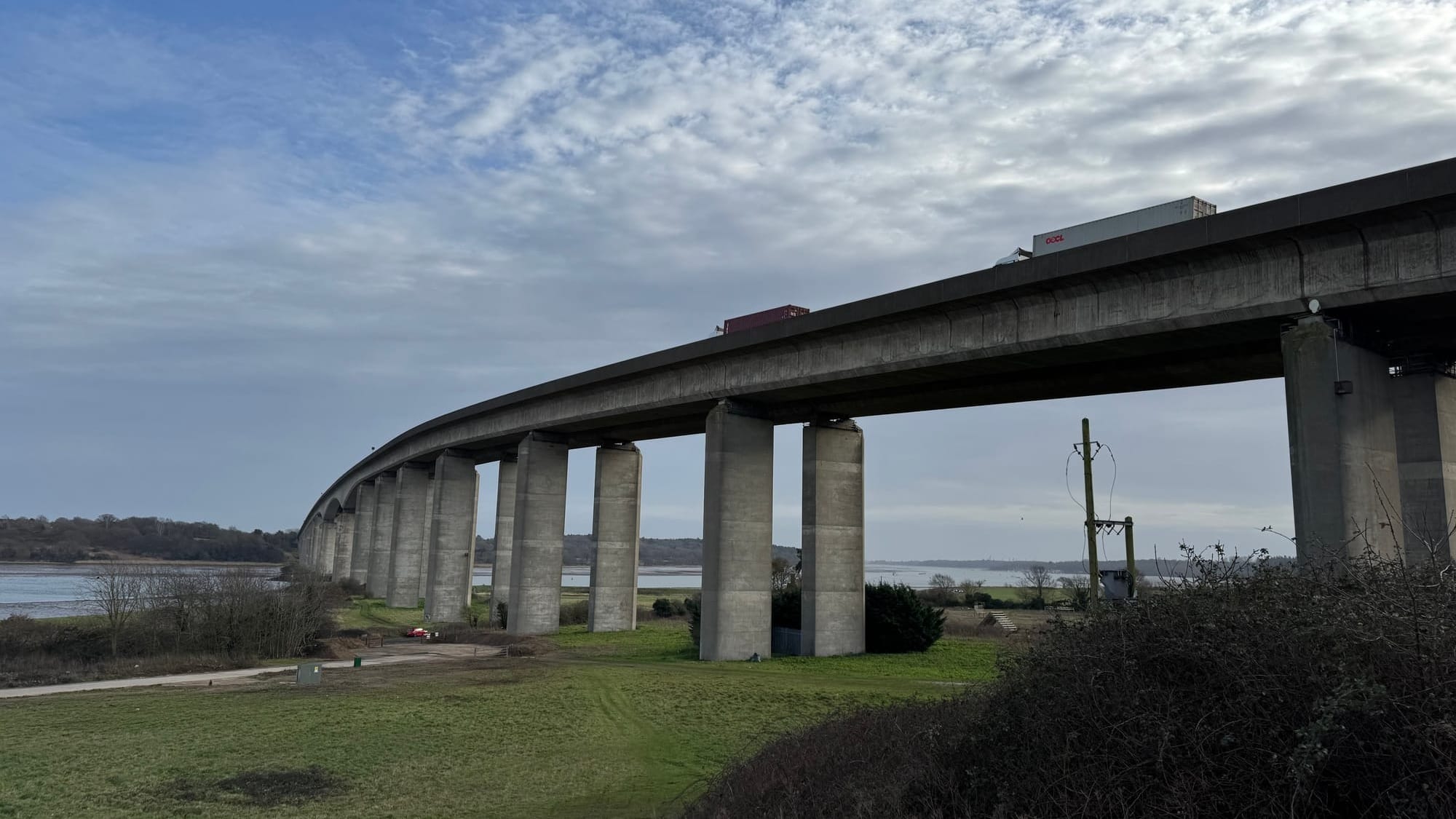
Jack Abbott, Ipswich's Labour MP, has framed the town's road network as "not fit for purpose," writing in correspondence to voters: "Every time the Orwell Bridge shuts, there is chaos, with our town and the surrounding area brought to a standstill. Shipping companies are leaving Felixstowe because of unreliable transport connections, putting thousands of jobs and millions of pounds of investment at risk."
Labour's #BackTheBypass campaign has, the party says, been signed by more than 3,000 people. Abbott has stated that "only Labour backs the project 100%," and that "only Labour councillors will push the Northern Bypass forward."
Beyond the bypass, Labour is leaning on its borough council record. The party says it has built more than 567 new council homes since taking control of Ipswich Borough Council, and points to the £70m allocated to regenerate the town centre and the £219m given to Suffolk County Council for road repairs. The party also points to two £20m awards under the Pride in Place scheme — one for Chantry and Stoke Park, the other for Whitehouse — to be delivered over ten years, with residents themselves deciding how the funding is spent.
Critics will note that the timing of these announcements has come in the build-up to the local elections, and voters will have vastly contrasting views of the council's track record.
It is widely expected that these elections will be tough going for Labour, with candidates facing strong headwinds driven by Westminster.
Conservatives: Backing the bypass locally after two decades of not backing it at the county level
The Conservatives have run Suffolk County Council for most of the past two decades — holding power continuously since 2017, and previously between 2005 and 2013. They currently hold 44 of its 70 seats. At Ipswich Borough Council, the party holds only seven.
Matthew Hicks, the Conservative leader of Suffolk County Council, has thus far avoided addressing the Northern Bypass directly, but, interestingly, it features prominently in the Ipswich Conservative campaign this election, with the party explicitly committing to "fight for a Northern bypass." This position is clearly specifically designed to steal votes from Reform UK, but it sits awkwardly alongside the record of Suffolk County Council under Conservative control. No plan for a bypass has been submitted to government during the Conservative tenure. The Ipswich Conservative position represents a marked shift from the historical stance of the SCC Conservative group, which has taken what Labour describes as a "do nothing" approach and which Labour says cancelled bypass plans in 2020.
Beyond the bypass, the Conservative offer in Ipswich emphasises GP services and continuity of service delivery — alongside a strongly held position on local government reorganisation. The party favoured a single Suffolk model over the three-unitary structure adopted by government, but candidates must now move on and persuade voters that they will do all they can to oversee a smooth transition to a three-council structure.
Liberal Democrats: 'Asking, listening, learning, acting'
The Liberal Democrats hold five seats at Suffolk County Council and three on Ipswich Borough Council. Inga Lockington, the party's group leader at Suffolk County Council, has served continuously as a borough councillor since 1999 and as a county councillor since 2001.
The party's stated priorities include preparing "for 'unitary' by solving County and Borough problems together," tackling "homelessness and care services, school and youth services, pot-holes and pavement litter, blocked drains and floods, utility works and road closure life," and ensuring "the ideas and wishes of all Ipswich people are central to plans for changes to our Town Centre, Waterfront and Business Life."
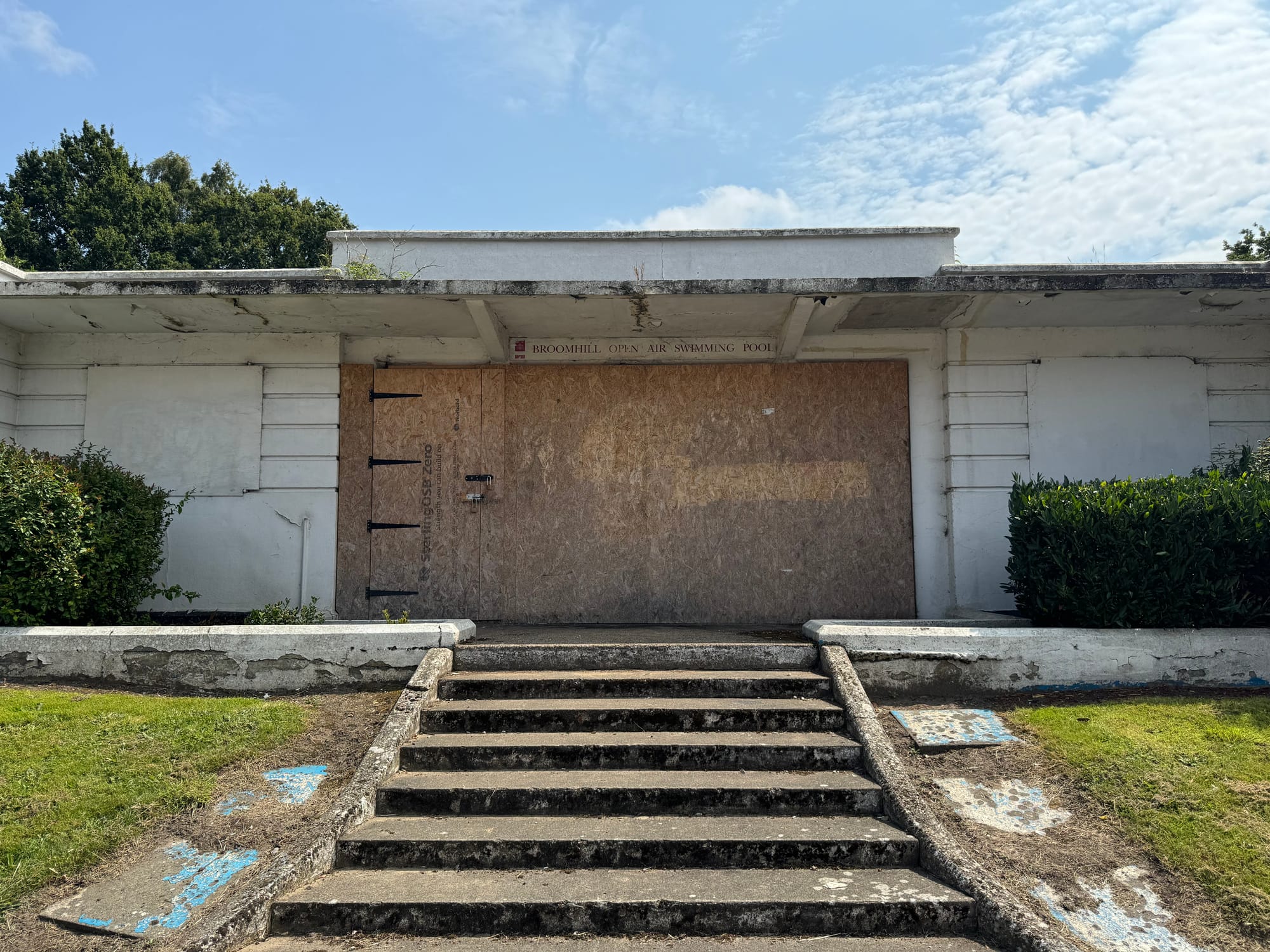
Long-running campaigns for the restoration of Broomhill Pool, the reopening of the Fonnereau Way bridge to the Country Park, and a "GP Guarantee" plan that would tie new housing developments to expanded surgery capacity from day one all feature in the party's campaign pledge.
On the cost of living, Lockington took a distinctive line, calling for a fundamental rethink of how local services are funded. "We need to change the tax system so that you are taxed on your income and not the house, or property you live in," she told BBC Suffolk. "That is such an unfair tax because some people maybe have a good income but choose to live in a smaller house."
The Lib Dems have not taken a public position on the Northern Bypass, but Labour points out that "every Liberal Democrat councillor voted against or abstained" on a Labour motion backing the project at Suffolk County Council. The Lib Dems have not directly contested that characterisation, but they are expected to be very much anti-bypass.
Green Party: A tactical pitch and an environmental case
The Greens have grown rapidly in Suffolk, holding nine seats at Suffolk County Council — making them the largest single component of the official opposition group, alongside the Liberal Democrats and Independents. They took control of Mid Suffolk District Council in 2023 and elected the county's first Green MP in 2024. They hold no seats on Ipswich Borough Council.
A key strand of the Greens' Ipswich pitch this election is a tactical one: that they are best placed to stop Reform UK winning seats in the town. The party has cited canvassing data from a recent Suffolk County Council by-election in the Tower division showing the Greens on 25%, with Reform on 28.8% and the Conservatives, Labour and Liberal Democrats all behind. The party argues this makes a Green vote the most effective way to keep Reform out.
The Greens do not support the Northern Bypass, and the party's national position has been to prioritise the upkeep of existing roads over the building of major new ones. That is a clear point of divergence with both Labour and the Ipswich Conservatives.
Buoyed by the recent by-election in Gorton and Denton in Manchester, and a surge in popularity nationally, the Greens are bullish on their chances in Suffolk.
Reform UK: A national pitch in every ward and division
For the first time, Reform UK is fielding candidates in every ward and division in Ipswich. The party did not stand in the last Suffolk County Council elections in 2021, but has since gained six seats through defections and by-elections.
Reform's national campaign is built around five pledges: cutting bills (including ending VAT on domestic heating), securing borders and deporting illegal migrants, restoring law and order, ending council waste, and putting "the British people first."
Several of these pledges, including the headline commitments on VAT and immigration, fall outside the powers of a local council. In a "personal letter" to voters, Nigel Farage MP wrote: "Britain is broken. Nothing works as it should anymore. Fourteen years of Conservative Government broke Britain. They left us with higher taxes, uncontrolled immigration, high council tax, rising crime and a cost-of-living crisis that is hitting families hard. Now Keir Starmer's Labour government is making things worse."
The party's case on local government performance, which Reform attributes to a Telegraph article from March 2026, claims that Reform-controlled councils have delivered an average council tax rise of 3.94% — lower, the party says, than Labour (4.77%), the Conservatives (4.90%) and the Liberal Democrats (5.49%). Reform describes this as savings of over £45m a year for taxpayers across nine majority-controlled councils.
Reform's most distinctive local position concerns the Northern Bypass. Suffolk Reform UK leader Christopher Hudson — a county councillor who lives in Framlingham — told a Suffolk County Council meeting on 10 July 2025 that "a Northern bypass isn't the solution, it would be a 'Massive blow to local communities,'" arguing that "Ipswich doesn't need a bypass, it needs better public transport." That position has been seized upon by the Conservatives as a reason to vote tactically against Reform in Ipswich, as it looks to steal votes on the right.
Ipswich.co.uk approached Reform's local leadership to invite all of its Ipswich candidates to take part in our meet-the-candidate interviews. Only Tony Gould, standing in Whitton, responded.
The party has fielded many paper candidates as it looks to steal the popular vote by capitalising on national issues and discontent with the Labour Party's leadership.
 Oliver Rouane-Williams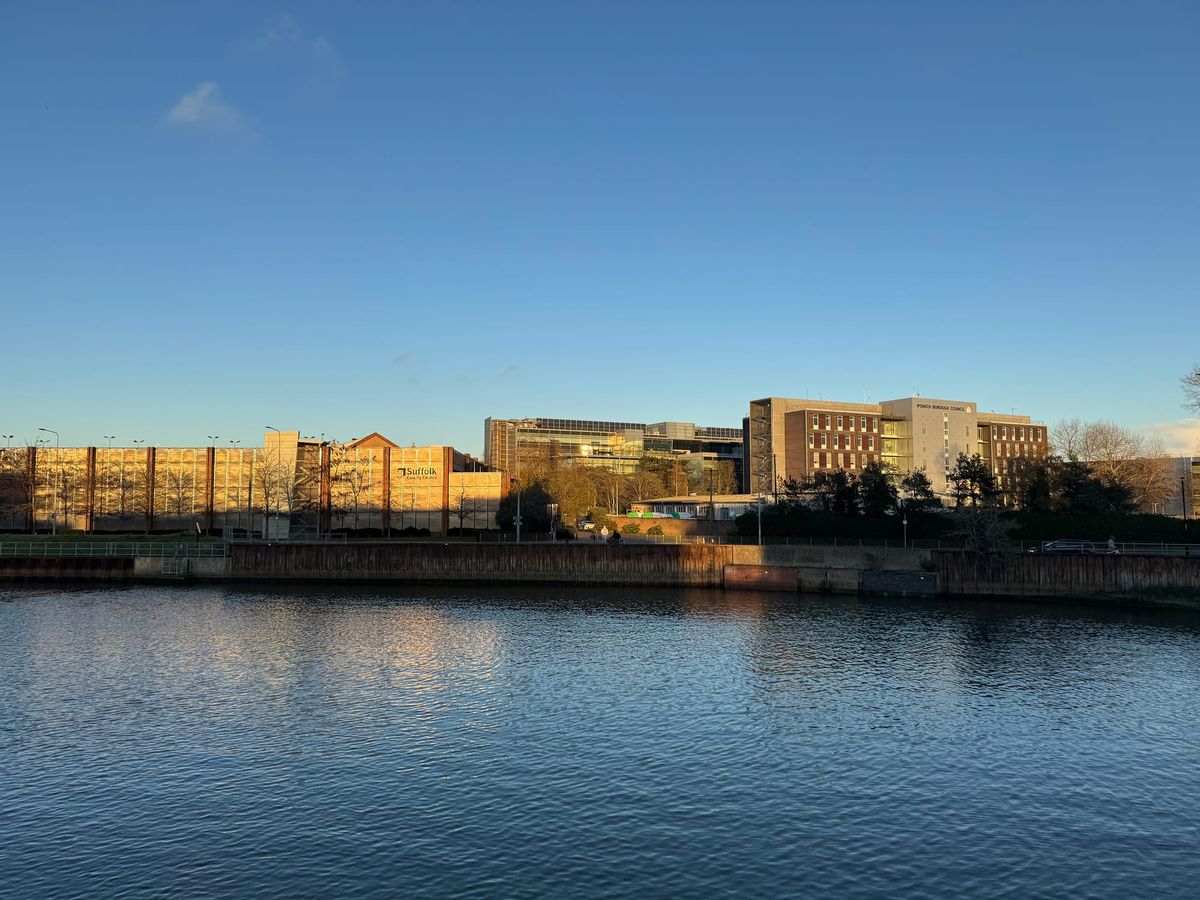
You can find all our Meet the Candidate interviews in this guide
Where the parties agree
Despite their differences, several themes recur across all five parties.
Potholes and the state of Suffolk's roads are the single most consistently cited issue. The county received a red rating from the Department for Transport's local road maintenance ratings system earlier this year, though the council's leadership fiercely contested it. Labour, Lib Dem, Green and Reform candidates have all raised the issue. Where they differ is on cause and remedy: Labour blames Conservative county management of the highways contract; the Lib Dems are waiting for unitary delivery; the Greens want to bring repairs under tighter scrutiny and prioritise existing roads over new ones; and Reform argues the wider waste issue is the deeper problem.
The cost of living also features prominently, though through very different lenses — from Lib Dem proposals to reform property-based taxation to Reform's pledges on domestic heating VAT to Labour's emphasis on the Renters' Rights Act.
The looming local government reorganisation casts a shadow over every party's pitch. All five say they want experienced or principled local councillors steering the transition, but there are serious question marks over whether or not all parties have enough candidates who fit that description.
What is at stake
With only a third of borough seats up for election, the political balance at Ipswich Borough Council cannot change this Thursday. Labour's majority is secure for the next two years, though they are expected to be in for a tough day at the polls.
The bigger prize is Suffolk County Council, where all 70 seats are in play — though for any party to take majority control would require gaining 36 seats. The Conservatives need to retain 36 to keep their majority; Labour, the Greens and Reform would each need to gain 29 seats and hold the ones they have to win outright.
We could see Conservatives retain control. Equally, we could see Reform UK or the Greens win a majority and force a change of control. But perhaps more likely is a no overall control administration, a minority administration or a formal coalition. All are possibilities, which is what makes this election so intriguing.
The deeper story of these elections lies in the transition itself. The councillors elected on Thursday will serve for one year of full-blown decision-making and another year with a shadow council, as the two-tier system winds down towards the launch of the new unitary authorities in April 2028. They will help shape how services are disaggregated, where decision-making sits in the new councils, and what the new Greater Ipswich authority looks like in practice.
That is a substantial responsibility for a vote that polls suggest could be defined as much by national mood as by local performance and competence.
The bottom line
The two-year mandate may be short, but whatever decides your vote on Thursday, the choices on the ballot paper this week remain consequential.
Perhaps less so for the borough, but at the county level, where all seats are up for grabs, these elections provide a fascinating test run ahead of the hugely significant elections for the new unitary authorities next May.
Polls open at 07:00 and close at 22:00 on Thursday, 7 May 2026. Results will be announced on Friday, 8 May.
Don't forget: If you enjoy our content, please add Ipswich.co.uk as a "preferred source" on Google so you can easily find more of the content you value.
This article cost us ~£131 to produce
It's free for you to read thanks to the generous support of our partners. Please support us by supporting them.
Below the line