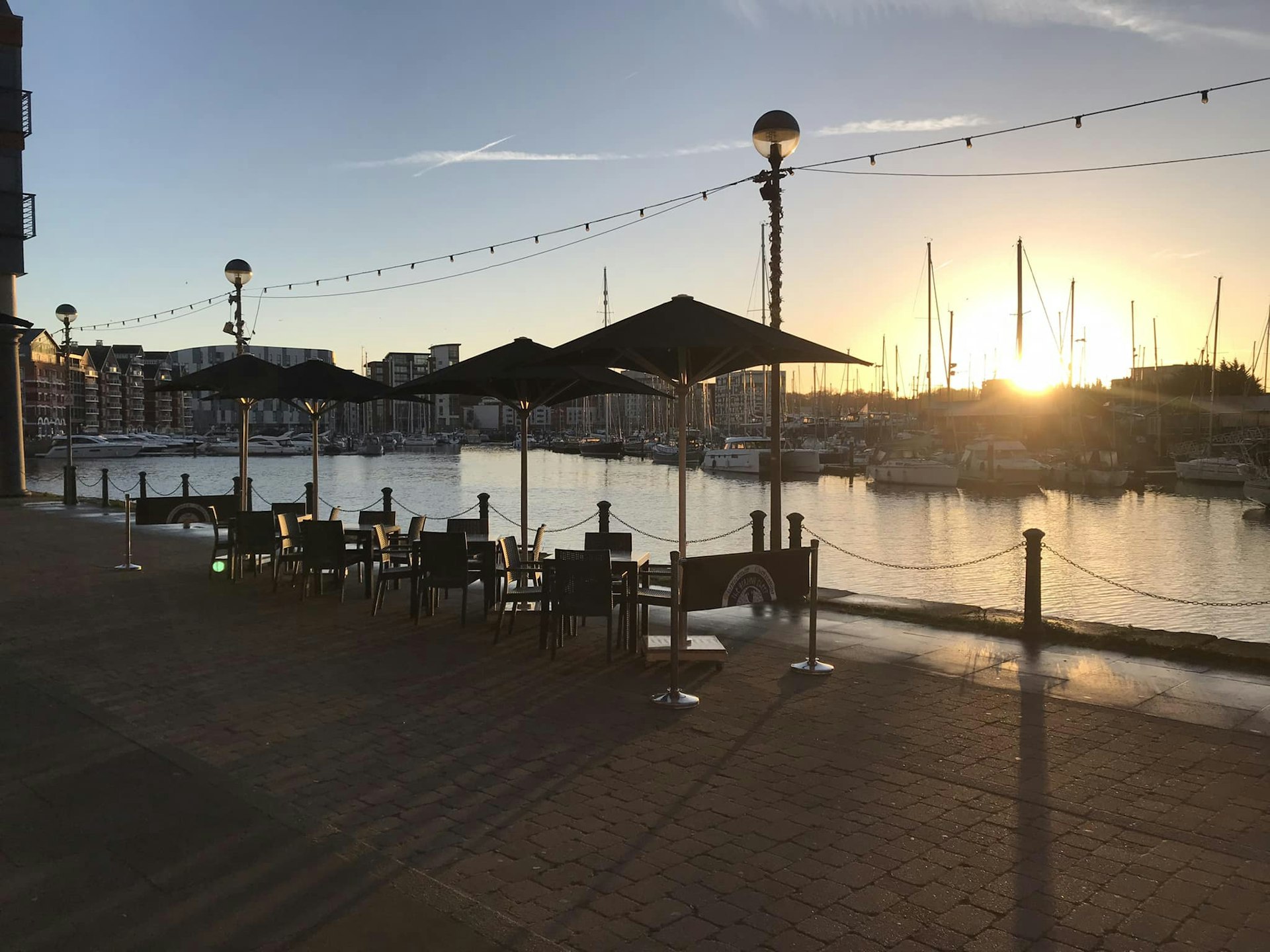
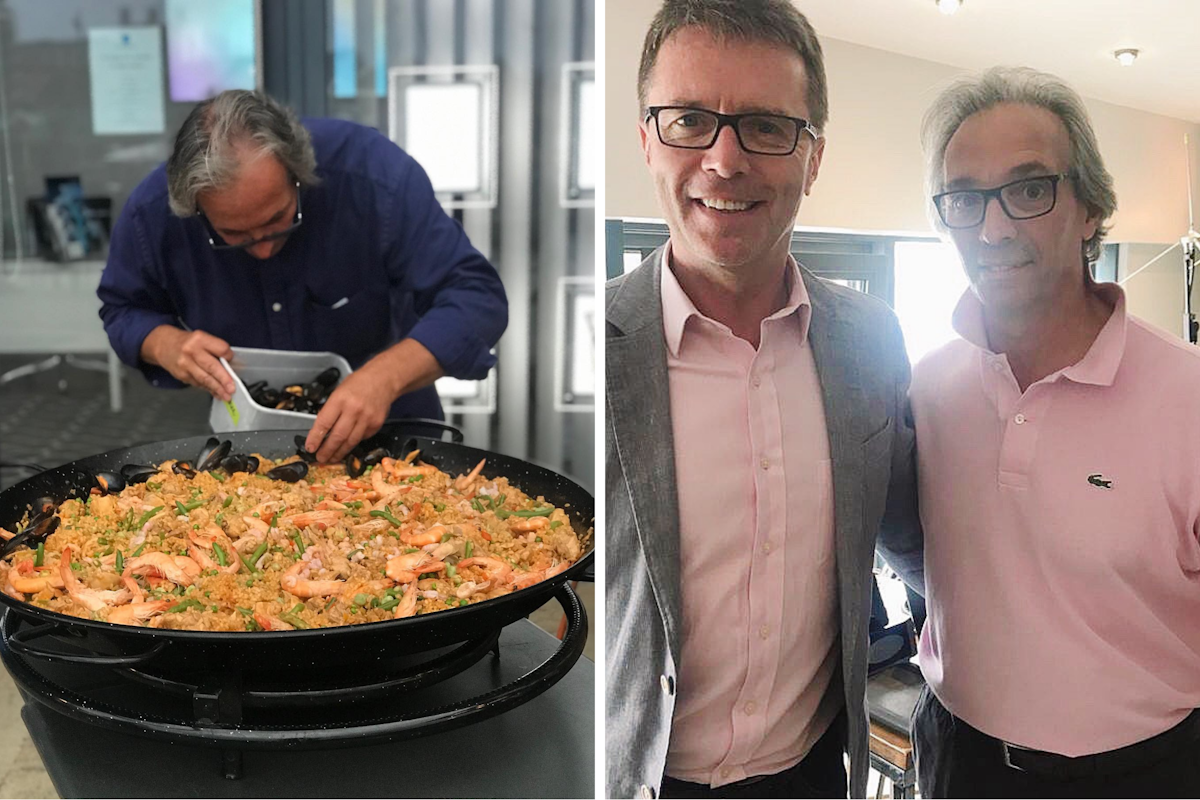
For eight years, the award-winning waterfront cafe served sourdough toast before it became fashionable, Spanish-influenced brunches that made you feel continental, and coffee that could restore your faith in humanity. Bart took over the unit in 2018, giving The Grazing Sheep, which had briefly traded under Rita Clark from 2016-17, a second life with his sons Julian and Carlos.
It won awards annually, including a Blue Ribbon at the Good Food Awards in 2023, but none of that was enough.
"You need to know when to stop, when to quit," Bart, 65, reflects. "That's important in business and in life."
A disappearing horizon
The Grazing Sheep was the sort of place where you could sit with a coffee and watch the world go by – until the view disappeared.
In November, scaffolding went up around an adjacent Regatta Quay building for necessary remedial work. The waterfront vista became metal poles and tarpaulin.
"When you sat inside you were just looking at scaffolding, you couldn't see the lovely waterfront like before," Bart says. "The last two months were very hard."
The cafe closed in December, as per festive custom. The family used the Christmas break in their Majorcan homeland to look at the numbers.
It was the final pressure point in a years-long squeeze.
The cumulative squeeze
Bart estimates The Grazing Sheep now costs £30,000-35,000 more per year to run than it did in 2018-19 – a burden spread across rent, rates and utilities.
"It was a combination of things: higher rent, higher business rates, and the general cost of living for everyone," he explains. "Business rates went up, and the relief we had as a small family business disappeared after the pandemic. Energy prices were ok in 2023 and 2024 because we were in a contract, but last year it went sky-high."
Then there's competition. When The Grazing Sheep opened in 2018, Bart estimates there were around half a dozen cafes in the area. Now there are many more, spreading footfall across more venues.
"There is only so much more you can put up your prices," he says. "People are prepared to pay for breakfast, but it's not a white-tablecloth restaurant – it's a cafe. And there's only so much you can morally charge. If you're not careful, you price yourself out of the market."
Awards didn't solve the margin squeeze. The Grazing Sheep won recognition every year, but reputation doesn't pay the energy bills.
"We explored everything to stay open, but we didn't want to get into debt," Bart says. "We were lucky not to have to do that during the pandemic, and we didn't want to start now."
Hospitality VAT cut could be 'saving grace'
Despite closing his own business, Bart has a clear message for policymakers: review VAT for hospitality.
"After the pandemic we all benefitted from the lower VAT rate for a while. Now VAT is back up, and for hospitality it's a key issue," he says. "If I were to give an opinion, a review of VAT for our sector would be a must – it could be a saving grace."
The temporary 5% rate introduced in 2020 rose to 12.5% before returning to 20% in 2022 – a shift Bart says can decide whether a small cafe survives rising costs. Yet the recent autumn Budget offered no relief, despite repeated calls from industry groups for a reduced rate.
It's a plea grounded in four decades of experience. Bart has spent 45 years in England – London first, Ipswich second – working in hotels, pubs and restaurants. The Grazing Sheep was the smallest operation he ever ran, and the most rewarding.
"The direct contact with customers all day long was fabulous," he says.
A pasture well earned
Bart plans to retire in Ipswich, "drinking coffee leisurely" while enjoying time with his family including his sons and grandchildren. He's honest about his decision: "I'm using this as an excuse for retirement!"
Julian, who worked as chef at The Grazing Sheep, is expected to stay in hospitality. "He's very talented and experienced. I'm sure he will find a new role quickly."
Whatever becomes of the unit, Bart thinks it's best suited as a cafe. "Maybe when conditions change for the better, someone can make good use of it."
What Bart takes with him are the relationships built over decades. "A heartfelt thank you to every single person who came through our door," he says.
He also remains cheerfully optimistic about his adopted town: "Six months ago the town centre was much quieter. Now there are more shops, more cafes, more vibrancy. Ipswich feels like it's on the rise."
"There has always been resilience in Ipswich," he adds. "When one business closes, another opens. That's the nature of the town."
Hasta luego, Bart
When a 40‑year hospitality veteran says the numbers don’t add up, it’s wise to listen. Bart’s story isn’t one of failure. Rising costs, competition, the cost of living – and even a wall of scaffolding – pushed a good business to its limit, and he chose to step away with clarity and grace.
The Grazing Sheep added its own sun‑splashed, Spanish‑tinged warmth to the Waterfront. And when places like that go, they don’t vanish cleanly. They leave a small space in the day: the kind you notice each time you wander past and think, almost without meaning to, 'that was a nice spot'.