Why it matters: The debate kept the conversation alive on major reform that will see Suffolk's county, district and borough councils cease to exist and be replaced by unitary authorities with more powers by May 2028.
The big picture: Two business cases were submitted to the Government in September – one calling for a single unitary covering the whole of Suffolk, and another splitting the county into three.
The debate, held on Thursday, touched on many of the same talking points councillors have been arguing about over the past few months, particularly around finances and keeping decision-making close to residents.
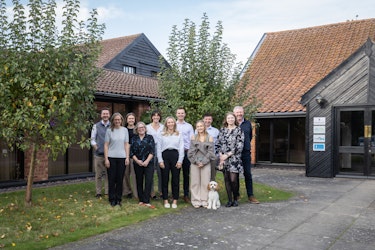
Among those attending the meeting were local leaders, former mayors and members of the House of Lords.
Representatives from the district and borough councils, who submitted the proposals for the county to be split into three, were not present.
The One Suffolk proposal: The county council has rallied behind potential savings which could be achieved, amounting to some £78.2 million after the first five years, with a further £39.4 million each year after that.
These savings could then be reinvested, addressing some of the challenges the council is facing, particularly around children's services and social care.
To address fears that a single authority would be too remote, the county council stressed its proposals for the creation of 16 area committees as well as extra funding and powers for town and parish councils.
The county council's business case included proposals to set Council Tax at the Mid Suffolk level, potentially saving between £17 and £245 for a Band D property everywhere else.
A funding pot totalling £40 million was also put forward for initiatives in market towns, including Ipswich.
All of these measures would have to be put in place by whoever took over the new authority, meaning the county council could not promise any of them would actually come forward.
What they're saying: Cllr Matthew Hicks, the county's leader, said: "It's a huge opportunity for a new start, a fresh start to design our services around the people who use them."
Mr Cartlidge, who backed the single unitary plans, said: "If this massive reform doesn't save money, then it is pointless because of the fundamental pressure on council budgets."
He warned, however, that any savings would need to be kept in the county, rather than ending up in Government coffers.
"If we create one or three unitaries, whatever money is saved through that process [...] must stay in Suffolk to be spent for the community," he said.
"We must keep the money here and not simply see it return to the treasury to our detriment."
Councillor Richard Rout, Suffolk County Council’s cabinet member for devolution, local government reform and NSIPs, said: “Today’s conversations have reminded us that success won’t come from a single blueprint – it will come from partnership. From listening to our parish and town councils, to businesses, to the voluntary sector – and most importantly, to our residents.
“Because local government reform, at its heart, is about rebuilding trust: proving that we can change how we work, without losing what makes Suffolk’s communities special.
“Change on this scale is never easy. But I am confident that if we stay focused on delivering for our residents, then we can create something truly transformative: one council, one voice, one Suffolk.”
Baroness Jane Scott, who oversaw the creation of a unitary council for Wiltshire back in 2009, praised the council's proposals on Thursday, stressing they were the right thing to do.
The alternative: Suffolk's district and borough councils have put together a business case for three unitaries to be set up with new boundaries.
Their pitch focuses mainly on ensuring that the new authorities maintain localness in decision-making.
Nevertheless, their model still proposes savings to the tune of £34 million a year, with £20 million of that reinvested back into services.
Localising services, they claimed, could save a further £67.5 million annually.
On Council Tax, their model could result in the bill going up between £0.53 and £1.78 per week, or £27.56 to £92.56 yearly.
Cllr Neil MacDonald, Ipswich's leader, said: "We are currently focusing our efforts closer to home as the only workable proposal for local government reorganisation in Suffolk is for three councils which are big enough to deliver and local enough to care.
"Our locally focused proposal is backed by expert financial analysis, delivering real savings and investment in services rather than empty promises."
What's next: The Government is expected to launch its consultation on both proposals at some point next month, with every resident able to weigh in.
The consultation is expected to end in early 2026, with a final decision coming later that year.
Elections will then take place for a 'shadow council' in May 2027, which will exist underneath the current structure until May 2028, when it will take over.
It is still unclear if local elections will take place in May 2026 after they were delayed by the Government last year.
The bottom line: With the Government consultation imminent, Suffolk residents will soon have their say on whether the county becomes one large authority or splits into three smaller ones, each with significant implications for local services and Council Tax bills.