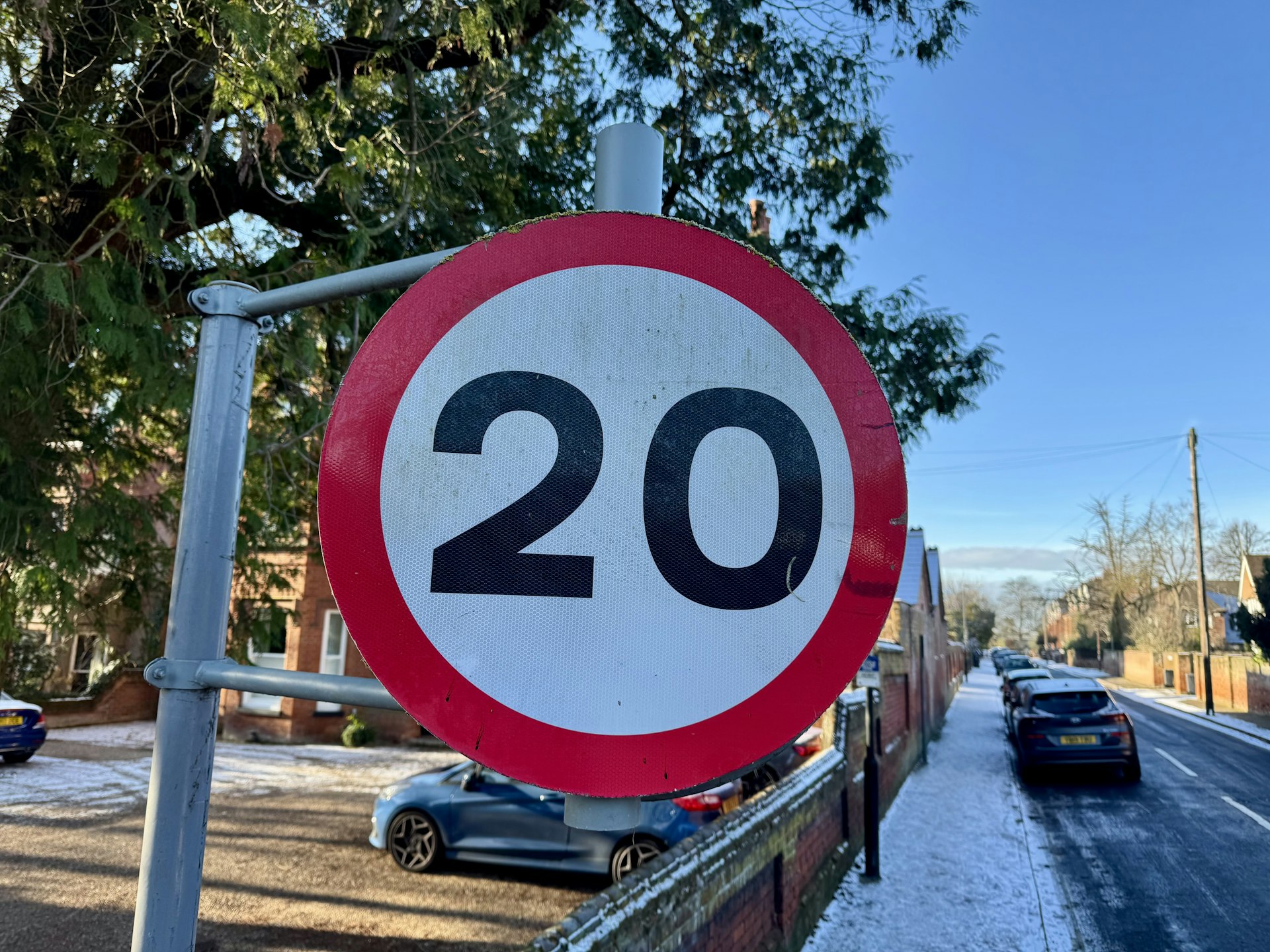
Why it matters: The Cabinet will consider the proposals on Friday, 9 January, which aim to give communities greater opportunity to reduce speed limits in residential and high-pedestrian areas. However, opposition groups say the changes will make it no easier for communities to obtain slower limits and represent a missed opportunity to tackle Suffolk's worsening road safety record.
The details: The new policy would allow communities, typically parish or town councils, to come forward with proposals for 20mph limits, supported by their local county councillor and backed by local engagement. The council has developed assessment criteria based on observed average traffic speeds, the role and character of the road, and the presence of vulnerable road users.
Where average speeds are already low, there will be a presumption in favour of a 20mph limit, often supported by clear signage. Where speeds are higher, additional measures such as traffic calming may be required.
However, these community-led schemes are anticipated to be locally funded.
What they're saying: Robert Lindsay, Green county councillor who helped secure a 20mph speed limit for Bildeston, said: "It's one step forward and one step backward. Overall, this will make it no easier for communities to get a 20mph limit.
"The changes are cosmetic. The Conservatives obviously want to appear as if they are doing something about speeds of traffic in our communities, but these proposals carefully leave the burden on communities to jump all the hurdles - and add a new one."
He added: "Deaths and serious road injuries have risen in Suffolk from 207 to 355 in the ten years to 2024. This will make no difference to that dreadful toll."
Felixstowe Liberal Democrat county councillor Seamus Bennett said: "The administration acknowledges that 20mph limits create safer, calmer neighbourhoods with cleaner air and efficient traffic flows, but its proposed new policy unfortunately does little to facilitate making this happen on the ground – it is a real missed opportunity."
The criticism: Mr Lindsay said the proposal removes the current complicated array of subjective criteria in favour of speed surveys, but makes things worse by inserting the demand that parish and town councils conduct a "formally conducted survey or similar consultation" which the community will have to fund before a 20mph limit will be approved.
"This is not required currently," he said. "At one point, the proposal even demands the community that wants a 20mph limit conduct an 'area-wide referendum' before a 20mph limit can be approved."
Mr Bennett said the administration had missed the opportunity to learn from Wales, where defaulting to 20mph in urban areas did not require strict enforcement and where sign-only 20mph limits reduced road casualties by 28% in the first year and even saw car insurance premiums fall significantly.
"The number of people killed and seriously injured on Suffolk's roads continues to rise, and these proposals will do nothing to stop this worrying trend," he said. "Suffolk could have joined the growing movement towards 20mph in residential areas, but instead we are left with an underfunded, piecemeal approach, leaving all road users at more risk they need to be."
For context: The opposition Green, Liberal Democrat and Independent group said the Conservatives voted down their motion this summer to adopt the internationally recognised "Vision Zero" policy to eliminate deaths and serious injuries on roads. That would have required the county to review all speed limits, including 60mph limits on twisting, rural, narrow roads and reduce speed limits accordingly.
The council's view: Councillor Chris Chambers, Suffolk County Council Cabinet Member for Transport Strategy, said: "This revised policy aims to strike the right balance between local choice and effective delivery of a 20mph limit, helping communities create safer, healthier places to live.
"The current process is complex and lengthy, and results in fewer locations meeting the success criteria. This new policy approach will provide communities with a toolkit to implement speed reduction when appropriate to make Suffolk roads safer."
The council says studies have shown that reducing speed limits can significantly decrease the number and severity of road accidents, and that slower speeds contribute to a more pleasant and liveable community, encouraging outdoor activities and fostering a sense of neighbourhood cohesion.
However, the proposal acknowledges that 20mph limits can be unpopular with motorists, and with police enforcement capacity limited, it was important that such schemes were introduced with community backing to ensure as much local support as possible.
The bottom line: While Suffolk County Council says its new policy will make it easier for communities to secure 20mph speed limits, opposition groups argue the proposals represent a cosmetic change that adds new hurdles and fails to address the county's rising road casualty figures.