Back in 2021, Ipswich Borough Council promised residents something spectacular: a £900,000 "trailblazing model of excellence" that would transform our town centre with a 5km green trail, living walls, and vibrant public spaces connecting the waterfront to the town centre.
It was to be funded by a £600,000 Towns Fund grant – part of a once-in-a-generation opportunity to regenerate Ipswich with £25 million of central government funding – and £300,000 of additional council funding.
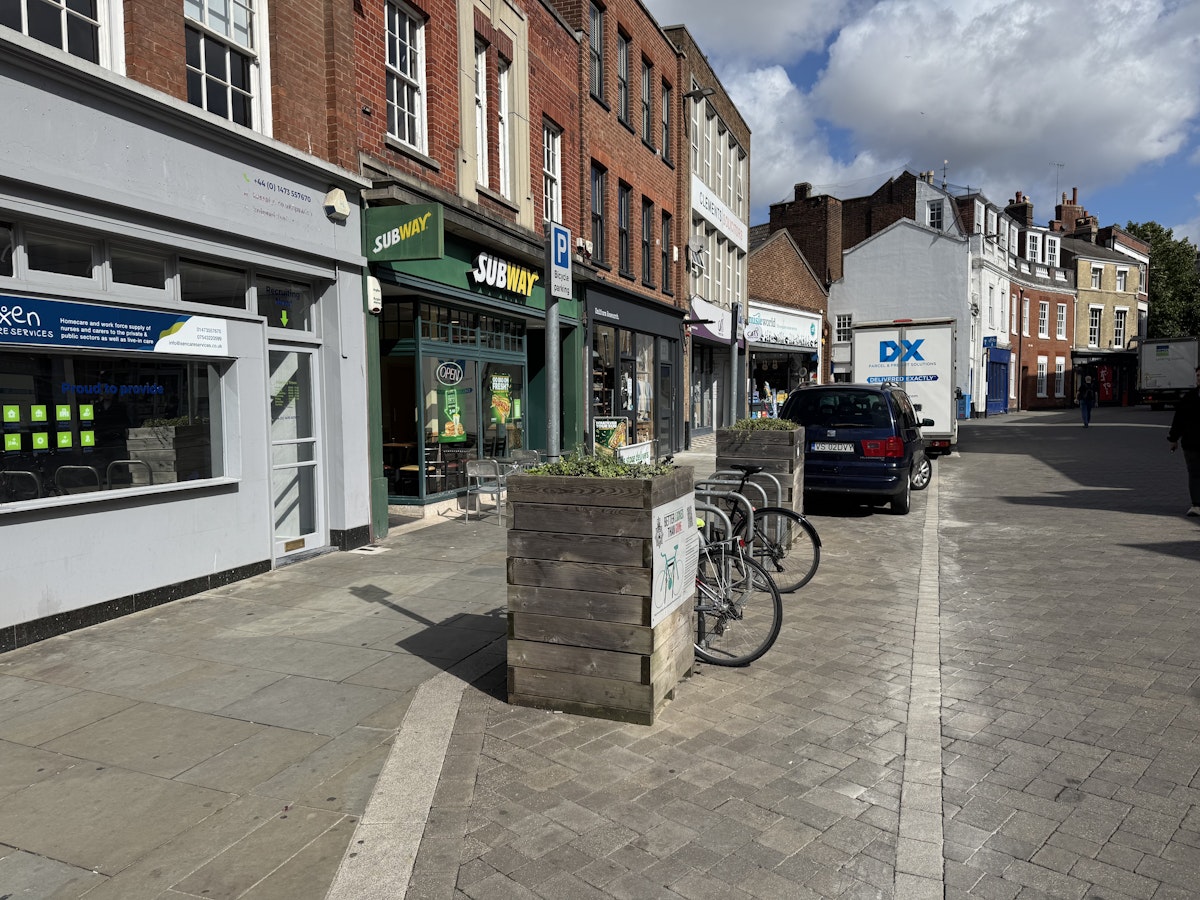
Four years later, we've got some hanging baskets that get planted each summer and a few temporary concrete planters around the Cardinal Wolsey statue. Meanwhile, nearly half the allocated funds have already been spent – £279,000 and counting.
What we were promised
The Oasis Project was supposed to deliver tangible economic benefits by making our town centre more attractive to shoppers and businesses.
It is precisely what Ipswich so desperately needs, and in the original Towns Fund application, the council got the vision spot on.
At its heart was a green trail of approximately 5km linking the town centre and waterfront, with rows of planted trees and beds completely transforming the look and feel of our town centre while showcasing "the diversity of methods available to introduce trees, planters, containers and living walls into towns and cities."
We were getting a landmark living wall as the destination and focal point of the green route.
The project would provide plants, containers and living wall infrastructure, encouraging businesses and residents to enhance their outside environments. Supporting businesses would be listed on a Green Trail map and publicly celebrated for their commitment.
There would be outdoor activities along an "activity mile" featuring exercise equipment and possibly even a basketball court.
The project promised collaboration with local partners, including Greenways, Green Light Trust, Suffolk Wildlife Trust, and The Woodland Trust, potentially linking with local high-profile celebrities.
The vision was clear: "Ipswich's newly buzzing, eco-friendly, and attractive town centre will have a positive socio-economic impact as it will be more attractive to shoppers, day trippers and potentially also businesses looking to relocate."
Four years and £279,000 later
What started as a transformational urban regeneration project has become a masterclass in how ambitious promises can shrivel into underwhelming reality, and a shining example of why so many people have such little faith in local government.
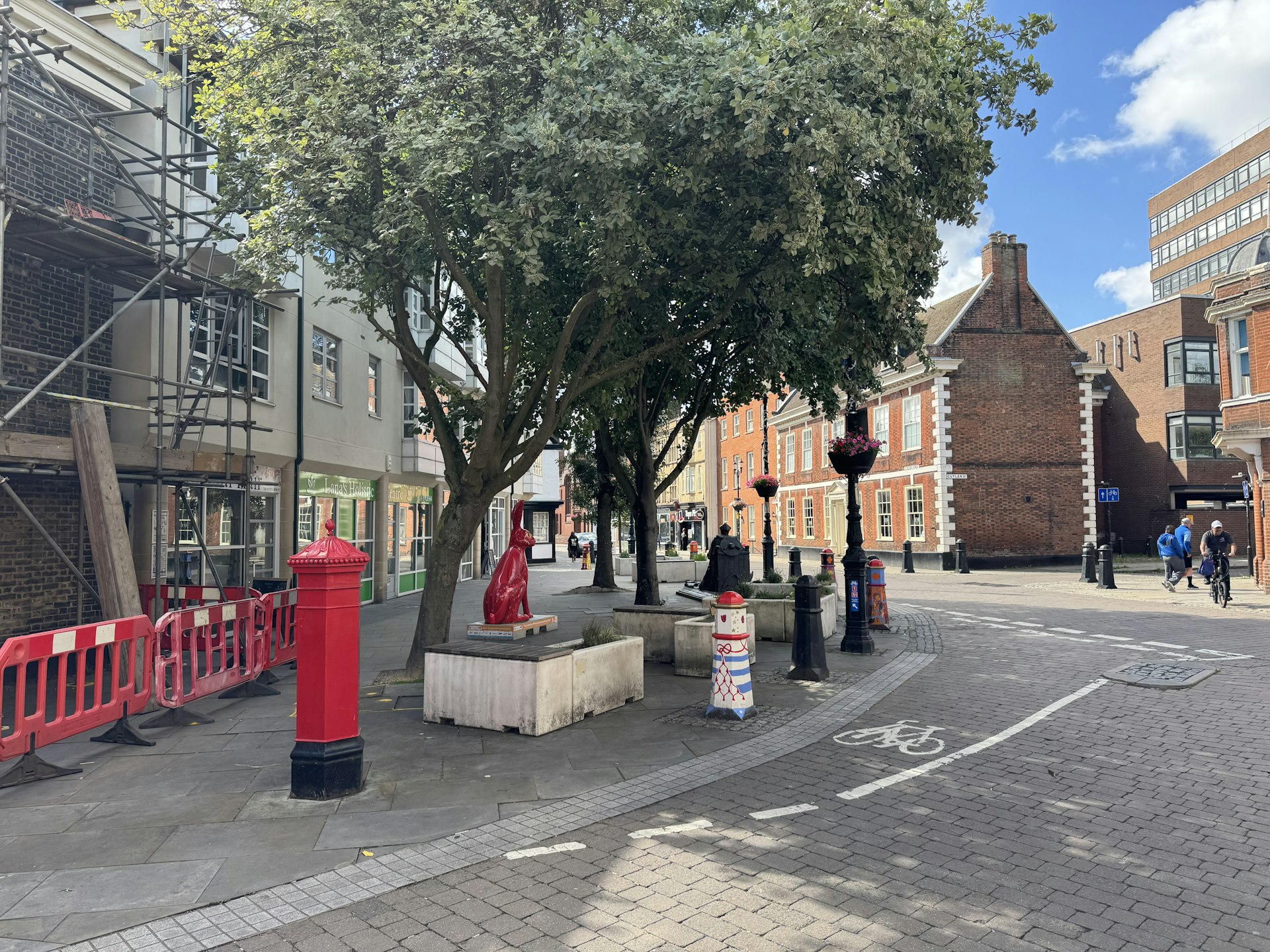
The project has provided a financial contribution towards lamppost hanging baskets for the Jubilee celebrations – nice enough, but hardly revolutionary– and a few temporary concrete planters and benches at Wolsey Square, which will be moved elsewhere when permanent works begin.
That's it.
Total transformation delivered so far: some seasonal hanging baskets, movable concrete planters, and some benches.
What's next?
What began as the "Ipswich Oasis Project" was reshaped in consultation with government advisors into the more modest "Public Realm and Greening" project we see today. The remaining £321,000 from the Towns Fund allocation – plus additional council funding bringing the total project cost to £900,000 – is earmarked for the "connected trail" through four town centre streets, but don't expect miracles.
The grand vision has been repeatedly scaled back due to underground utilities. While the council followed proper British Standard protocols for utility surveys, the most detailed investigations only revealed the full extent of buried infrastructure constraints during the technical design phase.
In Princes Street, proposed trees had to be removed after trial trenches revealed hidden utilities in the old tram track foundations.
In St Nicholas Street, four planned trees were scrapped entirely when "unidentified services" were discovered running through the proposed planting areas.
On St. Peter's Street, a small number of businesses didn't want to sacrifice on-street parking to make way for trees and seating, so that was killed altogether.
So, what are we getting, you may be thinking? Well, according to the council, this:
Two areas of raised planters on Princes Street
One tree and raised planters on Queen Street
Two raised planters and three integrated benches on St Nicholas Street
Three permanent planters and new permanent benches on Wolsey Square
The contractor appointment is now at an advanced stage, with the final delivery programme expected by the end of September 2025 and completion by spring 2026.
Even if everything goes to plan – and this project's track record doesn't inspire confidence – we're looking at what amounts to one tree and seating integrated into some raised beds.
Some way short of the grandiose plans.
In the council's defence
Urban greening projects face genuine challenges, and there are many hoops to jump through.
Underground utilities are a legitimate constraint that often becomes fully apparent only during detailed technical surveys, and the council has had to navigate complex legal agreements with Suffolk County Council for highway works.
The evolution from the original "Ipswich Oasis" concept to a more modest "Public Realm and Greening" project reflects both government guidance and practical realities.
But it has sold Ipswich short.
The uncomfortable truth
You can't transform a town centre's economic fortunes and deep-rooted external perceptions with "modest" projects. You need a big, ballsy, ambitious vision and noticeable, in-your-face positive change – the kind that was promised.
The council insists the project will increase footfall and dwell time, supporting local businesses and creating "unplanned social encounters" that boost wellbeing.
It won't.
It's better than nothing, but the promised "positive socio-economic impact" from creating a buzzing, eco-friendly destination bears no resemblance to the modest improvements being delivered.
And the council should – and must – be held accountable for that.
The bottom line
Ipswich deserves better than hanging baskets and planters dressed up as urban transformation. After four years and £279,000, we should have something more substantial to show than what we have, and the work to come should be multitudes more ambitious than it is.
The remaining works might add some welcome greenery to our streets, but they're not going to deliver the economic regeneration that justified this investment in the first place, or that the town requires.
When the final bill comes in at around £900,000, residents will be entitled to ask: couldn't we have achieved more? The answer, in my humble opinion, is unequivocally "yes".