Why it matters: In a remarkable coincidence, the fossil was found near the museum's façade that already features decorative terracotta panels depicting ammonites and other artefacts from the collection.
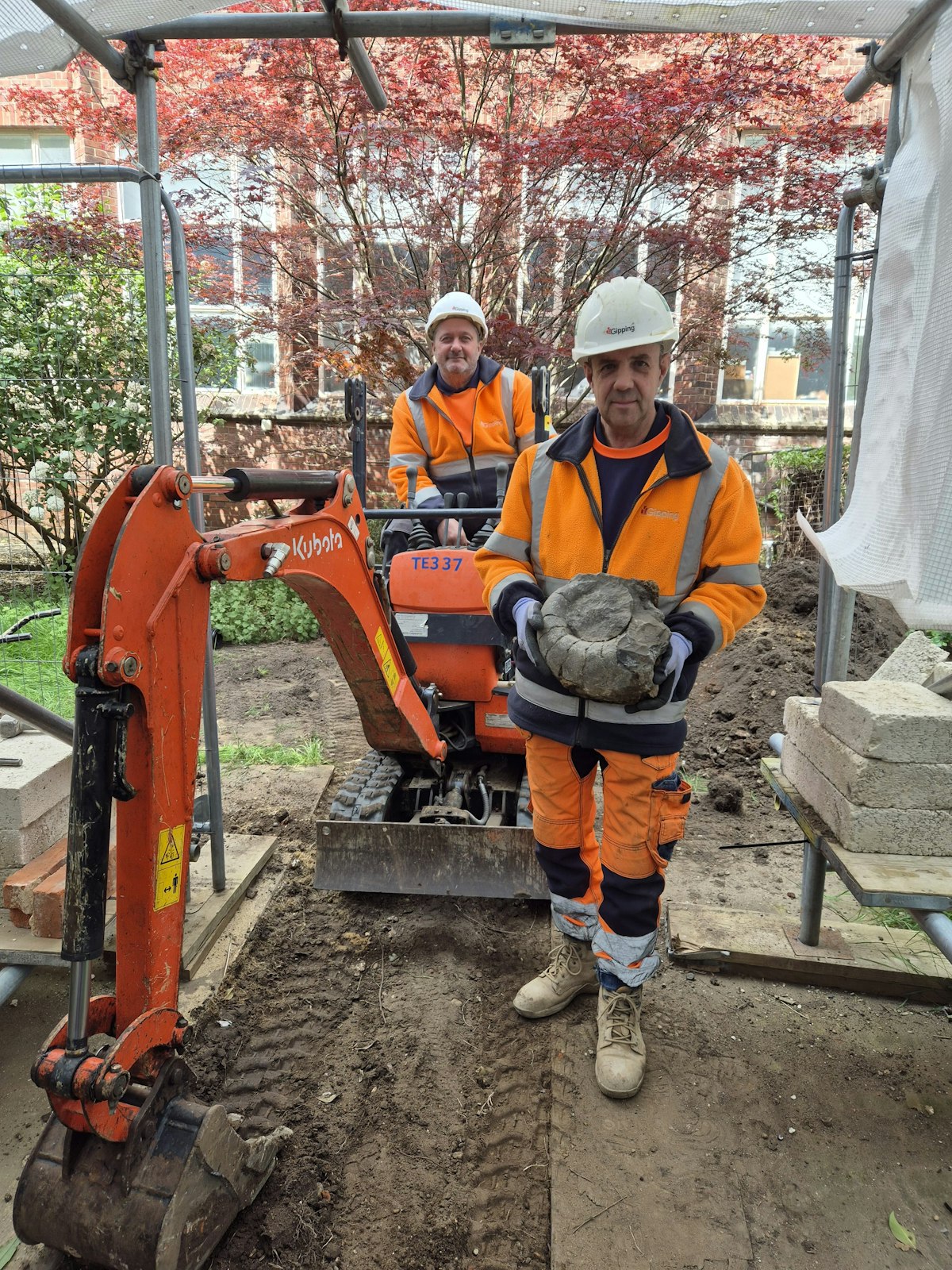
The details: The discovery was made yesterday by Gipping groundworkers Ian Mumby and Jason Starsmoore while they were excavating for a new water main in the museum's garden.
"While we were excavating the ground for a new water main, we came across something hard in the ground. When I pulled out the digger bucket out, there was the Ammonite," said Ian Mumby. "We carefully removed the fossil and reported it to Steve James, Gipping's Project Manager. It is very rare to find anything of this kind."
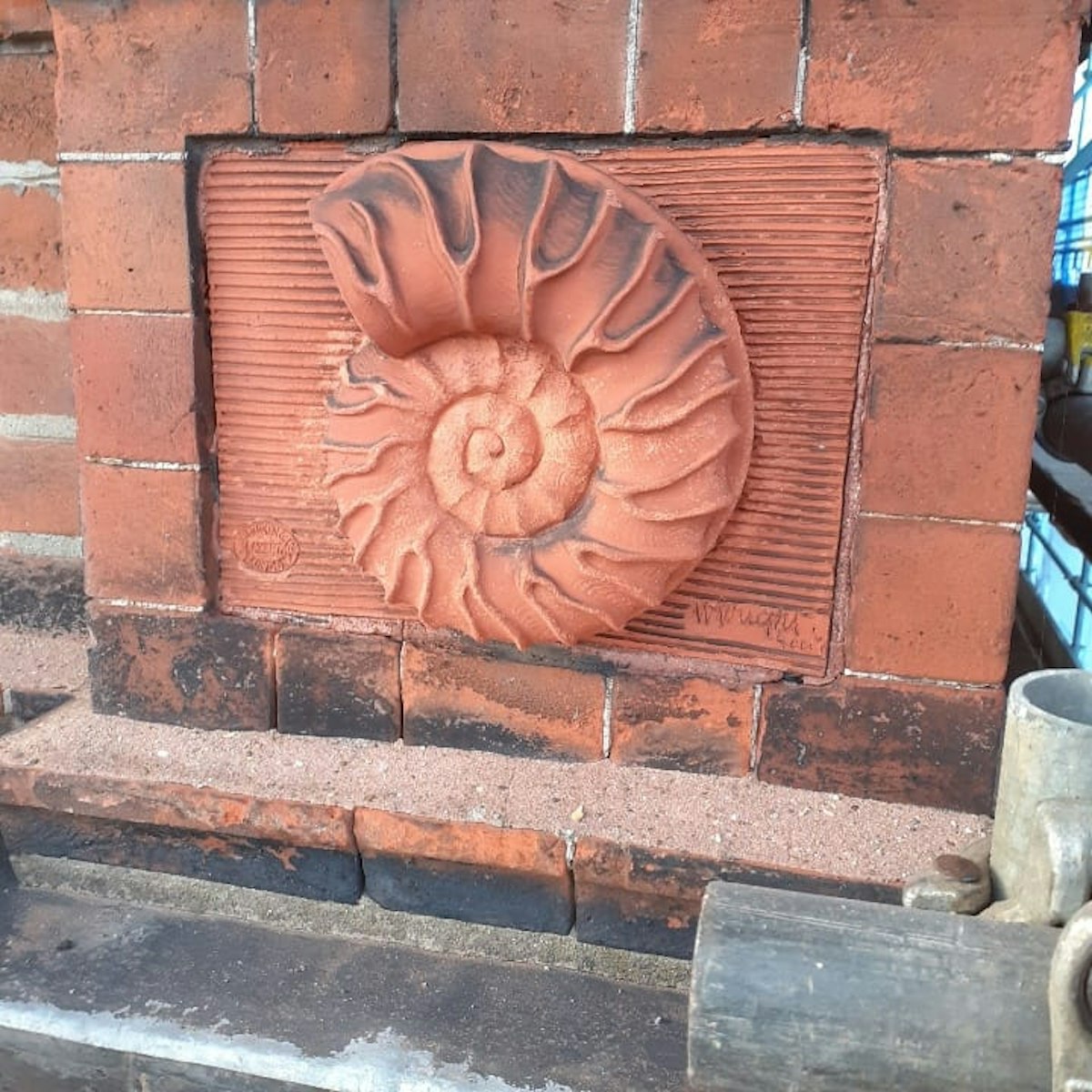
For context: Ammonites were shelled cephalopods that became extinct approximately 66 million years ago. Their fossils are found worldwide, sometimes in large concentrations.
Before scientific understanding, ammonites were sometimes thought to be coiled-up snakes turned to stone, earning them the nickname "snakestones". In reality, they were ocean-dwelling molluscs.
What's next: Museum staff are currently cleaning the fossil before it joins other specimens in the museum's collection.
The bigger picture: The discovery comes as Gipping is carrying out consolidation work on some of the museum's exterior terracotta panels that have deteriorated over time, particularly those located on a parapet wall above the entrance.
The bottom line: While construction workers often uncover unusual objects, finding a 66-million-year-old fossil – especially one depicted in façades being restored during the project – is an exceptionally rare occurrence.