
The life behind the landscapes: Constable comes home to Suffolk
'Constable: A Cast of Characters' marks 250 years since the artist's birth with over 100 works on display at Christchurch Mansion, running until 14 June. It is, in the best possible way, not really about the paintings.

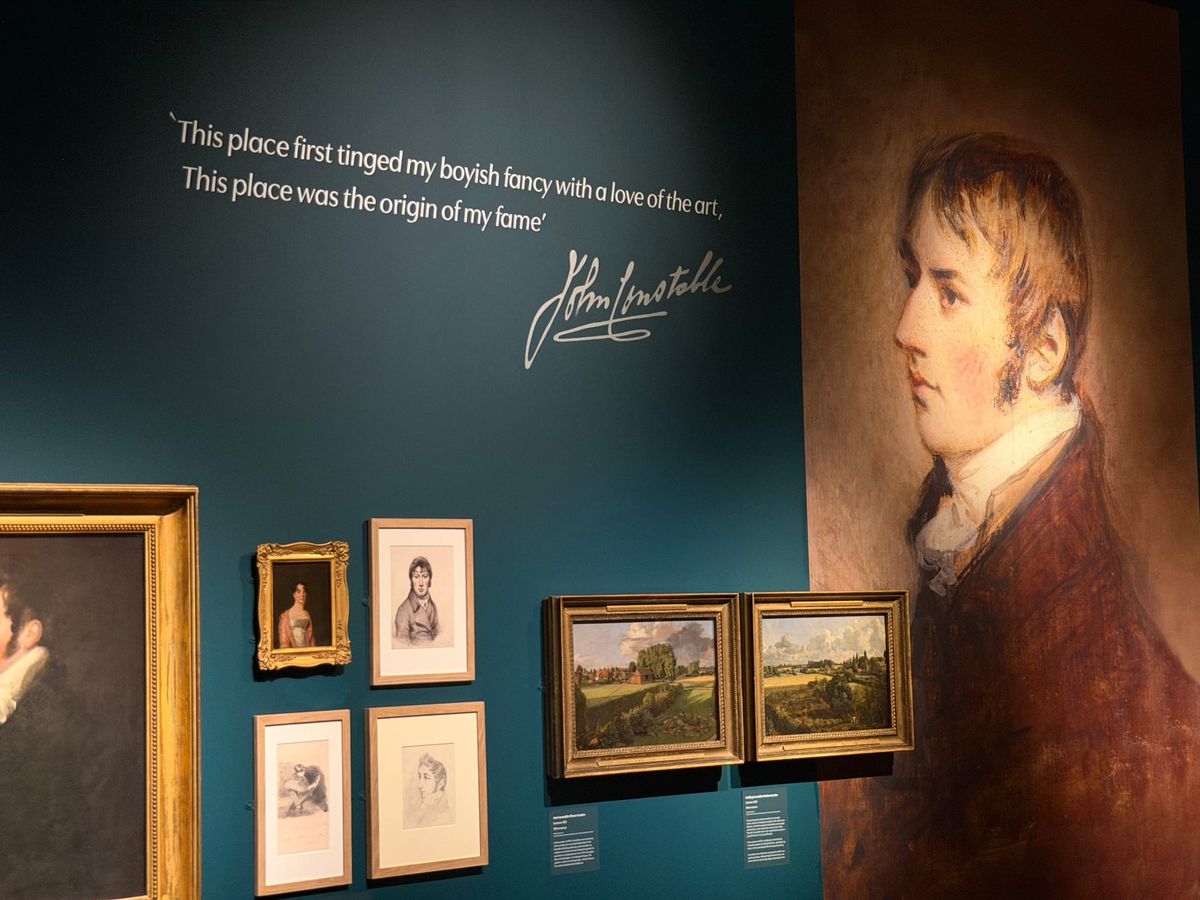
There is a wedding ring inside Christchurch Mansion right now. It is so thin you might miss it – barely more than a sliver of metal, no stone, no ornament. When I remarked upon it, curator Emma Roodhouse smiled. "Yes," she said. "Where is the gem?" There isn't one. There never was. It belonged to Maria Bicknell, the woman John Constable spent seven years fighting to marry, and it is, quietly, the most human thing in the room. (You can also find a lock of his hair, kept in a small transparent box in one of the glass cases.)
Everyone's an artist until rent is due
The exhibition opens with a question most people don't think to ask: Who helped Constable become Constable? The answer, it turns out, is a lot of people. His brother Abram ran the family mill, so John could paint. Elizabeth Cobbold, a significant figure in Ipswich's cultural life, helped build the network that opened the doors of the Royal Academy. His early mentor, George Frost, walked the banks of the Orwell with him, looking and sketching. Before any of it, Constable painted portraits for money and illustrated graveyard scenes for an Ipswich bookseller, because the landscapes he is famous for were not, for a long time, paying the rent.
Around the paintings, the exhibition layers in letters, objects and period costumes. You are not just looking at his work. You are being placed inside his world.
The cruellest timing
He was finally admitted as a full member of the Royal Academy in 1829. Maria had died the previous November, at 41, ten months after the birth of their seventh child. She never saw it happen.
It is the bittersweet coincidence at the heart of this exhibition, and arguably at the heart of his life. The recognition he had worked towards for decades arrived precisely when the person he most wanted to share it with was gone.
What grief looks like in paint
Two paintings hang side by side in the exhibition, both made in the summer of 1815 after his mother's death. They show views from the windows of the family home in East Bergholt: the flower garden his mother tended, golden fields stretching towards the horizon.
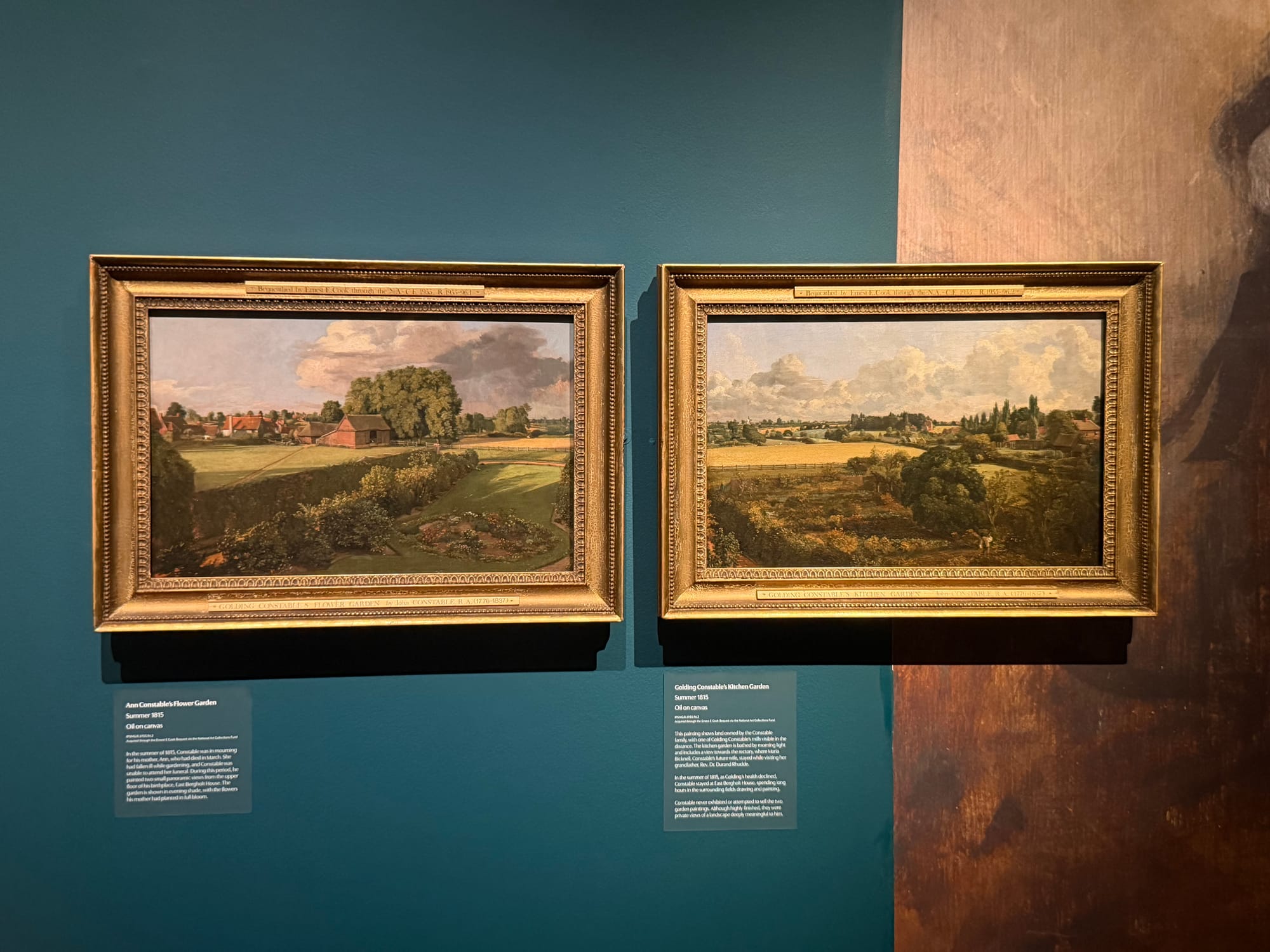
Look carefully at one, and you will notice a shadow falling across the part of the garden she kept. In the other, just visible in the distance, is a mill. A small, quiet nod to his father. Constable never exhibited either painting. They were private. They were never meant to be seen.
They are extraordinary.
In the corner of the room, the exhibition gives you a moment to sit with that. Two lit windows project the paintings onto a backdrop, and there is a desk where you can sit, as Constable once did, and write down how the work made you feel. Or, if you prefer, how it didn't.
Ipswich, as it was
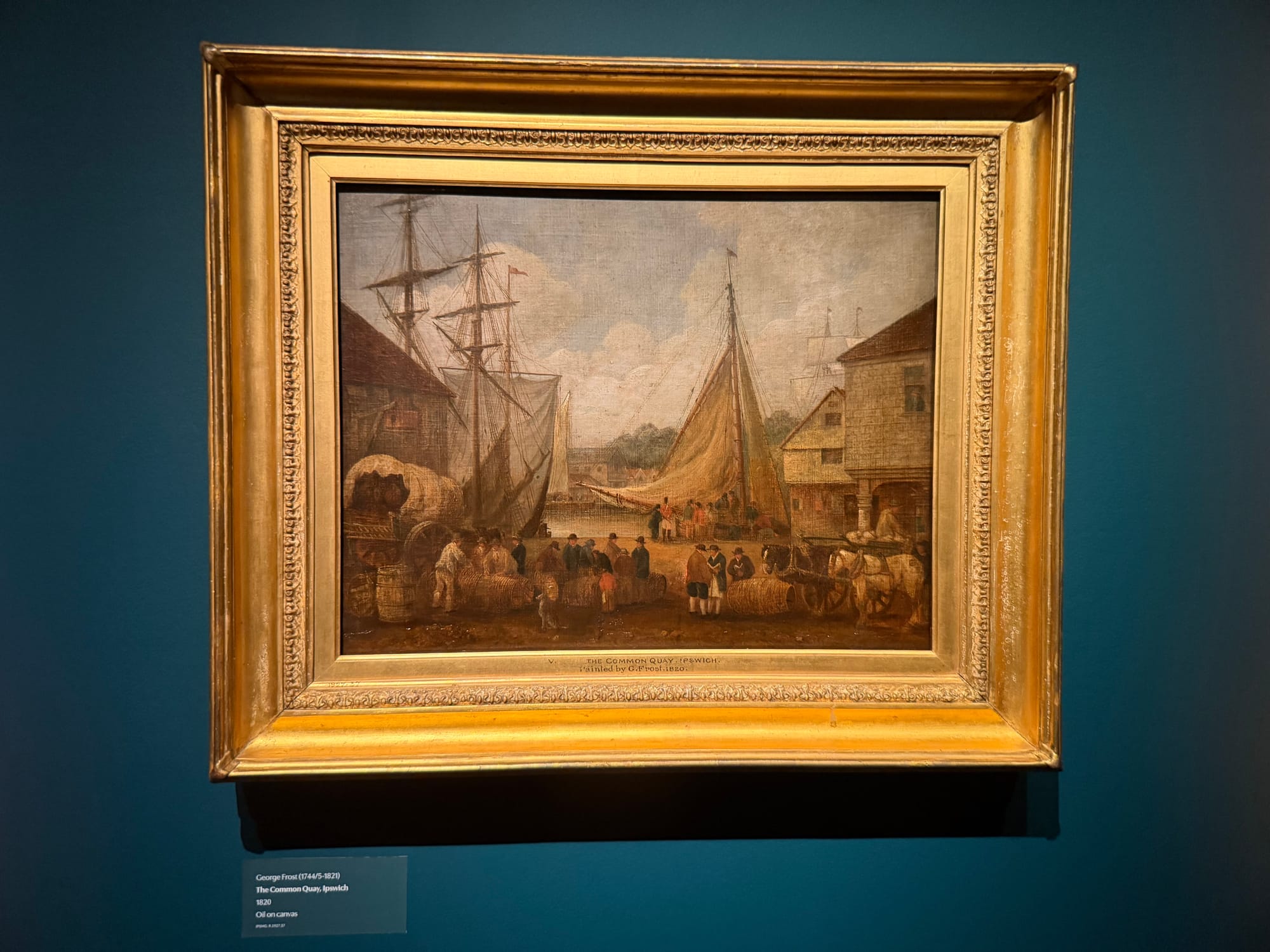
Part of what makes this exhibition so particular to this town is the chance to see Ipswich as it looked to the people who painted it. Works by Thomas Gainsborough and George Frost – both of whom Constable deeply admired – show the ordinary life of the town in the 1800s: its streets, its people, its riverbanks. Constable himself regularly travelled to Ipswich to stand in the spots Gainsborough had painted, looking at what the older artist had seen. Walking through the exhibition, you get a rare sense of the town as a living place across time, not just a backdrop.
The story that hasn't finished
Sasha Constable, a direct descendant born in 1970 and now an internationally exhibited sculptor, has works dotted throughout the space. One is a sculpture of a black cat – a nod to the family's habit, on trips back to Suffolk, of trying to smuggle their cats home to London with them. It is the sort of detail that closes 250 years in an instant.
There are also two drawings in the exhibition that cannot be photographed. You will have to go and see those for yourself.
The bottom line
John Constable's life is often reduced to fields, rivers, and a hay cart. This exhibition quietly dismantles that. Behind the landscapes is a man who spent years painting strangers for money, who waited seven years to marry the woman he loved, and who finally received his greatest professional honour with no one at home to celebrate with. Maria's wedding ring, thin, plain, no gem, is perhaps the most honest thing in the room.
Sasha Constable's sculptures stand a few feet away. The story, it turns out, is still going.
'Constable: A Cast of Characters' runs at Christchurch Mansion, Ipswich, from 28 March to 14 June 2026. Admission prices apply.
This article cost us ~£80 to produce
It's free for you to read thanks to the generous support of our partners. Please support us by supporting them.
Below the line