
'We simply cannot accept this as normal,' says minister as Suffolk homeless deaths increase
The Government has pledged urgent action after research revealed more than 1,600 people experiencing homelessness died across the UK last year, including eight in Suffolk, with a minister describing the figures as "heartbreaking" and calling every loss of life "an abject failure".

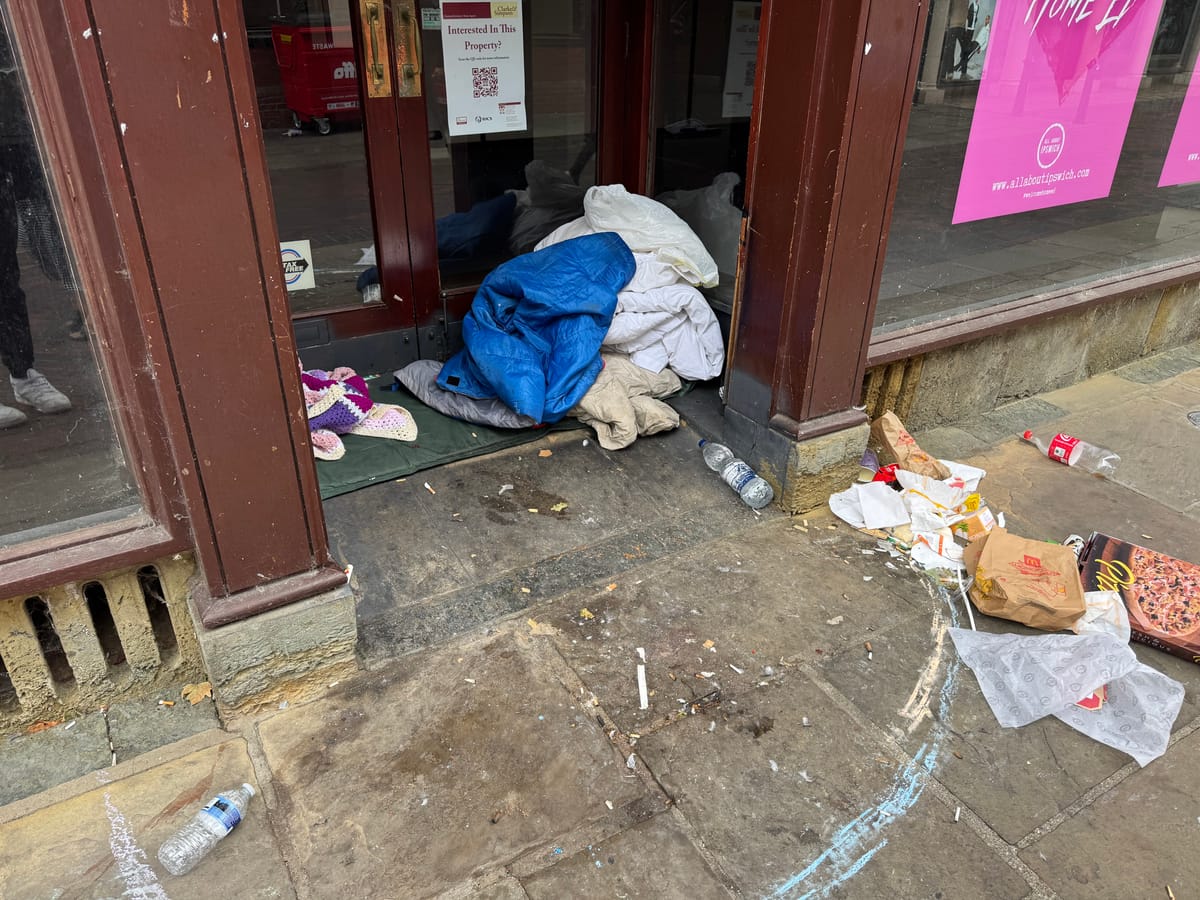
Why it matters: The increase from seven deaths in 2023 means a total of 21 homeless people have died in Suffolk between 2022 and 2024, reflecting a national crisis that saw more than 1,600 people experiencing homelessness die across the UK in 2024.
The big picture: An investigation by the Museum of Homelessness found 1,611 homeless people died across the UK last year – an average of four deaths per day. This marked a 9% increase on 1,474 deaths the year before, and means 8,523 people experiencing homelessness have died since the museum's Dying Homeless Project began compiling data in 2017.
The research shows the majority (55%) of last year's deaths were 'deaths of despair' and are linked to suicide or drugs, prompting the museum to highlight "significant issues" with substances including spice and synthetic opioids.
The details: The museum's definition of homelessness includes "all people who do not have a settled home", whether they are sleeping rough, living in emergency or temporary accommodation such as hostels or B&Bs, or living in short-term supported housing, sofa surfing or squatting.
The investigation found the proportion of those dying in temporary or supported accommodation has increased in the last three years, with 49% of homeless deaths recorded in temporary accommodation and 18% in supported accommodation in 2024.
The museum also pointed out the "controversial" use of exempt accommodation, a form of unregulated shared accommodation exempt from standard Housing Benefit rules, "continues to result in preventable deaths". The research found 36 people living in exempt accommodation died in the UK in 2024.
By the numbers: The investigation found 11 homeless children died across the UK last year, including four babies who had not yet reached their first birthday. The number of children who died in 2024 was up from four the year before.
The researchers said it is likely these figures are lower than the true scale of child deaths and homelessness, as some local authorities might only record when the person who has applied for homelessness help dies in temporary accommodation, rather than all the members of their family.
What they're saying: Project director Matthew Turtle said the data "shows how homeless people continue to be deeply failed".
He added: "We are calling for urgent action from the Government to alleviate this crisis."
Gill Taylor, strategic lead for the project, said: "Whilst it is positive that local authorities and Safeguarding Adult Boards appear to be taking the issue more seriously, with better reporting and evidence of improved local partnership working to prevent deaths, turning the tide on this enormous loss of life needs more than better counting."
"We remember with love all those who died and continue our work in solidarity with bereaved loved ones and the homeless community."
Minister for Homelessness Alison McGovern said: "These figures are heartbreaking. Every loss of a life, especially the death of a child is an abject failure that cannot be tolerated."
"We simply cannot accept this as normal. Every person deserves a safe place to call home, which is why we are accelerating efforts to tackle the root causes of homelessness, expanding access to safe accommodation whilst also strengthening support services."
For context: The data was compiled from Freedom of Information requests, media coverage, grassroots groups, homelessness sector workers and bereaved family and friends.
The bottom line: With eight deaths in Suffolk and more than 1,600 across the UK, the Government faces continued pressure to deliver on its promise to tackle what campaigners describe as a preventable crisis claiming four lives every day.
This article cost us ~£40 to produce
It's free for you to read thanks to the generous support of our partners.
Below the line