
New era begins at county council amid reorganisation upheaval
As it digests the government's decision to replace Suffolk's six councils with three new unitary authorities, Suffolk County Council is undergoing its own leadership change, with the outgoing CEO handing over to two internal appointments tasked with steering the county through the transition.

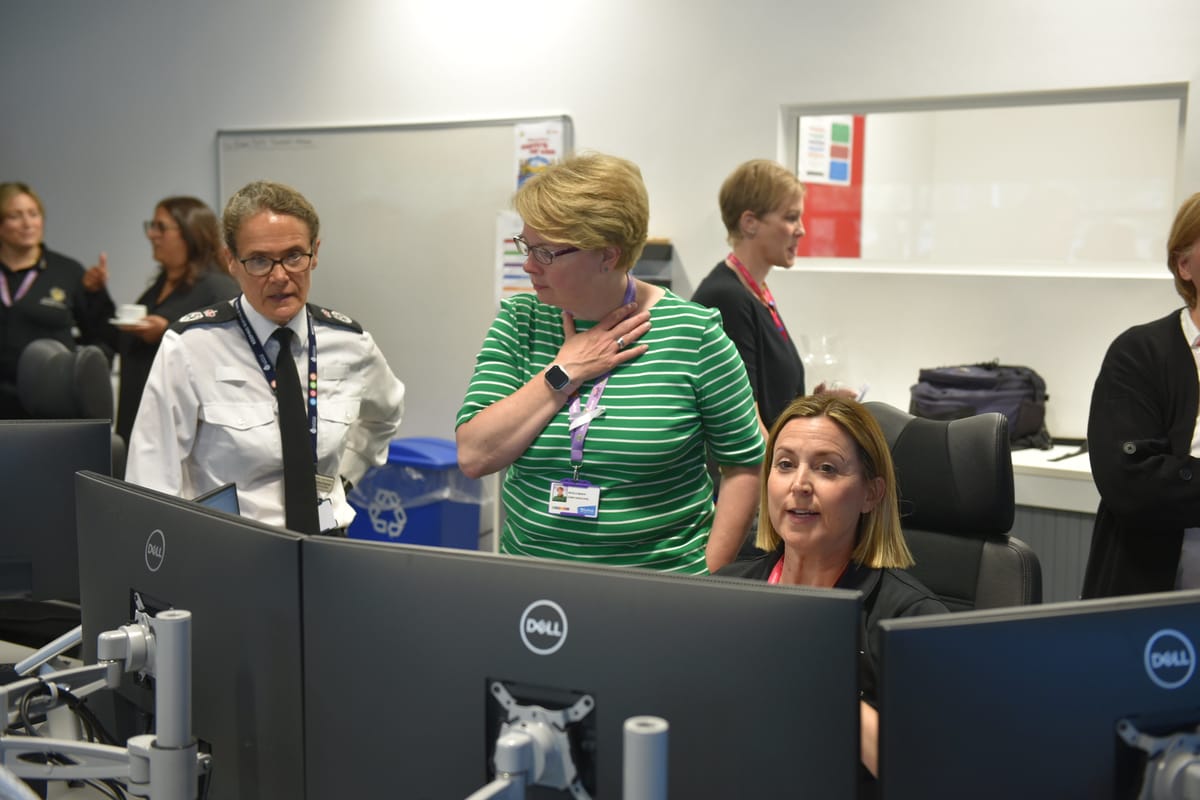
Why it matters: Nicola Beach steps down today after eight years as chief executive, having managed an £850m budget and led 6,294 staff through the Covid pandemic and the local government reorganisation process. Her departure coincides with one of the most significant moments in Suffolk's political history — and the council now enters a new chapter under a leadership structure specifically designed to manage what comes next.
The details: Mark Ash and Andrew Cook have been appointed as joint chief executives, taking up their roles from 1 April 2026. Both are existing executive directors at the county council. Their roles have been deliberately divided to reflect the scale of the challenge ahead:
- Mark Ash will lead on local government reorganisation, devolution and the wider change programme, with a focus on delivering unitary government in Suffolk effectively.
- Andrew Cook, as head of paid service, will be responsible for ensuring the council continues to operate effectively, meeting statutory requirements and delivering services to residents.
For context: Beach announced her decision to leave in February, citing the reorganisation as the right moment to hand over. She had handed in her notice before Christmas but the announcement was held until after the closure of the local government reorganisation consultation. "I believe this is the right time to hand over leadership to those who can steer and support colleagues through local government reorganisation over the next two years, whatever option the Government decides to implement," she said at the time.
The bigger picture: The leadership change comes just days after the government confirmed that Suffolk's two-tier system of local government will be replaced with three unitary authorities: Western Suffolk, Eastern and Central Suffolk, and Ipswich and Southern Suffolk — a decision the county council described as a "significant opportunity missed."
Council leader Councillor Matthew Hicks, writing to staff, acknowledged the disappointment while signalling a shift in focus. "Suffolk County Council is of course hugely disappointed with this decision to carve up Suffolk because there is clear evidence that this is not the best outcome for the county," he said. "However, our focus now is on ensuring Suffolk continues to receive the high-quality public services and support it deserves."
What they're saying: Hicks paid tribute to Beach's tenure, saying: "Nicola has led the council through an important period of change and achievement. She is very well-regarded, hardworking and has an exceptional knowledge of the complexity of public service, plus an unfaltering desire to deliver the best services for the people of Suffolk — the county that she loves."
Of the incoming joint chief executives, Hicks said both "bring a wealth of experience and knowledge — both of local government but also Suffolk," adding that they are "committed to continuing and building on our relationship with partners."
What's next: Shadow authority elections for the new unitary councils are expected in May 2027, with the three new authorities formally taking over in May 2028. The county council says it will take time in the coming weeks to understand and communicate the next steps in the reorganisation process.
The bottom line: Suffolk County Council faces a period of profound change — a new leadership structure, a government decision it opposed, and a two-year transition to a fundamentally different system of local government. Whether the joint chief executive model proves equal to that challenge will become clearer in the months ahead.
This article cost us ~£27 to produce
It's free for you to read thanks to the generous support of our partners. Please support us by supporting them.
Below the line