
Has Suffolk been put in Russia's crosshairs?
A road running through RAF Mildenhall has appeared on a list of European sites that Russia's defence ministry has described as potential military targets — just months after one of Ukraine's leading drone manufacturers opened a factory there. We examine what that means, and what it does not.

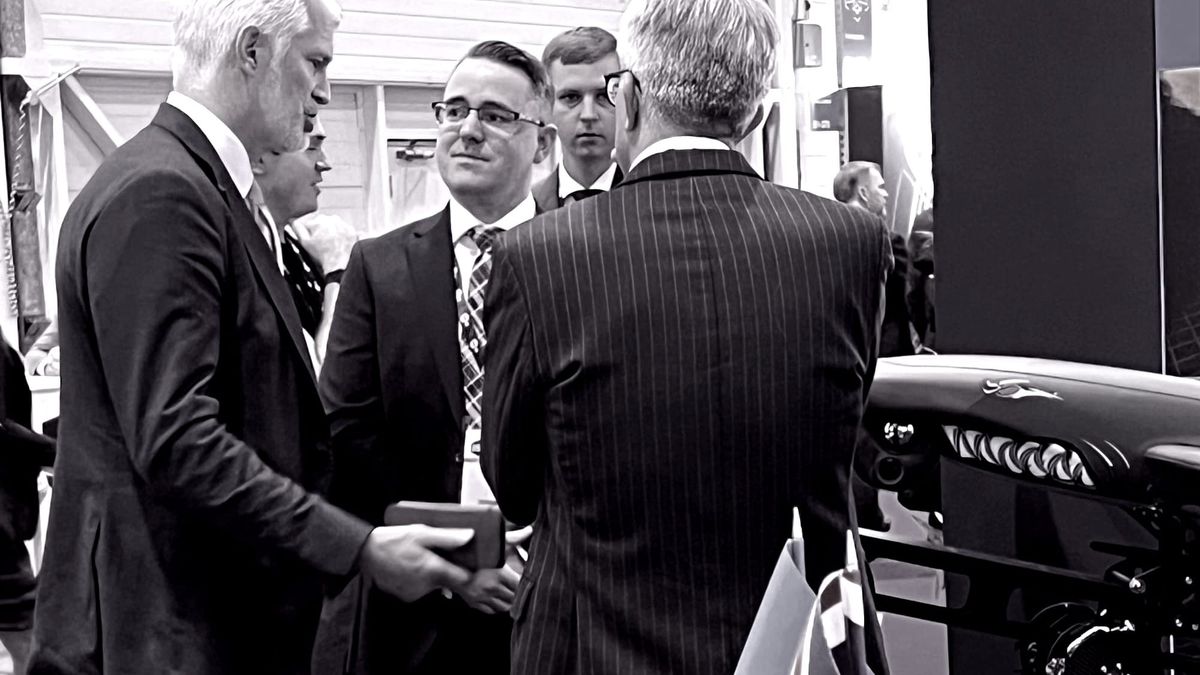
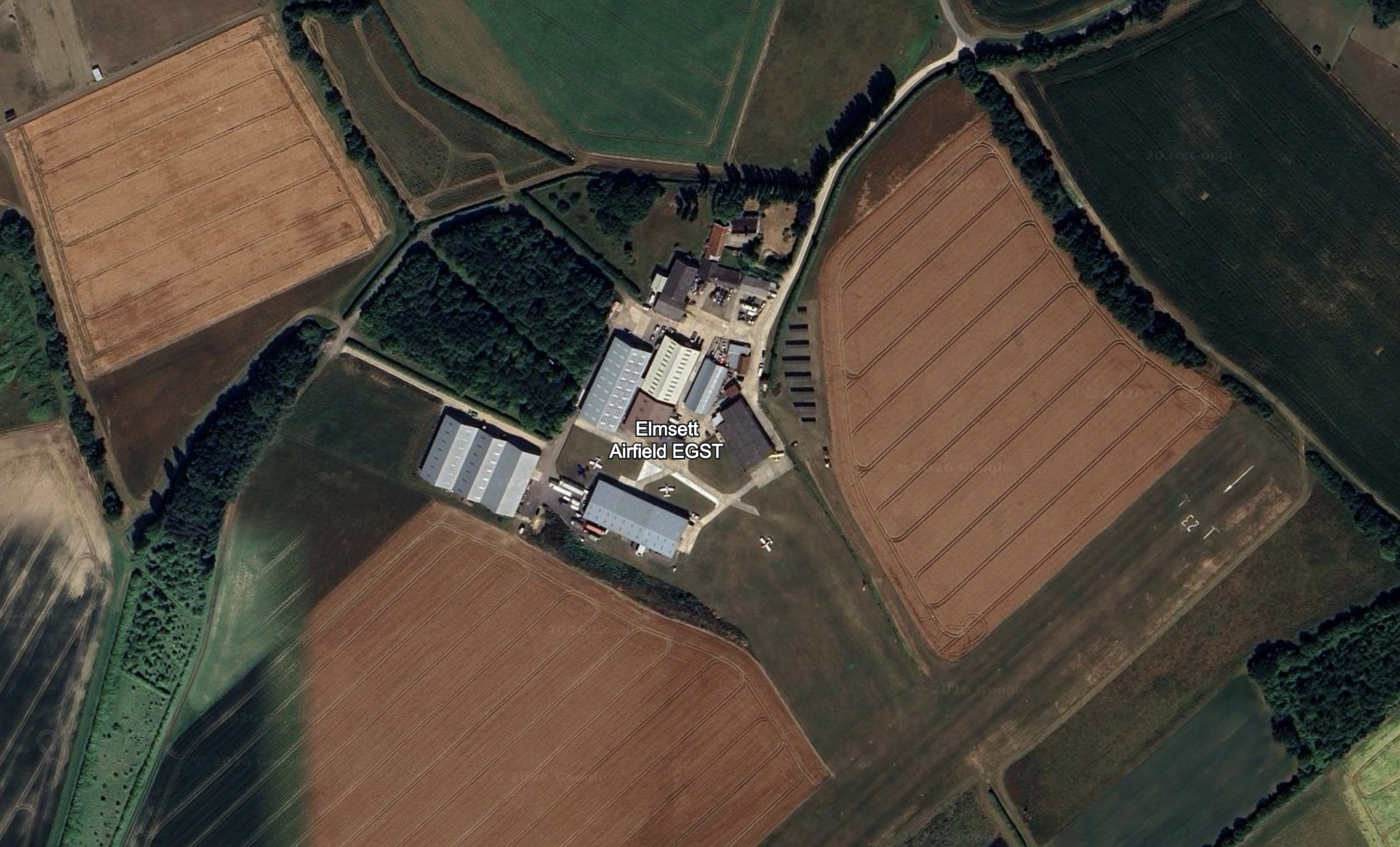
In September 2025, Ukrspecsystems — one of Ukraine's largest drone manufacturers — announced a £200m investment in Suffolk. The company, founded in 2014 at the beginning of Russia's occupation of Crimea, would build an 11,000m² manufacturing facility at Mildenhall and a flight test and training centre at Elmsett Airfield, a stone's throw away from Ipswich, creating around 500 jobs and apprenticeships.
The investment was the first of its kind: the first Ukrainian company to commit to funded infrastructure in the UK, and the first Ukrainian-owned defence manufacturing facility outside Ukraine.
When the factory officially opened on 26 February 2026, attended by Ukraine's ambassador to the UK, General Valerii Zaluzhnyi, and the UK's Minister for Defence Readiness and Industry, Luke Pollard, it was framed as a landmark moment in the UK-Ukraine relationship.
"Our resolve to support Ukraine is stronger than ever," Pollard said at the opening. "Ukrspecsystems' new factory is a vote of confidence in UK support and underlines the deepening cooperation between our nations' defence industries."
The facility is working towards producing up to 1,000 drones a month when fully operational. Rory Chamberlain, Ukrspecsystems' managing director in the UK, told the BBC that supplying soldiers with modern weaponry was of the "highest importance" because Ukraine remained "vulnerable" to attack.
"The war has changed, but this keeps soldiers safe, and it keeps the nation fighting," he said.
What Ukrspecsystems makes
Ukrspecsystems manufactures eight types of drones used extensively in Ukraine since Russia's full-scale invasion in 2022. Its products range from the PD-2, a long-range surveillance drone with a 200km range and five-metre wingspan, to the smaller SHARK — a 60km-range reconnaissance system — and the compact Mini SHARK, introduced at the International Defence Industry Fair in Istanbul in 2023, which has a 30km range.
The company says its drones have contributed to almost $3 billion of damage to Russia's military since the start of the full-scale invasion. The UK has previously ordered over 80 SHARK and Mini SHARK drones from Ukrspecsystems' factories in Ukraine.
The Elmsett facility, just outside Ipswich, is used to train drone pilots and test the machines before they are deployed to soldiers on the front line.
Russia's list
The context for Russia's listing is significant. In late March 2026, Russia's defence ministry published a list of 23 sites across several European countries that it alleged were either subsidiaries of Ukrainian drone producers or sites where drone components are manufactured. The ministry described the expansion of drone production for Ukraine as "a deliberate step leading to a sharp escalation of the military and political situation on the entire European continent."
Among the UK locations named were addresses in Reading, London, and Leicester — and a road running through RAF Mildenhall in Suffolk.
RAF Mildenhall is predominantly operated by the United States Air Force and is commonly referred to as the USAF's "gateway to the United Kingdom." It is already one of the most strategically significant military installations in Europe.
The firms named in connection with the Mildenhall address were Fire Point and Horizon Tech. Fire Point is a Ukrainian drone manufacturer with a UK branch also located in Mildenhall, on the grounds of the RAF base. Notably, Ukrspecsystems — whose factory, we understand, sits at the same site — was not mentioned by name on Russia's list. It's not clear why.
Russia's former president and head of the country's security council, Dmitry Medvedev, was unambiguous in his interpretation of the list's significance. "The Russian defence ministry's statement must be taken literally: the list of European facilities which make drones and other equipment is a list of potential targets for the Russian armed forces," he wrote on X. "When strikes become a reality depends on what comes next. Sleep well, European partners!"
A fairly ominous threat, then.
How seriously should the threat be taken?
Colonel Richard Kemp, a former British Army officer and government counterterrorism adviser, told The Mirror that the threat should be taken "extremely seriously."
"We should expect sabotage attacks launched by Russia but in such a way that they are deniable operations," he said, adding that the UK is "seen as vulnerable."
The distinction between a sabotage operation and a direct military strike is important. Russia's track record in Europe in recent years has included alleged acts of sabotage — arson attacks, infrastructure interference, and covert operations — rather than conventional military strikes on NATO member states. Colonel Kemp's warning points towards this pattern: deniable, disruptive actions rather than an overt military assault.
We reached out to Ukrspecsystems to understand if any additional security measures have been taken, but they have not responded to requests for comment at the time of publication.
The UK's position
The UK government has framed its support for Ukraine — and the Ukrspecsystems investment specifically — as part of a long-term strategic commitment. More than £1 billion has been committed to Ukraine's air defences since July 2024. The Ukrspecsystems factory is presented as part of what the government calls the "100 Year Partnership" between the UK and Ukraine, deepening defence industrial cooperation between the two nations.
Colonel Andy Boardman, commander of Operation Interflex — the British Armed Forces' military training collaboration with Ukraine, which began in 2022 — spoke at the factory opening about the evolving nature of modern warfare.
"Not only must we make sure we're delivering up-to-date tactics, but [we must] also integrate some of the new technologies," he told the BBC. "We're now integrating unmanned aerial systems in all aspects of our training too."
For his part, Chamberlain was direct about what the factory represents.
"Four years on from Russia's full-scale invasion of Ukraine, this factory delivers what matters: secure supply, secure resource, and sustained support for Ukraine," he said. "By establishing production in the UK, Ukrspecsystems are increasing the resilience of the UK's defence industrial base, and providing a trusted supply chain that ensures that the drones relied upon by the Ukrainian Armed Forces can be built and scaled without interruption."
The bottom line
Russia's threat is a reminder that indirect involvement in the war in Ukraine is not without consequence. What Russia's list does not do, at least not yet, is constitute an imminent threat in the conventional military sense. The more realistic concern, as Colonel Kemp warns, is subtler: deniable sabotage rather than airstrikes.
Mildenhall was already one of the most secure military installations in the country before Ukrspecsystems arrived. The testing facility just outside Ipswich is, presumably, somewhat less secure. The question now is whether the expansion of Ukraine-linked drone production in Suffolk changes the calculus — for the people who live nearby, and for those responsible for keeping them safe.
We have approached Ukrspecsystems for comment. This article will be updated if responses are received.
Don't forget: If you enjoy our content, please add Ipswich.co.uk as a "preferred source" on Google so you can easily find more of the content you value.
This article cost us ~£96 to produce
It's free for you to read thanks to the generous support of our partners. Please support us by supporting them.
Below the line