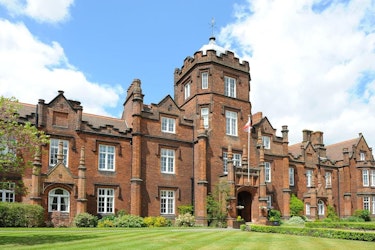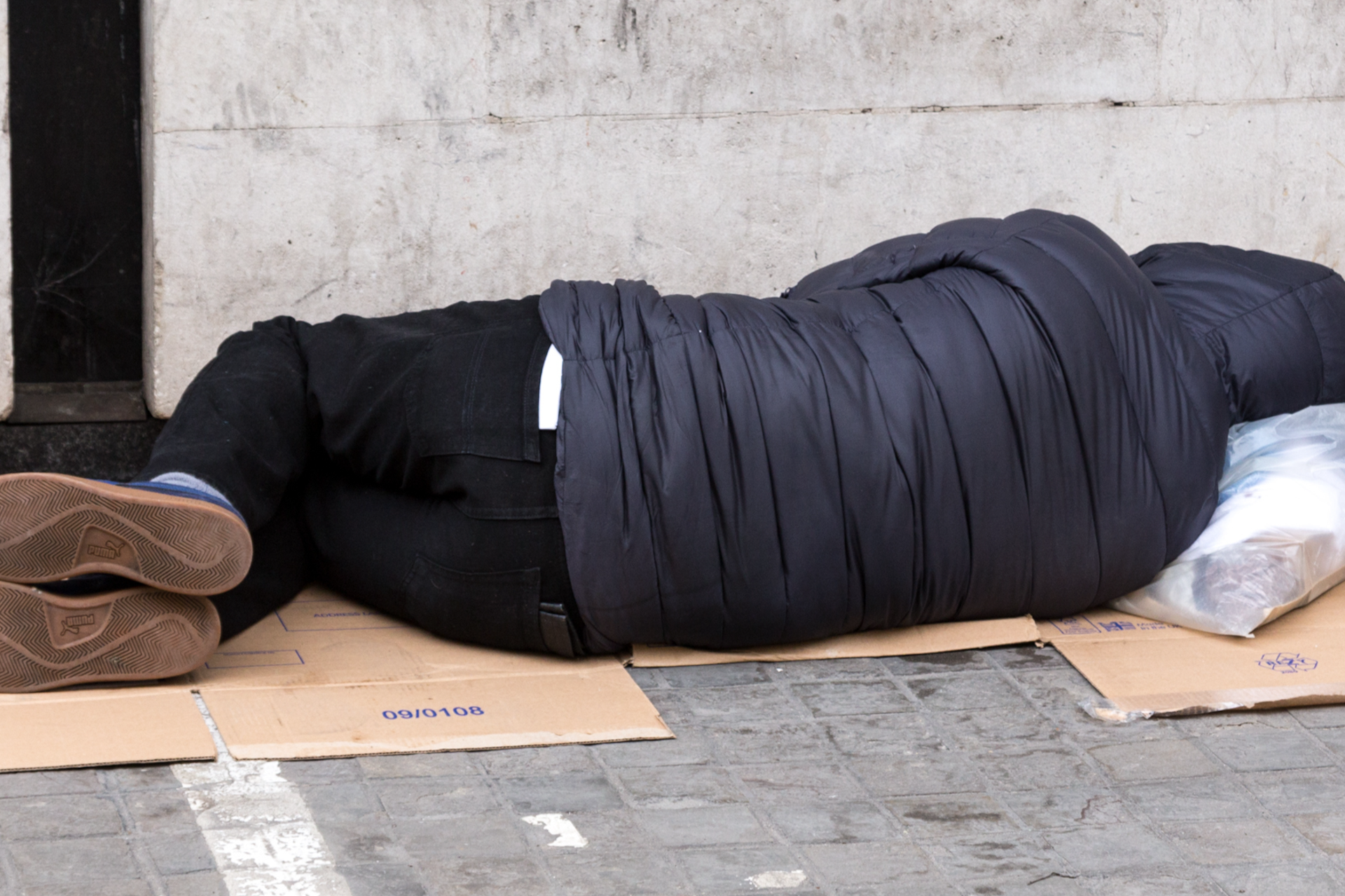
"We had two rough sleeper deaths in Ipswich last year," says Jools Ramsey-Palmer, chief executive of Ipswich Housing Action Group. "There was no publicity about it."
A pause. Then: "Overnight, when the national lockdown happened, rough sleeping was solved."
When the government chose to act, homelessness ended in days. Five years later, people are dying on Ipswich streets again. The difference isn't possibility. It's priority.
Rents are soaring, wages stagnate, and temporary housing is draining council budgets, leaving many Ipswich families trapped between debt and eviction.
Frontline advice workers say the gap between benefits and market rents is pushing people into debt and eviction.
Private renters on a median income in Ipswich spend about 24% of their income on rent (2023–24), up from roughly 21% a year earlier, according to ONS local affordability data. That sits under the 30% affordability threshold used by ONS, but it hides the squeeze on lower-income households. Median residence-based earnings in Ipswich were £28,657 in 2023, compared to the England median of £29,919. Of the 61,628 dwellings in Ipswich, around 79% are in the private sector, with about 13% owned by the council.
Mairi MacRae, director of campaigns and policy at Shelter, said: "Millions of people are forced to rely on an increasingly unaffordable private rental market, where costs have spiralled out of control."
Private rents rose by around 9% in the year to December 2023, near a record high in the ONS series.
The benefits don't add up
"In the year up to October 2024, Ipswich rents had gone up over eight percent," said Ramsey-Palmer.
For a single adult over 25, the standard Universal Credit allowance is around £400 per month, while couples with children receive just over £600 before housing costs. Local Housing Allowance (LHA) rates for Ipswich are £595 for a two-bedroom property and £366.50 for a one-bedroom. According to data from October 2024, average monthly rents in Ipswich were £714 for a one-bedroom property, £829 for two bedrooms, and £999 for three bedrooms.
Here's how the sums don't work:
1-bed: LHA £367, average rent £714, £347 gap
2-bed: LHA £595, average rent £829, £234 gap
3-bed: LHA £717, average rent £999, £282 gap
That gap between what benefits provide and what rent actually costs means impossible arithmetic for thousands of local families. Pay the rent and skip meals. Heat the house or fall into arrears.
"We're in a space where costs are so high that it is contributing to the levels of homelessness," Ramsey-Palmer said.
Francesca Albanese from the homelessness charity Crisis said: "Households on the lowest incomes are having to spend increasingly large proportions of their incomes on rent, often foregoing other essentials, from food to gas and electricity, to make ends meet. These families are more vulnerable to financial shocks like eviction, and more vulnerable to being forced into homelessness."
Housing is the top issue at Citizens Advice
Nelleke van Helfteren, Communications Manager at Citizens Advice Ipswich, explained the scale of the problem: "Housing is the top emerging issue for Citizens Advice. Twenty-seven percent of all issues brought to us nationally are around housing. That's a nine percent increase from August to September."
She added: "The main problem cited is a lack of affordable housing. Private rental costs far exceed the Local Housing Allowance payments."
Citizens Advice Ipswich saw 1,200 clients with housing issues in the last year, bringing 2,500 separate issues with them, according to the local team. Each number represents a family navigating the daily stress of unaffordable housing.
The crisis has overwhelmed the service. "We have now taken on a full-time housing and employment expert advisor," van Helfteren said. "This is somebody who can take on and do casework with people around housing issues, where previously that was dealt with by generalist advisors."
Van Helfteren described the interconnected nature of the housing crisis: "People with housing issues often have debt issues, and these debt leads to further housing issues. People who are unable to work or are having problems with their benefits may well be having problems with their health. It's a cyclic thing."
Without stable housing, everything else unravels. Finding work becomes harder. Health deteriorates. Debt accumulates. Children's education suffers.
The viewing lottery
Even those who can theoretically afford rent face significant hurdles accessing properties.
"Most private rental places now are asking for at least a month, if not two months', rent up front as a deposit. People just don't have that money," Ramsey-Palmer said.
For someone on Universal Credit, saving two months' rent in advance means setting aside their entire income for two months while still paying current rent and bills. The mathematics make it functionally impossible.
Then there's the viewing itself. Ramsey-Palmer describes the reality: "It's a 10-minute slot, and the people before them were just coming out, and the people after them were already waiting. If you're interested, literally run home and fill out an application because you're in this huge list of people."
For someone who's been rough sleeping or sofa surfing, the barriers multiply. "If you have been rough sleeping or you have been staying at a friend's house, you're not necessarily going to turn up as presentable as somebody else. And that puts people off."
Van Helfteren highlighted more barriers: "Getting a deposit together is incredibly difficult, and some landlords insist on renters having a guarantor, but if you haven't got someone who earns enough to be a guarantor, you're stuck."
Despite legal protections, discrimination against benefit recipients continues.
"Landlords and agents aren't supposed to say, 'You don't look the part,' or, 'Your earnings don't meet what we're looking for,' or, 'You're on benefits, so no.' But we know they do," Ramsey-Palmer said.
Van Helfteren added: "People are frightened to complain about disrepair because they could simply be evicted."
The five-week trap
The Universal Credit five-week wait creates the foundation for debt spirals that families often struggle to escape.
"Universal Credit and the five-week delay had a major impact on people's debts," van Helfteren said.
Van Helfteren described the cascading impact: "In this country, there are over five million households that are in a negative budget. Every month, they are spending more on essentials than they are getting in income. So that means that for five million households, their debt is growing every month."
Five million households are watching the gap widen each month. Five million families where next month is always harder than this one.
She cited the example of a woman in a Housing Association property who was subject to the bedroom tax after her adult child moved out. Her council support was reduced by 25%, creating rent arrears. When she tried to downsize to reduce costs, the Housing Association refused to allow her to move while she was in arrears.
A woman trying to do the right thing, trying to solve her own problem, is blocked by the system because she's in debt created by that same system.
"People are stuck in this vortex of debt and future debt," van Helfteren said.
Gateway to nowhere
Part of the pressure comes from Ipswich's geography. The town sits an hour from London, making it attractive to commuters.
"Ipswich in particular is a Gateway town to London," Ramsey-Palmer said. "That's why I think prices sort of stay above the national average. People come to live here, our beautiful coastline, but also to get in and out of the city. And so that pushes demand for properties."
That demand prices out local families. "Particularly with the creation of what is now a town in all of itself in Kesgrave, just on the outskirts, prices on Grange Farm are through the roof. Professionals, and families of professionals, who are commuting either to London or, indeed, to Norwich, are moving in. And it means that other local people are really struggling."
The rental market is shrinking just as demand increases. "There are private landlords leaving the marketplace, which means the number of private rental spaces that are left has shrunk," Ramsey-Palmer said.
According to the 2024 English Private Landlord Survey, almost a third of landlords plan to reduce their portfolios over the next two years, with 16% planning to exit entirely.
Ben Twomey, chief executive of Generation Rent, said: "Renters are being crushed under the weight of high, unaffordable rents. For families up and down the country, this means being unable to put money aside for the future, or facing a daily choice between putting food on the table or getting into debt."
The hidden thousand
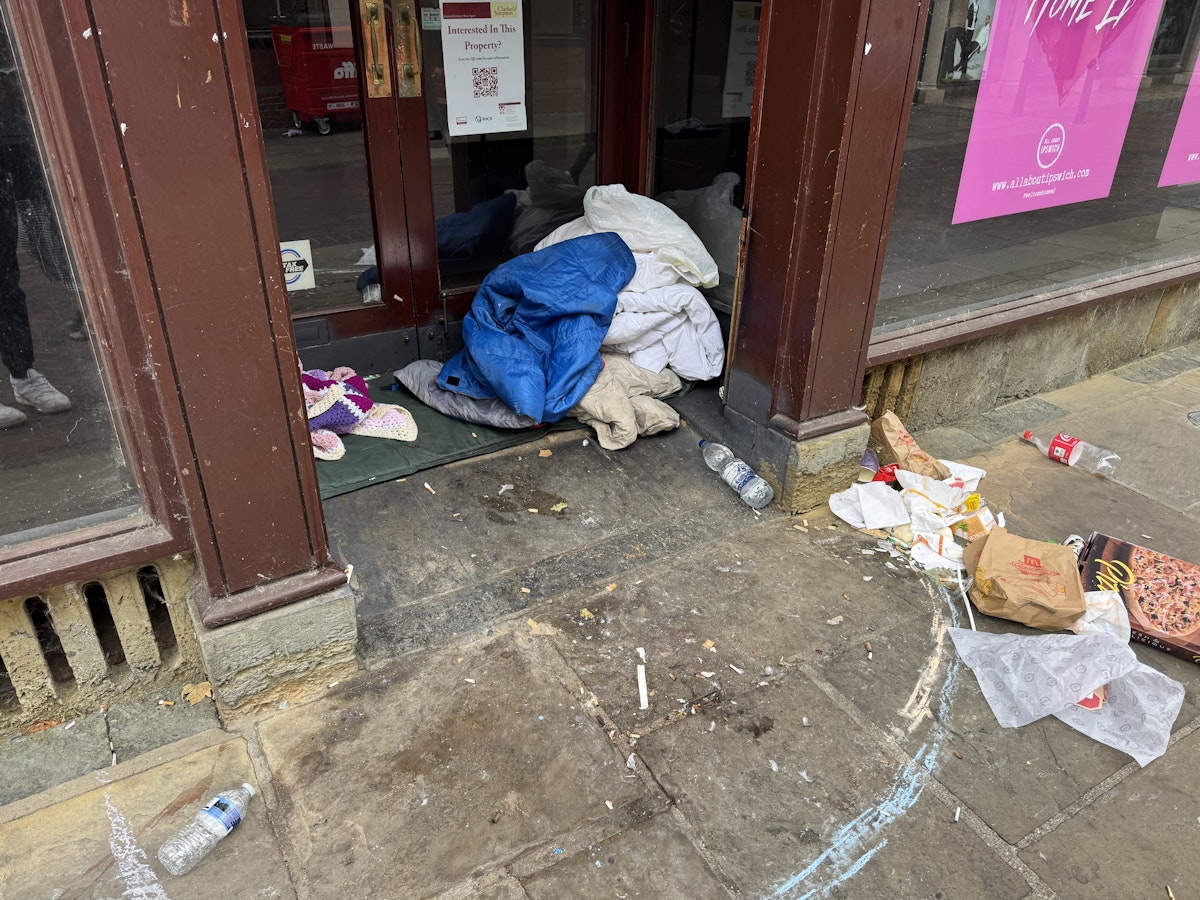
Official rough sleeping counts miss the majority of people experiencing homelessness.
"The national count happens at one o'clock in the morning. You have to be bedded down. If you're up and walking around, you're not counted," Ramsey-Palmer said.
The official autumn 2023 DLUHC snapshot recorded five rough sleepers in Ipswich. But Ramsey-Palmer was told when she started at iHAG six years ago: "On average at any given night, there were around a thousand people homeless in Ipswich."
That includes everyone in emergency accommodation, temporary accommodation, B&Bs, refuges, and the hidden homeless - people sofa surfing, sleeping in cars, moving between friends' floors.
Women, in particular, remain invisible in the statistics. Ramsey-Palmer explained that the vast majority of people using iHAG's homeless hub are male: "We do have women. I would suggest that most women who have come in have at some point or another or are currently either being sexually exploited or have experienced some form of domestic abuse."
The streets aren't just uncomfortable for women. They're dangerous.
Some women make an impossible calculation: "Women in an abusive relationship feel it is safer sometimes to stay than to risk being homeless," Ramsey-Palmer said.
Staying with a violent partner can feel like the less dangerous option when the alternative is sleeping rough or navigating a system with no guaranteed safe outcome.
Violence in the shadows
The reality of rough sleeping goes beyond cold and hunger. Ramsey-Palmer's team hears reports of attacks that rarely make headlines: "The number of incidents we had last year - people had machete injuries, they'd been set fire to in their sleeping bags, they'd had their stuff stolen."
"Friday, Saturday nights, people coming out of clubs, thinking it's a great laugh to go and find a homeless person and urinate on them," she said.
Her staff carry the weight of these stories. "We can offer you that opportunity to be clean and to be fed, to be spoken to as though you are a human being. But come five o'clock when we close the doors, we also know you're going to be going back to that doorway or that car park or the graveyard."
Two lives were lost last year. Two deaths that passed without public acknowledgement.
The support system stripped away
As homelessness rises, the support infrastructure is being dismantled.
Suffolk County Council announced it will phase out Housing Related Support (HRS) over the next two years, cutting £1 million in 2024/25 and a further £2 million in 2025/26. The cuts represent a 66% reduction in supported accommodation spaces, removing over 700 places for vulnerable people who need more than just a roof over their heads.
HRS provides not just housing but the wraparound support people need to recover from homelessness.
Ramsey-Palmer explained why this matters: "The reality of what's going on in somebody's life for them to become homeless in the first place, their root cause of homelessness, needs longer-term support. There was a system where people were given accommodation, but alongside that they were given the support they needed - with their finances, with living skills, with tenancy management, with their mental health, with their physical health."
"You can put people in private rental spaces," she said. "That would solve homelessness for probably a day. Because the reality is they need support."
District and borough council leaders have expressed concern about the impact on vulnerable populations.
Council response
Councillor Alasdair Ross, portfolio holder for housing, said: "Reflecting the national picture, there is a huge and growing demand for affordable housing. Ipswich Borough Council allocates hundreds of council homes each year and takes a multi-strand approach to addressing the need for affordable housing locally."
The council's initiatives include the Ipswich Lettings Experience Team, which offers rent guarantees and deposit bonds to encourage landlords to accept tenants at Local Housing Allowance rates. It is also building over 300 new homes through its Handford Homes subsidiary by early 2026.
In a town where thousands remain on the social housing waiting list and temporary accommodation use continues to rise, the gap between supply and demand remains stark.
The temporary accommodation trap
When the private rental market fails, councils step in with temporary accommodation at significant cost to taxpayers. But temporary housing addresses the crisis, not the cause.
Van Helfteren described the impact: "Many people are placed in unsuitable temporary accommodation, often in a completely new area. So if you have a catastrophe, for instance, you are fleeing domestic violence with your family, even though the council has a duty to house people with children, you can end up somewhere away from your support networks and having to deal with even more change, like schools and work."
Ramsey-Palmer explained: "Homelessness is trauma. Losing the safe space to call home, a roof over your head, knowing that you're safe at night. That is traumatic."
Yet during the Covid lockdown, the crisis briefly disappeared. "Overnight, when the national lockdown happened, rough sleeping was solved," she said.
When the government chose to act, homelessness ended in days. Five years later, people are dying on Ipswich streets again. The difference isn't a possibility. It's a priority.
What would help
Van Helfteren pointed to the fundamental problem with housing benefit: without uprating Local Housing Allowance to reflect actual rents, the gap will continue widening.
Ramsey-Palmer called for a fundamental shift in approach: "There has to be a long-term strategy. It needs to be ten years. Here's the plan."
She added: "Everybody is entitled to somewhere safe to be. It's a human right."
The government has committed to making the rental market fairer through its Renters' Rights Bill, which will end Section 21 'no fault' evictions, restrict advance rent payments to one month, and extend decent homes standards to private rentals. The government says boosting housing supply remains central to reducing rents.
The bottom line
While Ipswich remains affordable by national measures, the numbers don't capture what affordable actually means.
Families are struggling to get by, and the costs of moving into new 'affordable housing' are beyond their means, as their wages don't match the housing costs in the town.
Ramsey-Palmer puts it more directly: "These are fellow human beings. They are somebody's daughter, son, brother, sister, uncle, or mother. Everybody is entitled to somewhere safe to be. It's a human right."
The question isn't whether Ipswich is affordable compared to London or Cambridge. The question is whether people who live here, work here, and call this place home can afford to stay.
Last year, two people died while rough sleeping in Ipswich. Their deaths went unpublicised. During the Covid lockdown, rough sleeping was solved overnight when the government chose to act.
Five years later, people are dying on Ipswich streets again.
Right now, for thousands of residents, the answer is no.