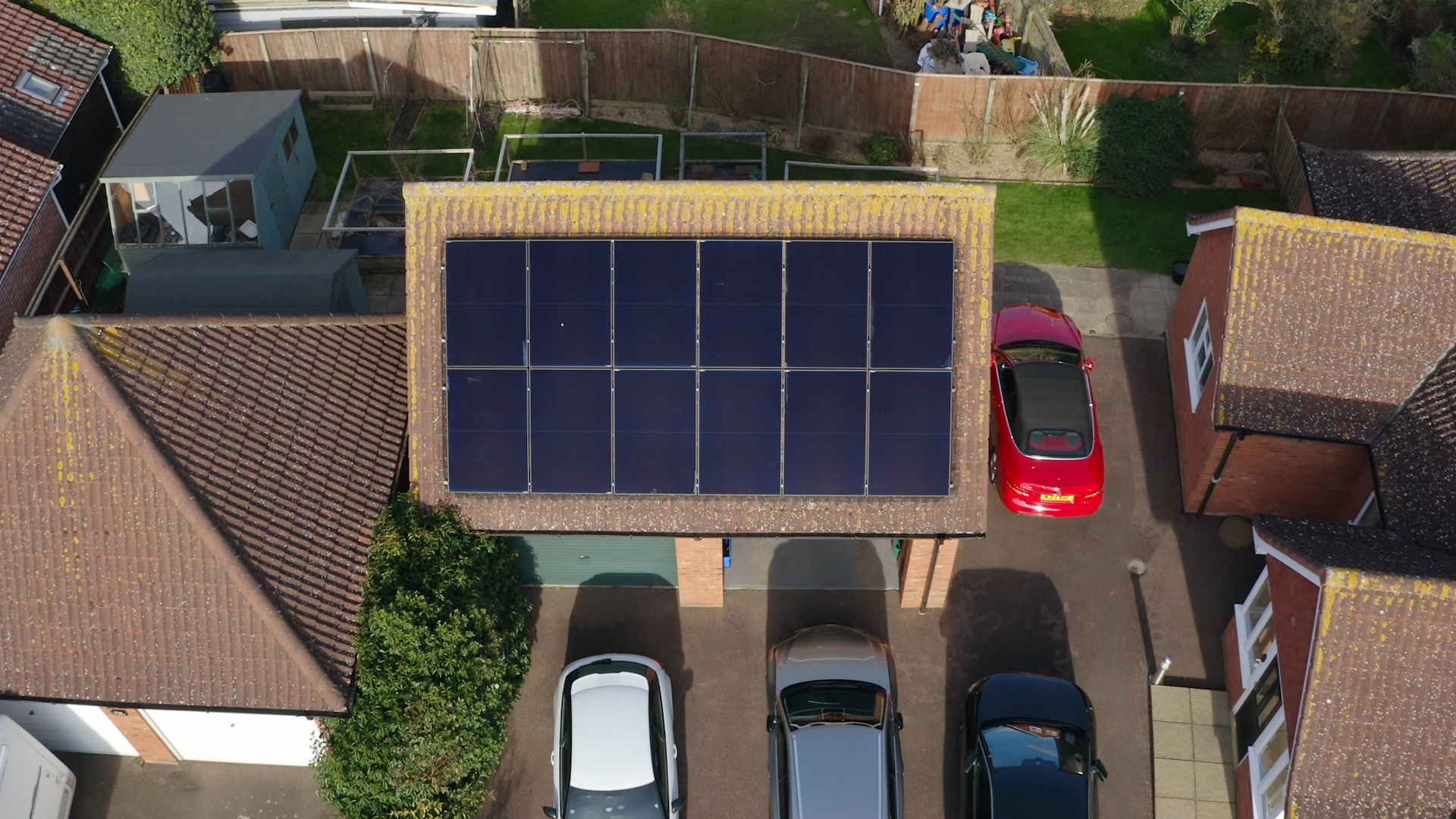
Why it matters: The analysis by Ordnance Survey reveals significant missed opportunities for renewable energy development in areas with ideal solar conditions, potentially supporting government green initiatives and infrastructure investment decisions.
The big picture: Geospatial analyst Jonathan Allsup used Met Office climate data to investigate the correlation between existing solar panels and annual sunshine hours across Britain, identifying areas where solar infrastructure lags behind natural potential.
By the numbers: The mapping shows Ipswich ranks ninth nationally for areas with high sunshine hours but low solar panel coverage. Other Suffolk and Essex locations also feature prominently in the top 10 missed opportunities, including Colchester (seventh), Eastern Essex (sixth), and Felixstowe and Harwich (eighth).
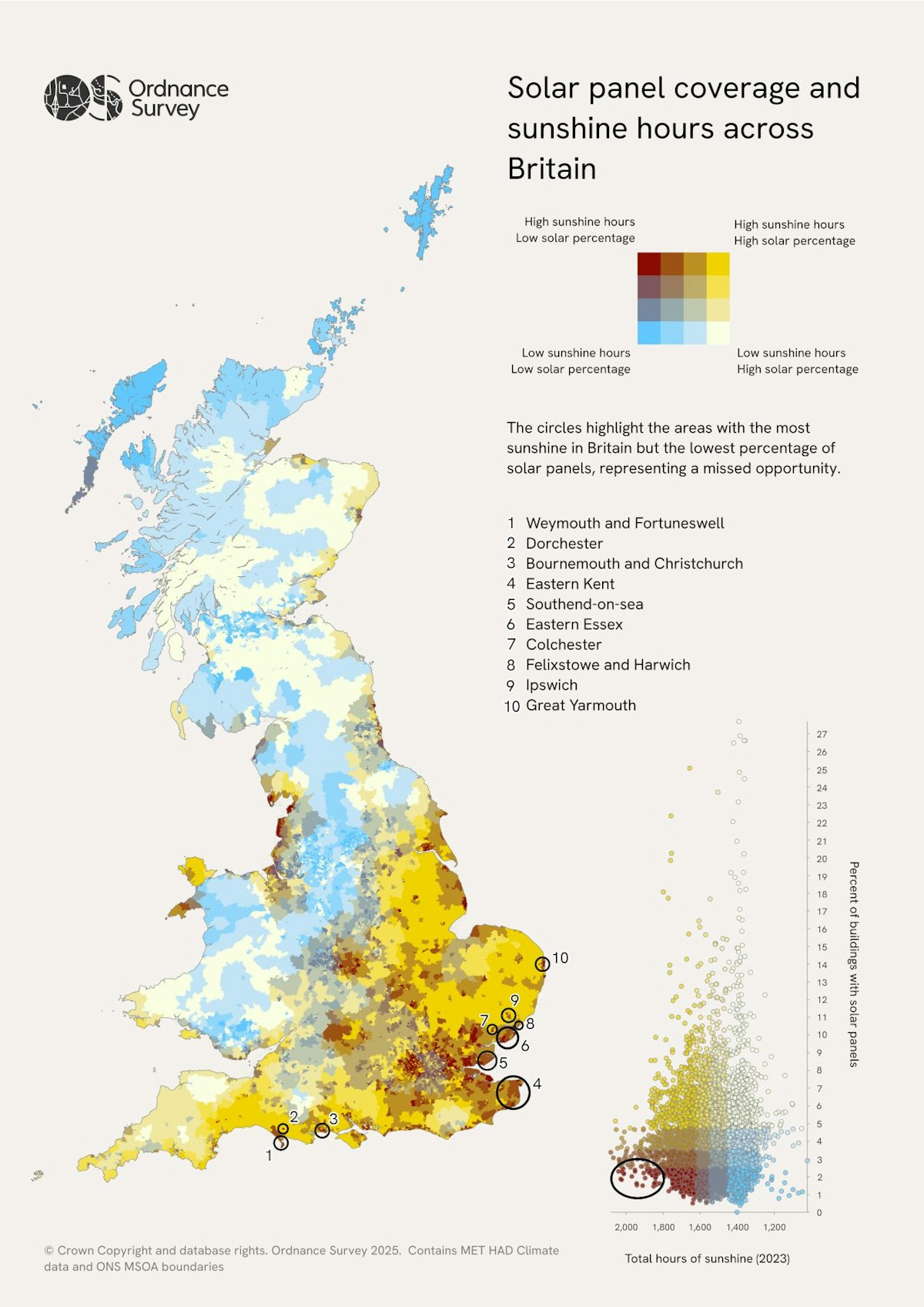
What the data shows: The research combines solar panel locations from the National Geographic Database with 2023 sunshine hour data to highlight disparities in renewable infrastructure distribution. Areas are colour-coded to show the relationship between sunshine availability and current solar panel density.
As Allsup puts it, the mapping reveals "where we could get our most energy return on investment for building future solar panels" by comparing solar infrastructure against natural sunshine patterns across the country.
By investing in intelligent solar hardware today, businesses and residents can unlock immediate savings through smart energy tariffs, reduce their electricity bills from day one, and gain access to real-time energy management, which provides more control, flexibility, and resilience against future price volatility.
Paybacks average 4 years for commercial businesses, and circa 6 years for homeowners.
What they're saying: Freeport East CEO Steve Beel said, "Our From the Rooftops campaign with Ipswich.co.uk is designed to address the under-investment in rooftop solar in four of the top 10 places listed in this survey. It's good to know the detailed analysis from the Ordnance Survey supports the case we are making."
What's next: The solar data in the National Geographic Database provides what researchers describe as "an authoritative overview of the nation's renewable infrastructure" to support future infrastructure development and government green initiatives.
The bottom line: Suffolk and Essex possess ideal natural conditions for solar energy generation, but current panel installation rates fail to capitalise on this potential, representing significant opportunities for renewable energy investment.