Suffolk's solar opportunity
Suffolk boasts over nine million square feet of recently developed or planned commercial roof space across just eight of the larger developments in the Freeport East area alone. Using industry-standard metrics, these roof spaces could support nearly 100MW of solar installations, representing tens of millions of pounds of investment and creating hundreds of skilled jobs.
The numbers are compelling. That 100MW of rooftop solar installation within just 20km of Ipswich could lead to savings for local businesses of over £20m per year. Scale this across Suffolk as a whole, and energy experts estimate over 1GW of rooftop solar is possible, representing over £500m of investment and supporting more than a thousand jobs.
For individual businesses, the impact is equally appealing. Commercial rooftop solar typically reduces business energy costs by 40-80%, with many companies seeing payback periods of 3-6 years before enjoying essentially free electricity for the remaining 20+ year lifespan of their systems.
Why this matters for Suffolk businesses
Financial resilience in uncertain times
In an era of volatile energy prices, rooftop solar offers something invaluable: predictable energy costs. Rather than being subject to the whims of international gas markets, businesses can lock in fixed electricity production costs for decades ahead.
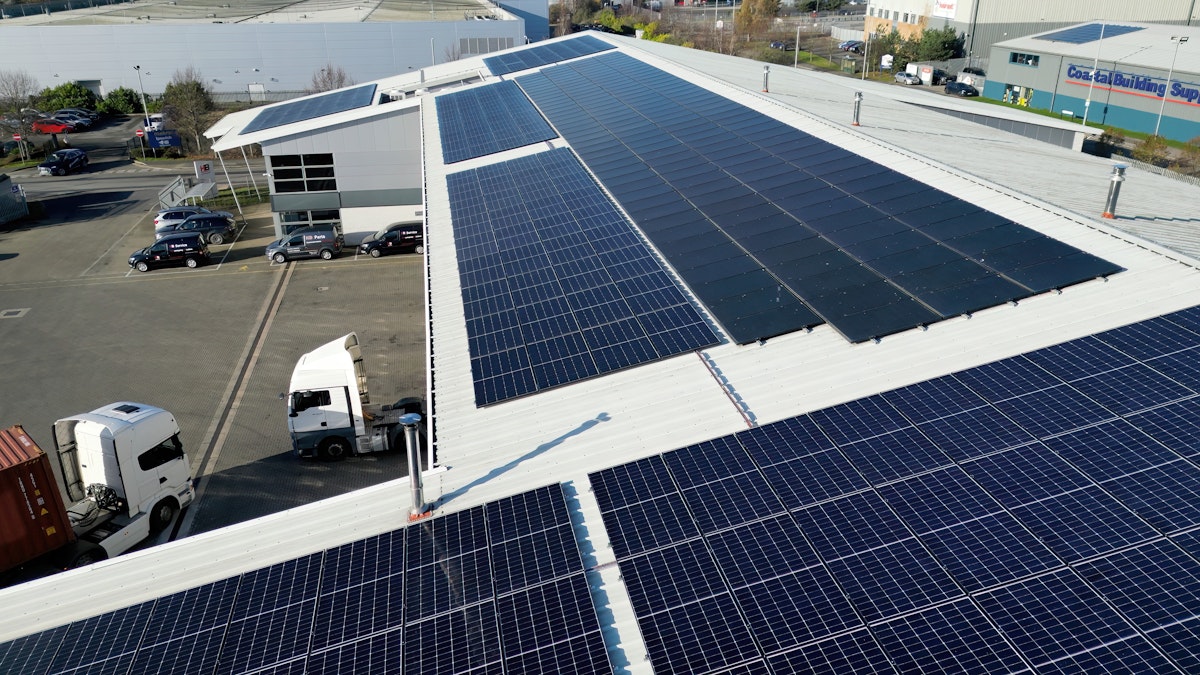
The financial case has never been stronger. Solar installation costs have fallen dramatically whilst product quality has risen. Combined with new battery storage options and government incentives like the Smart Export Guarantee, solar now simply makes good business sense for most Suffolk companies with suitable roof space.
When energy prices were spiking, many businesses felt powerless. Solar gives you back some control — it’s a way to protect your bottom line long term.
Meeting investor expectations
International investors and major corporations increasingly expect to see renewable energy solutions as standard. For Suffolk businesses seeking to attract investment, secure major contracts, or establish a presence in supply chains, having renewable energy credentials is becoming increasingly essential rather than optional.
Contributing to regional leadership
Suffolk's position as home to the UK's largest container port at Felixstowe, plus the concentration of logistics and manufacturing along the A14 corridor, creates unique opportunities. The Freeport East area spans from Felixstowe to Stowmarket via Ipswich, as well as Harwich-Colchester, encompassing thousands of businesses with suitable roof space.
By leading the commercial solar revolution, Suffolk businesses can reduce costs whilst positioning the region as a hub for clean energy innovation, attracting further investment and creating a virtuous cycle of economic growth.
Utilising our rooftops for solar energy is one of those ideas that has almost everyone in agreement – an undoubted “good thing” that maximises the value of an existing unwanted space to create energy that is wholly renewable and can be deployed directly back into local businesses or their close neighbours for real financial savings.
Part of the reason this isn’t yet the default approach is that there are, or have been, challenges that have made the financial case difficult to justify – finding the right technology mix, local grid complications, mobilising capital, dealing with aging roof materials, or addressing legal and ownership issues for leaseholders and short-term renters.
We believe there is now a range of solutions and experienced businesses in the sector that can resolve most of these challenges most of the time, whilst still preserving the obvious economic and financial benefits.
Making solar work for your business
Assessing your premises
The first step is understanding whether your property is suitable. Most commercial buildings can accommodate solar, but several factors determine the optimal system size and financial returns.
Roof requirements: Your roof must support the additional weight of panels (typically 15-20kg per square metre). South-facing roofs perform best, though east and west-facing installations can still deliver strong returns. If your roof needs replacement within 10 years, consider doing this first to avoid the cost of removing and reinstalling panels later.
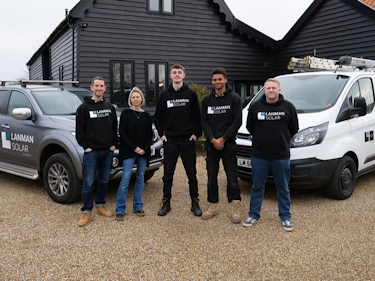
As Pietro Lanni of the Lanman Group explains, “A good install starts with the right prep. If your roof’s in decent shape and you know your usage, we can usually tailor something that just works.”
Space and usage patterns: Each kilowatt of solar panels requires roughly 8-10 square metres of suitable roof space and generates approximately 1,000 kWh annually. Your installer will analyse your electricity bills to recommend the optimal system size based on your consumption patterns and available space.
Understanding your usage data
"Accurate half-hourly energy data is a game-changer when designing a solar PV system for your business," says Insight Energy co-founder Kristian Day.
We use this detailed information to gain a deeper understanding of how and when you use electricity throughout the day, not just your total usage, but also the peaks and dips.
This means we can design a system that truly fits your needs, helping you get the most out of your investment, avoid unnecessary costs, and maximise your savings.
In short, half-hourly data enables us to build a smarter, more effective solar system tailored to your business.
System sizing
Commercial installations typically fall into these categories:
Small businesses (offices, retail units): 10-50kW systems requiring 80-400 square metres of roof space. A 20kW system costs roughly £20,000-24,000 and could generate 18,000-20,000 kWh annually in Suffolk.
Medium enterprises (manufacturing, larger retail): 50-250kW systems needing 400-2,000 square metres. A 100kW installation costs £80,000-100,000 and typically generates 85,000-95,000 kWh per year in the East Anglia region.
Large commercial and industrial (warehouses, logistics centres): 250kW+ systems across 2,000+ square metres. A 500kW installation costs £350,000-450,000 but can generate over 400,000 kWh annually.
Financial considerations
Current UK pricing guidelines show costs of £1,000-1,200 per kW for smaller systems, dropping to £700-900 per kW for large installations as economies of scale kick in. These prices include panels, inverters, mounting systems, electrical work, and installation.

Financing options have expanded significantly. Beyond outright purchase, businesses can access solar loans, leasing arrangements, or power purchase agreements where third parties own the system and sell electricity at reduced rates. Many UK banks now offer competitive green financing specifically for renewable energy projects.
The Smart Export Guarantee provides additional income streams. Energy suppliers pay for surplus electricity you export to the grid, with rates typically ranging from 3-7.5p per kWh. Combined with electricity bill savings and tax reliefs like the Annual Investment Allowance, payback periods of 4-8 years are typical.
Overcoming common barriers
Many perceived obstacles to commercial solar have practical solutions. For businesses with older roofs, installations can often proceed alongside planned maintenance programmes. Grid connection challenges that once delayed projects are increasingly manageable, with experienced local installers handling applications to Distribution Network Operators.
For leaseholders or businesses in rented premises, innovative financing models can work around ownership complications. Some landlords welcome solar installations that increase property values, whilst power purchase agreements can benefit tenants without requiring capital investment.
Technical essentials
Most Suffolk businesses will benefit from grid-tied systems that work seamlessly alongside existing electrical setups. During sunny periods, you use solar power directly. When generation exceeds demand, excess electricity flows to the grid for payment under the Smart Export Guarantee. At night or during cloudy weather, you draw electricity from the grid as normal.
Battery storage is increasingly popular. For many businesses, the grid effectively acts as a free battery – storing excess generation during the day for use across the wider electricity system.
Commercial battery storage unlocks the ability to take advantage of off-peak tariffs and capture surplus energy during the day. One of the significant advantages is for businesses that may require emergency backup in the event of a power outage.
Planning and regulations
Most commercial solar installations under 1MW benefit from permitted development rights, though restrictions apply in conservation areas, near airports, or on listed buildings. Your installer should handle grid connection applications, which typically take 8-12 weeks for larger systems.
All installers must be MCS (Microgeneration Certification Scheme) certified to access government schemes, such as the Smart Export Guarantee. Look for companies with relevant insurance, solid references from similar businesses, and knowledge of current support programmes.
Making it a reality
Getting started
Begin by reviewing your electricity bills to understand usage patterns and costs. Assess your roof for suitability, considering age, condition, orientation, and available space.
Obtain multiple quotes from MCS-certified installers operating in Suffolk, such as Insight Energy and The Lanman Group. Quality installation is crucial for long-term performance, so prioritise experience, case studies and positive reviews over the lowest price.
Consider energy efficiency improvements alongside solar planning. Reducing electricity consumption through LED lighting, efficient equipment, and better insulation reduces the system size needed and improves returns on investment.
Staying informed
This guide is part of the From the Rooftops campaign running throughout 2025-26, showcasing how Suffolk businesses can lead the UK's commercial solar revolution. Future articles will feature local case studies, detailed technical guides, and updates on support programmes.
Subscribe to the From the Rooftops newsletter to stay updated on developments, opportunities, and events designed to connect businesses with solar experts and financing options.
The bottom line
Suffolk has everything needed to become the UK's commercial solar leader: abundant suitable roof space, a concentration of energy-intensive businesses, proximity to major ports, and backing from Freeport East.
The technology is proven, costs have fallen, and government incentives remain attractive.
For most Suffolk businesses with suitable premises, rooftop solar presents a low-risk opportunity to reduce operating costs, enhance sustainability credentials, and contribute to regional economic leadership. The combination of electricity bill savings, export income, and tax reliefs will make the commercials stack up for most businesses.
The question is not whether commercial solar makes sense for Suffolk – it is whether your business will be among the early adopters capturing maximum benefits, or wait until everyone else has recognised the opportunity.
Start with a professional assessment of your premises and energy usage. Investing in proper planning and selecting the right installer will pay dividends for decades to come, while contributing to Suffolk's position at the forefront of the UK's clean energy future.