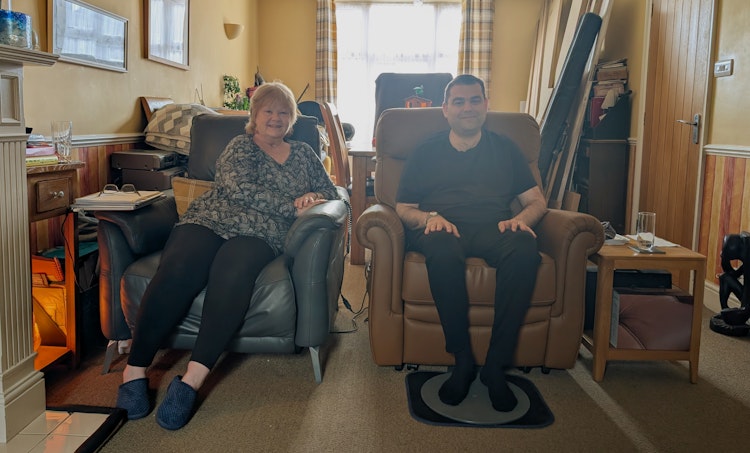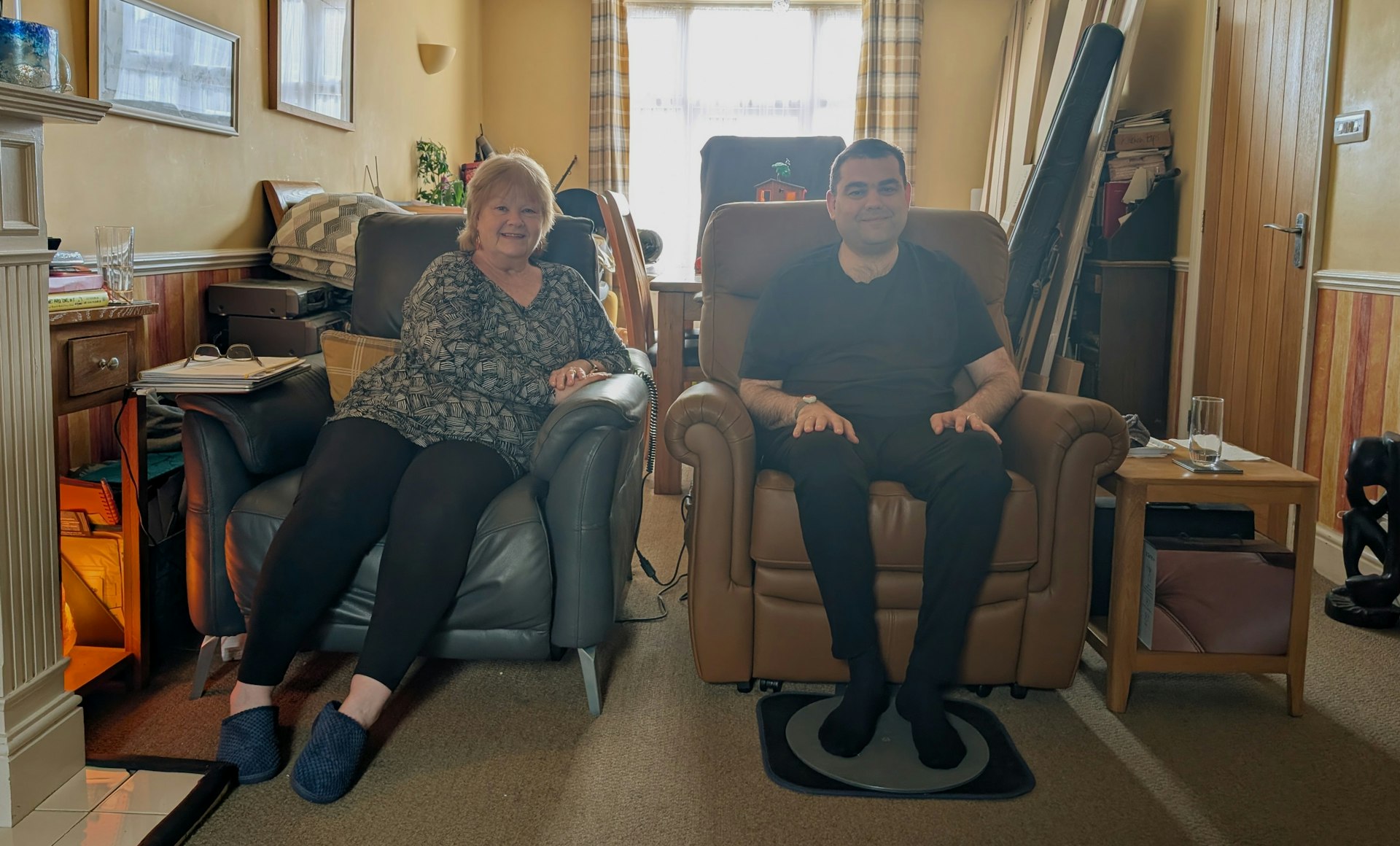
Ivan Ambrose hasn't stepped into his garden for four years. He pays £250 for private psychiatric care because, as he puts it, "the NHS mental health service locally is terrible." Living with PTSD, depression and the lasting effects of the pandemic, the 41-year-old from Ipswich has spent four and a half years fighting to make sure what happened to him never happens to anyone else.
"When the government kept changing the rules — sometimes within hours — my brain was completely frazzled. I experienced confusion, I didn't know what was going on, and there was no autism-friendly information," Ivan says.
The impact on his household was immediate and lasting. "We couldn't have the TV on when Ivan was downstairs," says his mum, Jayne. "The constant news updates were too much." Even now, years after lockdowns ended, the television stays off during the day.
The breaking point
For Ivan, the pandemic wasn't just confusing. It was traumatic. He developed PTSD and experiences flashbacks to those days of constant rule changes and information overload.
"I know that I'm far from alone in that. Other people on the spectrum would have been suffering in the same way," he says. "So it prompted me to start campaigning for it so that it doesn't happen in a future pandemic, so that autistic people are considered and supported correctly."
What emerged from his breakdown was determination. Ivan developed detailed legislative proposals requiring government agencies and health services to provide autism-appropriate information during future health crises.
"Short and specific sentences. No abbreviations or jargon. Simple, clear, straightforward language. Bullet points and visual images to assist processing and understanding," his proposed legislation states.
Television programmes should carry warnings before discussing health crises. "If we have another pandemic, because none of us know when, there should be proper warnings on the TV," he argues.
His campaign became a full-time commitment. "I've been working on this for over four and a half years now, appearing on radio stations and in papers," he explains. "I'm not doing this just for me, I'm doing it for all autistic people including the ones who aren't comfortable speaking out. I always think I'm being their voice as well."
Years of dismissal
For most of those four years, Ivan said he faced frustration from his then-Conservative MP Tom Hunt.
"Tom Hunt just did not want to know and kept dismissing everything," he said.
It took 13 months to get a reply to a letter sent to Downing Street on Ivan's behalf. "It was pretty wishy-washy," Jayne says.
Ivan is housebound, unable to access adequate NHS mental health support in his area. Despite these challenges, his determination remained strong. "I make my life as best as I can, and it's not like I'm doing nothing — I'm campaigning," he says.
The breakthrough
Then, after years of getting nowhere, Ivan said that a change in government brought new hope with the arrival of new Ipswich MP Jack Abbott.
"He's brilliant — a breath of fresh air compared to his predecessor, Conservative Tom Hunt," Ivan said.
Ivan recalls him immediately grasped the campaign's importance, saying, "You've been working on this for a long time and we need to get this further along for you. We need to secure a Westminster debate, either in the main chamber or Westminster Hall."
"Jack Abbott said that he would get the support of as many other MPs as possible. He mentioned Jen Craft MP and Marie Tidball MP."
The impact has been transformative. "It's a relief that all these matters I've raised are now finally being taken seriously," Ivan says.
Then came the moment that made years of work feel worthwhile. Ivan's petition was picked up by the House of Lords for their inquiry into the Autism Act 2009.
"It was picked up by the House of Lords and they asked me to submit evidence to the inquiry into the Autism Act," Ivan explains. The cross-party inquiry is examining whether the Autism Act 2009 — the first disability-specific law in England — is delivering the support and accountability it promised. His evidence has now been published on the House of Lords website. "That evidence will now be on the parliamentary record forever," he says with evident pride.
For Jayne, watching her son gain this recognition has been profound. "It gives him some self-worth and self-esteem and purpose when he suffers so deeply with depression," she observes.
Reading other submissions to the inquiry validated Ivan's experience. "Many of them are similar to yours, talk about the same things," he discovered, confirming his struggles weren't isolated.
The fight continues
Ivan is now waiting for Abbott to secure the promised Westminster debate. He understands the process takes time and checks in periodically without applying pressure.
"He won't give you false hope. He's honest. I think you don't want false promises because that really doesn't help matters at all," Ivan adds.
Jack Abbott's office did not respond to requests for comment before publication.
The urgency of Ivan's campaign remains clear. "Nobody knows when the next pandemic will come along or another health crisis," he warns. "We've got to put it right now — fix the roof when the sun is shining before the next pandemic comes along."
The bottom line
From a breakdown during lockdown to having his evidence permanently archived in the House of Lords, Ivan Ambrose's journey shows what's possible when determination meets the right support.
For four years he campaigned while housebound, dismissed by his MP, paying hundreds of pounds for mental health care the NHS couldn't provide. Now, with Jack Abbott's backing and Westminster recognition, his fight for autism-friendly emergency communication may finally achieve the breakthrough that could protect autistic people in future crises.
In a county still facing years-long waits for diagnosis, Ivan's campaign offers a reminder that inclusion starts with listening.