England's latest figures tell two stories at once. Overall absence in autumn 2024/25 stood at 6.38%, with persistent absence falling to 17.79%. But severe absence, children missing more than half their sessions, climbed to 2.04%, a record for an autumn term. More pupils are attending more often, but the most disengaged are slipping further away.
In Suffolk, the county council's Q2 2024/25 dashboard shows persistent absence fell to 16.1%, down from 18.2% the year before. The direction is positive, but national watchdogs warn the trend remains entrenched, with risks for attainment and wellbeing.
Absence is not one story. In Suffolk, it takes many forms: from a classroom that became a crisis point, to a results culture that broke a child's confidence, to a teacher questioning whether school still fits her own child.
School refusal or school harm
Amy Wegg withdrew her autistic son after watching him deteriorate in an environment that could not adapt to him.
"I literally saw my son turn into... it was like having a rain cloud over him. Eight years old and he's depressed, essentially."
The crisis built slowly. Her son Joshua began shutting down in class, overwhelmed and isolated. "They ended up keeping him in the staff room for months." It kept him safe. But it was not education or inclusion.
Her other son, Romeo, fared worse. He went from thriving under one teacher to being in isolation daily under the next. He became non-verbal, hid under desks, threw chairs. "Given that he'd literally gone from no issues, this perfect, super bright child, to now we're at this stage, you'd think surely they would look at maybe where the difference is in how we're dealing with this child."
When Joshua was six, the school wanted to suspend him for biting another child. Amy asked what had happened. "Have you actually met my son?" The head had not. They brought him in, and the head said, "Look at him, he's clearly guilty." Joshua could not speak clearly enough to explain. It turned out he had been bullied every day and had reacted. "This child can't talk. Six years old. He can't say what's happened to him."
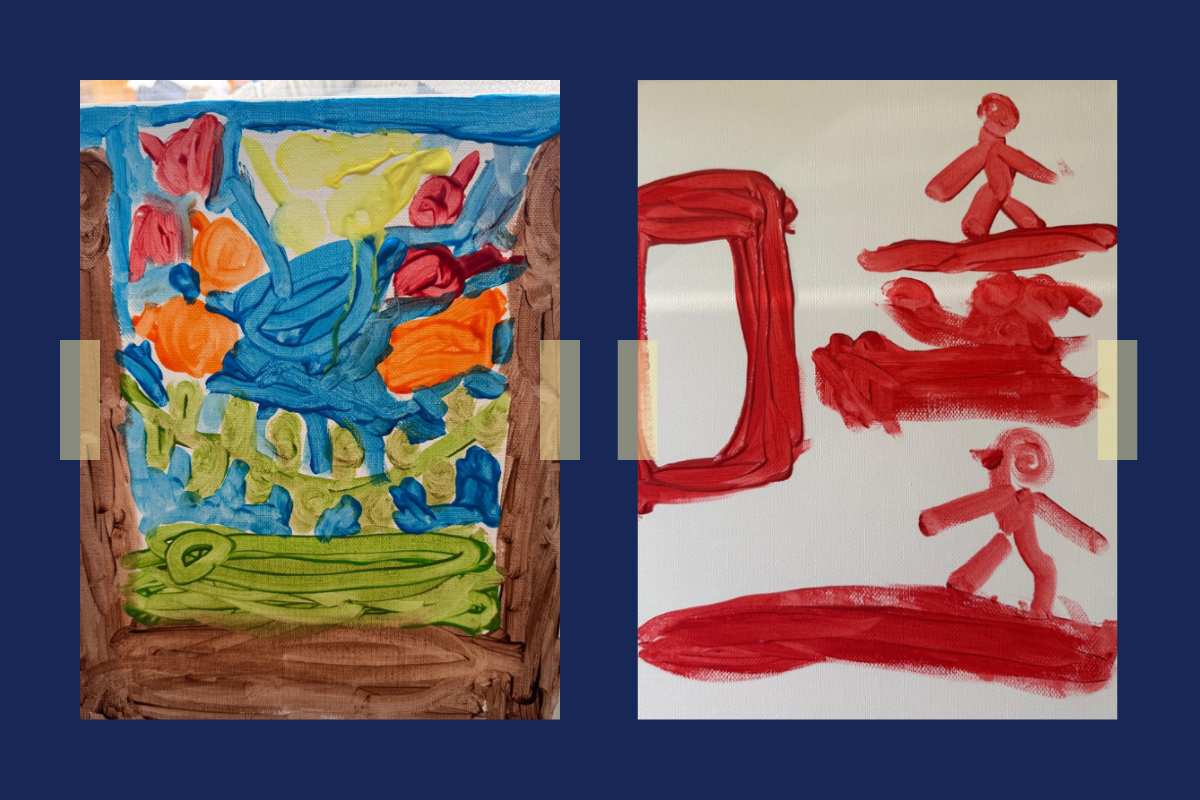
The pattern continued outside school. One afternoon, during home education, Amy took Joshua to gymnastics. Before the session, he sat drawing bright colours, a child at ease. An hour later, after being told to sit on the red line, excluded from the class and denied his free play, he drew again. The second picture was dark, chaotic, angry. Amy photographed both. One hour. One incident. The contrast was stark.
"I said to them: look at my child. What are you doing to him to get him to that point?"
Later, the gymnastics staff told her that because her children had "SEND issues", they would need to move to a different class on a different day, or Amy would have to stay on the gym floor with them. After consulting a legal charity, she was advised this was discrimination. Autism is classed as a disability and the club should have made reasonable adjustments. "We're essentially pushed out, like, we don't want you here because you've got SEND."
Amy's critique targets the structure, not individual teachers. "They don't teach how to deal with someone with autism in initial teacher training," she says. "Every class will have those children." Support hinges on luck: whether a teacher has trained themselves or has personal experience.
Joshua's Education, Health and Care Plan (EHCP) took just over 18 months. The school called it "unheard of" and "amazingly quick." Romeo's took just over two years. During that time, Romeo was approved for a specialist placement Amy says was costing £2,000 per day. Four hundred children applied for the one available place. But the school wanted to expel Romeo, prompting Amy to withdraw both boys before he could access the placement.
Amy's experience reflects broader system failure. According to Suffolk County Council's Q2 2024/25 SEND performance dashboard, only 31.6% of EHCPs in Suffolk were issued within the statutory 20-week timeframe. The average wait is 41 weeks. Nationally, only around half of plans meet the 20-week deadline. Children decline while they wait.
After school withdrawal, the change was immediate. "He just started talking. Now anyone can understand him." Joshua, who could not speak clearly or read at six and a half, is now reading and communicating confidently.
Amy discovered his brain could not process phonics, but he could learn through repetition - a Victorian-era method the modern curriculum had abandoned. "If school had achieved this improvement in his ability they would have thought they deserved an award," she says. "All I did was observe my child closely and with an open mind, turn away from traditional teaching methods and find what worked for him."
For Amy, home education was survival, not ideology.
Local data mirrors her experience. Persistent absence runs higher for pupils on EHCPs and SEN support than for all pupils in Suffolk, a pattern the county links to additional needs and poverty. Nationally, the picture is more severe. In 2022/23, persistent absence for all pupils in England was 21.5%. For Suffolk's children in need it was 53.8%. For children on a child protection plan it was 56.4%. Illness is the largest driver of absence each autumn, but vulnerable learners carry a disproportionate load.
When outcomes culture backfires
Mel Reid's daughter did not refuse school. She went every day and tried harder. That, Mel says, was the problem.
"Watching our middle daughter's decline in mental health left her feeling that no matter how much she burnt herself out, it would never be enough." The message was constant: achieve more, try harder. "Our child struggled with the pressure, large class sizes and lack of individual attention. It often left them anxious and disengaged."
"Schools no longer look at children as individuals. They see them as statistics."
The decision to withdraw came after watching one child suffer. Then came the decision not to enrol their youngest. Mel's youngest has been home educated from the start. The choice was reactive at first. Now it is deliberate.
Stepping away brought relief. "The biggest benefits are freedom and flexibility. We can shape learning around interests, strengths and real-world experiences. The hardest part is the responsibility. Being both parent and educator can be tiring."
Twice a year, Mel helps host a four-night home-ed camp at The Orchard in Wickham Market. Her family also prioritises connection beyond the camp. "We mix formal learning with trips, group activities and meet-ups with other home-educating families. Clubs, sports and community events also give them a wide circle of friends."
Unions say fines are a crude tool and call for earlier specialist support and proper attendance services. The government has tightened fining rules, making it easier for councils to penalise parents for unauthorised absences. But unions argue this treats the symptom, not the cause. Families like Mel's are protecting, not shirking.
When being a teacher does not mean trusting the classroom
One Suffolk teacher, currently on maternity leave, says she is no longer sure mainstream schooling fits her own child or their family life.
She has worked in schools for 12 years. She has seen what works and what does not. She knows how hard teachers work. She also knows what she wants while her child is small: time, autonomy, experiences that do not fit neatly on a timetable.
"To do that with class sizes of 30, even with a really skilled teacher, is a huge challenge." She is not ready to hand over the best years. "I'm not ready for her to be told to sit down and be quiet. I'm not ready to hand her over."
The decision feels urgent because of timing. In England, children start school at four or five. In other countries, they start at seven. That difference matters to her. "If children started school at seven, like they do in several countries, I'd be much more inclined to consider it." Four feels too young. "Socially, suddenly you're aware of your peers and whether you're liked, and there's that hierarchy. I'm just not ready for her to face all of that."
She feels the social pressure. When people ask what she does, she says she is a stay-at-home mum and feels she has to justify it. "Being a mum, this is my favourite identity. I love it."
She believes in structured learning and worries about socialisation if she home educates. But she questions a culture that treats children as data points first and people second. If she did make the leap, she would want connection, not a bubble: strong networks, diverse perspectives, and resources beyond one household.
What would keep families like hers? "Smaller class sizes, more flexibility in teaching methods and more emphasis on wellbeing. A school environment that genuinely adapts to children rather than expecting them all to adapt to it."
And then there is the holiday question. "The thought of someone telling me I can't take my child on holiday makes my blood boil. The benefits of family time and travel far outweigh the loss at that age." As a teacher, she has seen absence become a problem when it is persistent and avoidant. A planned week or two? "It doesn't affect their education."
Each story is different. The pattern is shared.
Social, not solitary
"It's home education, not homeschool," Amy says. The distinction matters. Home education is learning through life: the fish tank that teaches percentages, the woods that become a science lesson, errands that build executive function. For neurodivergent children especially, learning outside a classroom structure can reduce anxiety and allow information to stick in ways that formal teaching cannot.
Suffolk's home-ed networks are growing. According to Suffolk County Council's Q2 2024/25 SEND performance dashboard, 129 children with EHCPs are now electively home educated in the county, a 42% increase year-on-year. This is not a fringe phenomenon. Families with the most complex needs are opting out in growing numbers.
The home-ed camp at The Orchard in Wickham Market is an anchor. Local groups and online forums add structure, social time and shared resources. Families are building infrastructure where the formal system left gaps.
But there is a cost. Families receive no financial support and must pay privately for GCSE exams. Many cannot afford all of them. The financial barrier means home education remains largely a middle-class option. Families without savings, flexible work or a parent who can stay home do not have this choice. The children who might benefit most are the least likely to access it. Economics, not values, determine who can opt out.
Beyond fines: support, flexibility, experiment
Unions are blunt. Fines will not fix this. They want investment in attendance services and rapid specialist support. The problem is not defiance. It is unmet need, pressure and distrust.
Some local experimentation hints at another path. Unity Schools Partnership, which runs several Suffolk schools, extended its autumn half-term and reported fewer illness absences among pupils and staff. Parents were split. Teachers were largely supportive. Structural flexibility can move the dial where punitive measures do not.
In Suffolk, some schools are getting it right. Rushmere Hall Primary School in Ipswich runs specialist provisions including a Hearing Specialist Base and a Speech and Language Hub. One parent (the author of this piece) says her son is thriving there, not because of additional resources, but because of culture: teachers who listen, a head who communicates clearly, space for a child to be a child.
Where the money and the burden go
What these families describe individually, the data confirms systemically.
Suffolk's SEND system is under measurable strain. According to Suffolk County Council's Q2 2024/25 dashboard, the county received 604 EHCP requests this quarter, a 38% rise year-on-year. There are now 2,049 open needs assessments, up 63% from the same period last year. The number of children with an EHCP has grown to 9,186, a 19% increase in 12 months.
Nationally, the picture is similar. Department for Education data shows EHCP numbers have grown 83% since 2016. Nearly 5% of all pupils in England now have an EHCP, reflecting long-term growth in diagnosed need and parental demand for statutory support.
But capacity has not kept pace. In Suffolk, only 31.6% of EHCPs were completed within the 20-week legal deadline in Q2 2024/25 — an improvement on 15% the previous year. The average wait is still 41 weeks. Nationally, just over half are issued on time. Families wait. Children decline. And when specialist provision cannot be found locally, costs soar. Suffolk now has 522 pupils in independent placements, up 34% year-on-year, at an annual cost of £35.7m.
Meanwhile, 46 children in Suffolk have an agreed EHCP but no education setting. And 159 complaints were lodged in Q2 2024/25, most relating to communication delays and service failures.
Resources flow into process, assessments, casework and disputes, rather than provision. The paperwork swells. Support does not. This reflects a system heavy on compliance but light on timely help.
At the same time, teachers' unions warn that the wider fabric around school has frayed. Many parents are time-poor and cash-poor. They are raising children in tech-saturated homes while juggling long hours and rising anxiety. Teachers are asked to plug every gap, academic, social and safeguarding, in a day already full.
The result is collective exhaustion, not bad parenting or bad teaching. The register can measure absence. It cannot measure burnout.
Attendance will follow safety, belonging and meaning
In Suffolk, absence rates may be falling, but disillusionment is rising. Rebuilding trust may matter more than any attendance target.
For families who stay, the ingredients for thriving are simple: teachers who see children as people first, systems flexible enough to bend, and space for life to happen alongside learning.
For those who leave, those ingredients were missing long enough that withdrawal felt like the only safe choice.
The register will keep counting. But until schools can offer what these families are searching for, safety, belonging and meaning, the numbers will keep telling the same story.
The questions remain: What happens when families with resources opt out and those without cannot? What version of 'inclusive education' leaves 129 children with EHCPs learning at kitchen tables? When 604 EHCP requests arrive in one quarter, is the system surprised — or indifferent?