
3,000-year-old settlement with rare artefacts uncovered during Ipswich link road construction
Archaeologists discovered a Late Bronze Age settlement and cremation cemetery during the development of the recently opened Europa Way in Ipswich, yielding multiple artefacts, including pottery, cremation urns, and a rare flint tool for grinding grain.

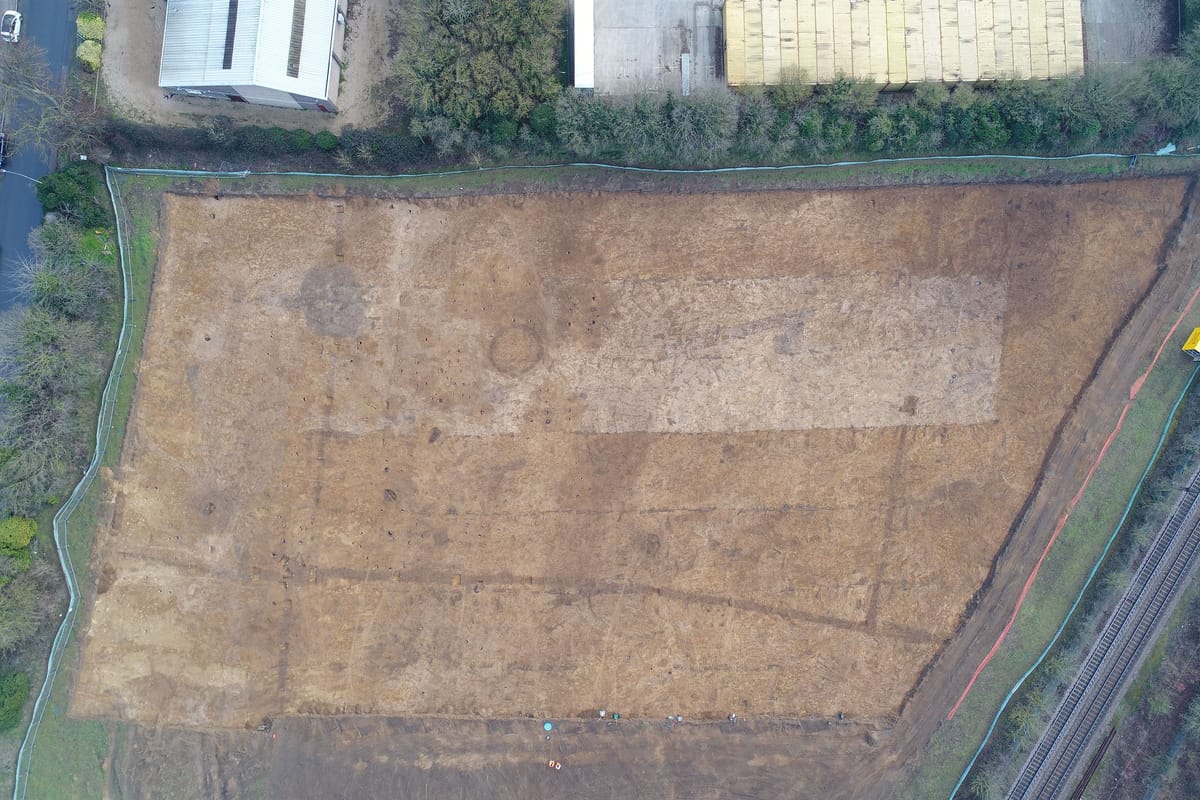
Why it matters: The archaeological finds provide significant insight into prehistoric life in the Gipping valley, including evidence of changing burial customs and agricultural practices from around 1200 BC.
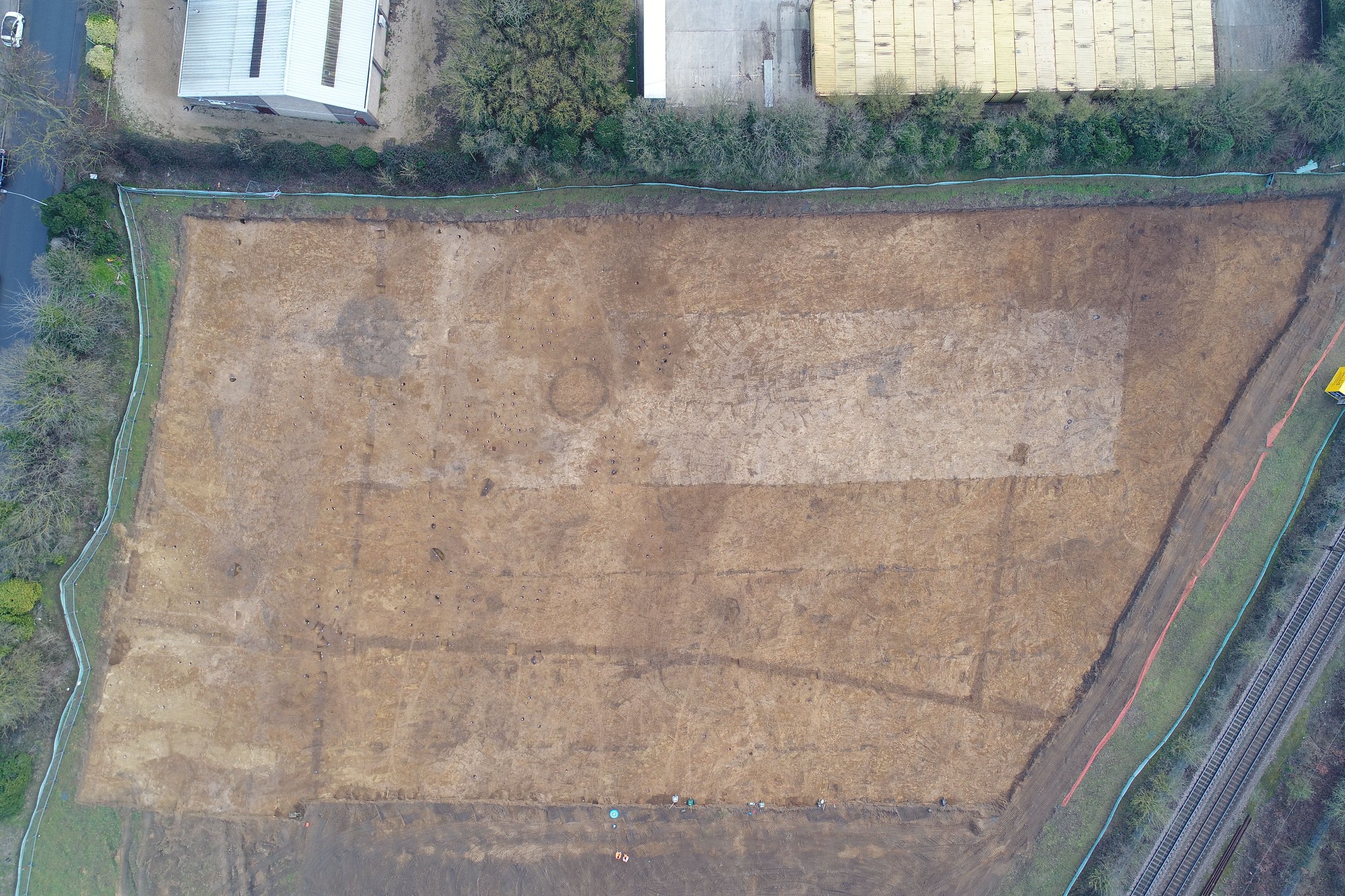
The details: The site near Bramford and Sproughton revealed the postholes of two roundhouses, numerous four and six-post structures, and two ring gullies, alongside an unusually placed cremation cemetery containing 18 burials.
What they're saying: "The Bronze Age remains at Europa Way have been an important discovery to the understanding prehistoric activity along this stretch of the Gipping valley," said Chris Thatcher, Senior Project Manager at Oxford Archaeology.
"Some aspects of the settlement remains are of considerable significance in the wider regional context, especially the substantial pottery finds, the cremation cemetery, and the way that the agricultural landscape was organised," Thatcher said.
The bigger picture: The discovery of cremation burials in close proximity to the settlement marks what archaeologists believe is a shift from Middle Bronze Age burial practices.
"One distinctive feature of this cremation cemetery, is how close it was to the buildings and daily life - the inference being that the inhabitants of the settlement were likely buried close by," Thatcher noted.
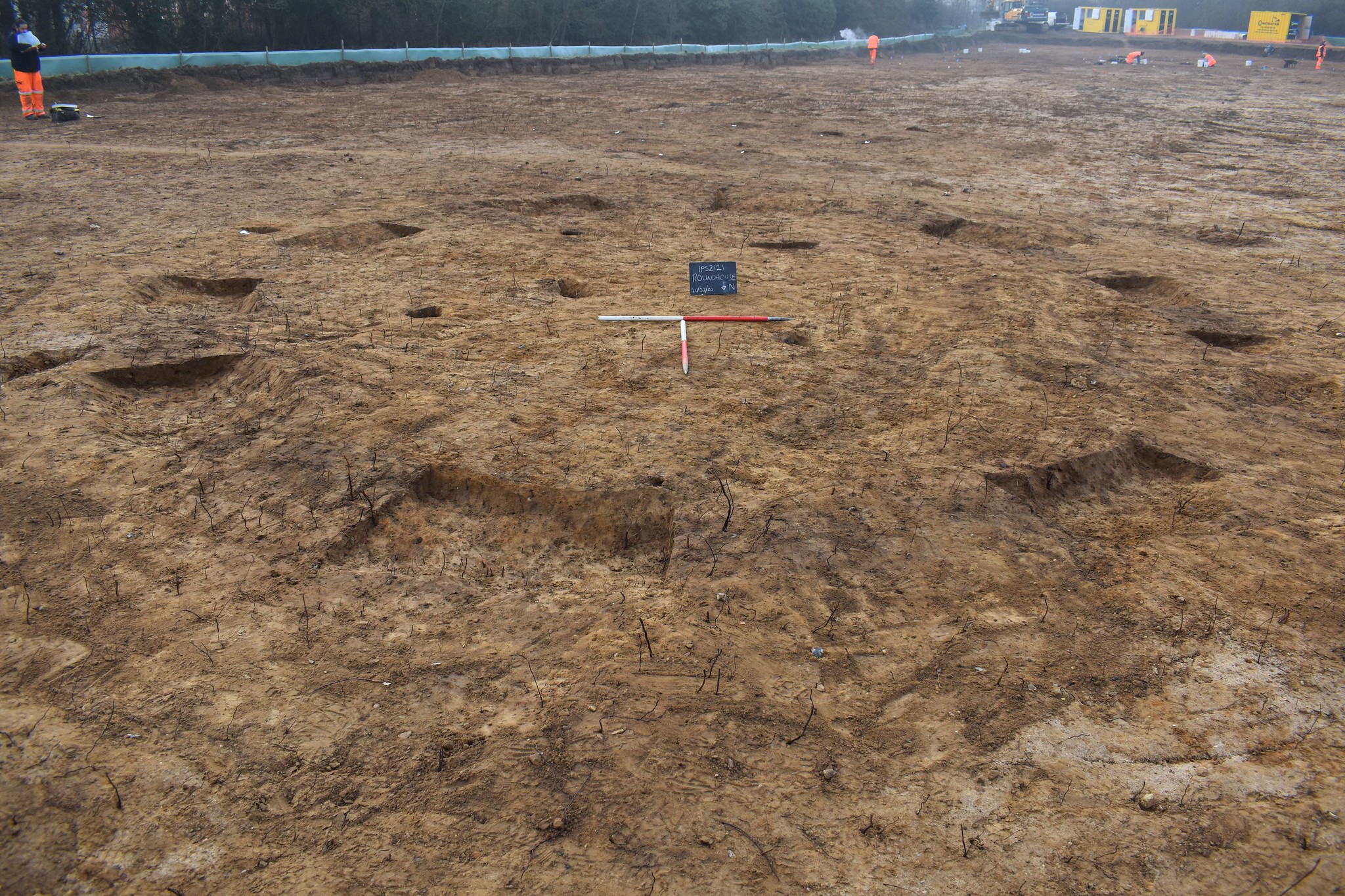
For context: The archaeological site was located on glacial outwash gravels on the northern side of the Gipping valley, an area with a rich record of prehistoric land use.
The site also yielded evidence of other historical periods, including:
- Neolithic (4300 BC to 2000 BC): Small quantities of pottery and worked flint
- Iron Age (800 BC to AD 43): Gold Iron Age coin
- Post-medieval: Two ditches with finds correlating to 19th century maps
What happens next: The artefacts will be preserved for future generations.
"The full archive of finds will be deposited with the Suffolk County Council Archaeological Service, where it will be curated for the future and accessible to researchers of all levels," said a spokesperson for Suffolk County Council.
The bottom line: Councillor Philip Faircloth-Mutton, Suffolk County Council's Cabinet Member for Environment, Communities and Equality, said: "Suffolk has once again revealed its unique history, and added another layer to our understanding of what life was like for previous generations in our part of the world."
Independent local journalism is expensive to produce
It's free for you to read thanks to the generous support of our partners.
Below the line